Guides
What is an abort or cancel code
An abort or cancel code is a code you use right after an accidental alarm to tell the central station the signal may be false. It helps the operator know what happened before police or fire are dispatched.
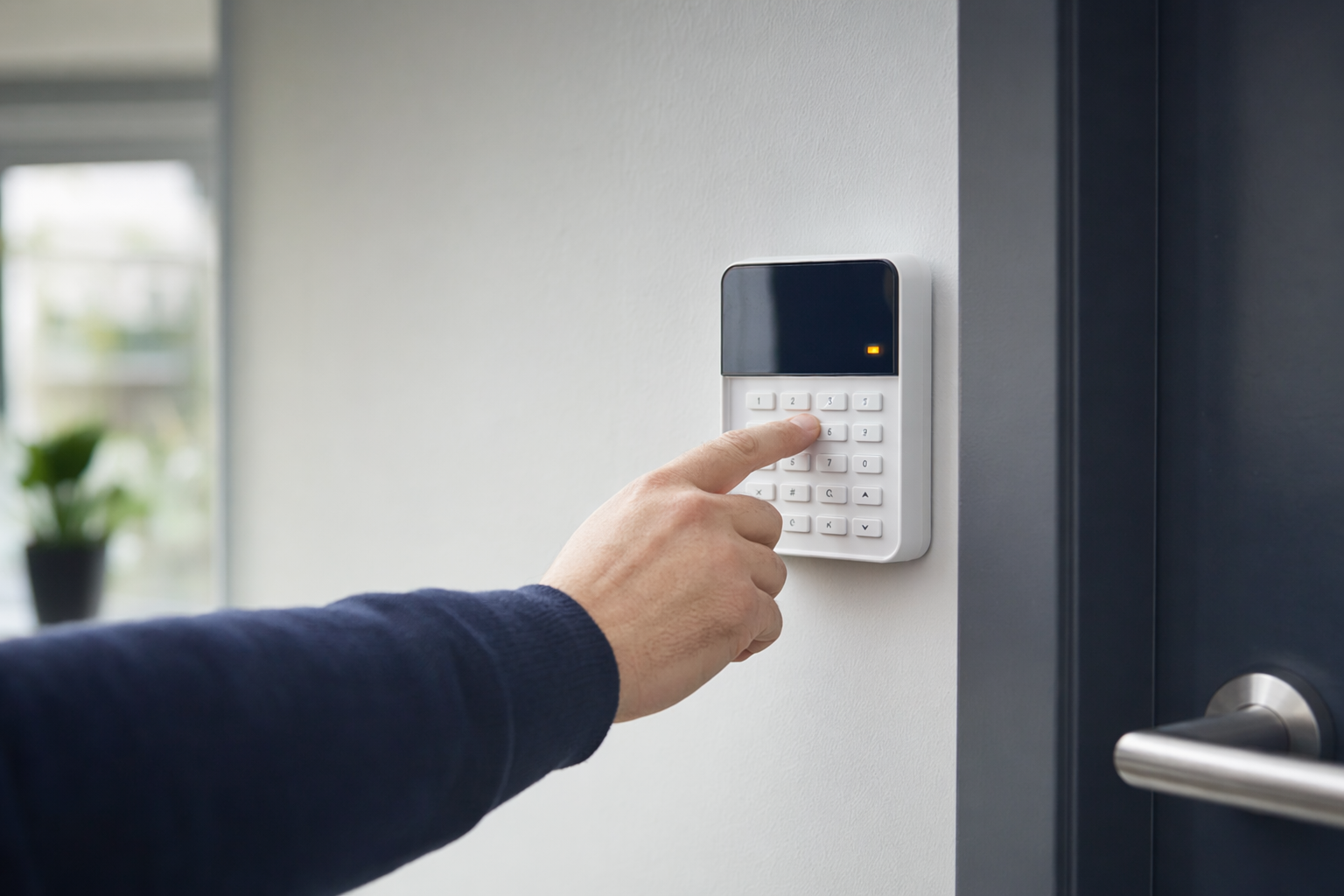
What an abort or cancel code means
In alarm monitoring, an abort or cancel code is a special user code entered at the keypad after an alarm is triggered by mistake. The control panel sends that update to the central station so the operator can see that someone at the protected location is trying to stop the alarm process.
The basic signal path is simple. A sensor trips. The control panel sends a signal to the central station. A trained operator reviews the signal, usually tries a verification call, and may notify police or fire based on the signal type, the account instructions, and local rules.
An abort or cancel code does not always mean dispatch will stop. It is important information, but the central station still follows its procedures. Those procedures can depend on whether it is a burglar alarm, panic signal, or fire alarm.
Abort code vs cancel code
Companies do not always use these words the same way. In many systems, an abort code means a code entered during the entry or alarm period before the central station has finished processing the event. A cancel code often means a code entered after the alarm already transmitted.
Some providers use just one term for both. Others show separate event codes in their software. The practical point is the same: the central station gets an updated signal that the alarm may have been accidental, and the operator checks that against the account instructions.
If you are comparing providers, ask them how their panel handles aborts, cancels, and restorals. That matters more than the label.
What happens after you enter it
After you enter the code, the panel may send an abort or cancel signal by cellular, internet, phone line, or a dual-path setup. At the central station, the operator sees the original alarm and the later update. Many stations will still place a verification call to the premises or to the listed contacts.
If you answer and give the correct verbal password, the operator may be able to close the event according to the account rules and local dispatch policy. If the signal is a fire alarm, the operator may follow stricter steps. Fire signals are often handled differently because local authorities and insurance requirements can be stricter.
This is why you should never assume that typing a code ends the process every time. The operator works from the signal history, the type of event, and the instructions on file.
Why it matters for false alarms and fees
Accidental alarms happen. A rushed entry, a pet, a door left open, or a smoke detector near cooking can start a signal chain. An abort or cancel code can help show the central station that the event may not need emergency dispatch.
That can matter because many cities and counties have false-alarm rules, permit requirements, and fees. Some places escalate fees after repeated dispatches. A provider may also have its own policies around service calls, account changes, or permit reminders.
Monitoring itself often costs about $20 to $60 per month for a basic burglar alarm account, and more if you add fire monitoring, cellular backup, app control, or dual-path communication. Equipment and activation charges vary widely. Those ranges are not quotes. The real number depends on the equipment, the monitoring contract, and your area.
Questions to ask before you sign up
Ask plain questions. How does your system report an abort or cancel to the central station? Do you require a verbal password on the verification call? What happens if the operator cannot reach anyone? Do you support cellular or dual-path communication? Is the monitoring center UL-listed? What local permit rules should I know about?
Also ask about contract terms. Watch for long auto-renewing contracts, "free" systems tied to costly monitoring lock-in, vague cancellation terms, and high-pressure door-to-door sales. Some states license alarm-company solicitation, and the rules vary by state.
If you want a general overview first, see alarm monitoring basics or our page on central station monitoring. If you want help finding a provider near you, we can help you get matched. Our service is free to readers. We provide general education and help connect you with participating monitoring providers. We are not an alarm company, we do not install or monitor systems, and we do not guarantee any result.
An abort or cancel code tells the central station that an alarm may have been accidental, but the operator may still need to verify and may still follow dispatch procedures.
Common questions
Is an abort or cancel code the same as my normal arm/disarm code?
Sometimes yes, sometimes no. Many systems use your normal user code, while others may log the event in a special way. Ask the provider how their panel reports it to the central station.
If I enter a cancel code, will police definitely not come?
No. The central station still follows its procedures, your account instructions, and local dispatch rules. A cancel signal helps, but it is not a guarantee that dispatch will stop.
Does this apply to fire alarms too?
It can, but fire alarms are often handled more strictly than burglar alarms. The operator may still follow fire dispatch procedures even if someone enters a code after the signal.
What should I do after an accidental alarm?
Enter your code as instructed by your provider, then answer the verification call if the central station calls. Be ready to give the correct verbal password and explain that it was accidental.
Will I get marketing calls if I ask to be matched with a provider?
Only if you give prior express written consent through an unchecked box that you choose to tick. That consent is not a condition of any service, and you can opt out at any time.