Monitoring
UL-listed central-station monitoring
A UL-listed central station has been evaluated against specific standards for alarm monitoring operations. That does not guarantee results, but it can be a useful quality check when you compare monitoring providers.
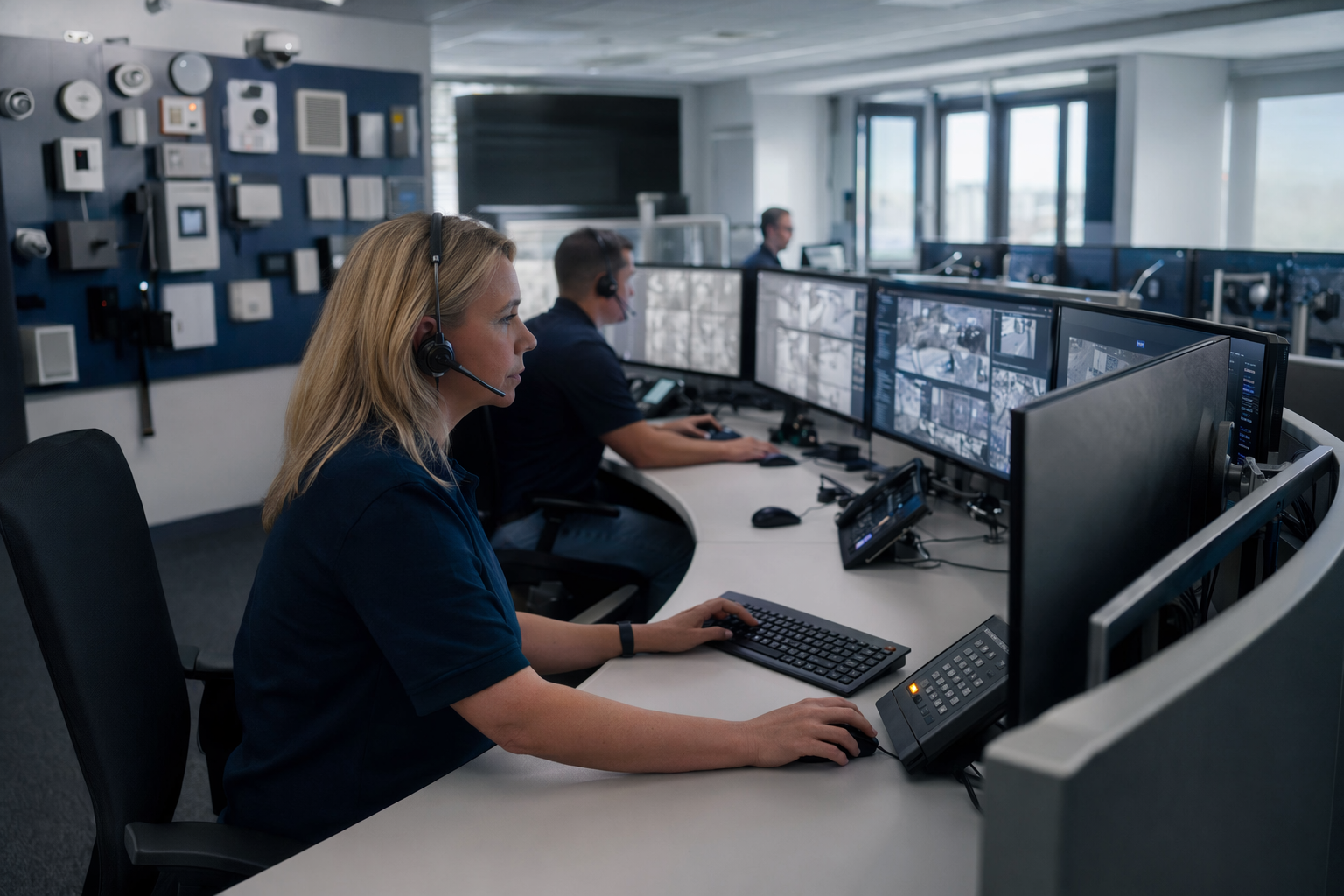
What happens in the seconds after a sensor trips
- 1A sensor trips. A door, window, motion, smoke, or heat sensor detects something and tells your control panel.
- 2The panel signals the central station. Within seconds the panel sends the alarm to a 24/7 monitoring center over cellular or internet — not just a siren in your house.
- 3An operator verifies. A trained operator reviews the alarm and makes a verification call to confirm it is real and not an accident.
- 4Help is dispatched. If it is real, the operator dispatches police or the fire department and keeps you informed. This is what 'monitored' means.
What “UL-listed central-station monitoring” means
In alarm monitoring, a central station is the place that receives alarm signals 24/7. A sensor trips, the control panel sends a signal to the central station, a trained operator reviews it, makes a verification call when the situation calls for it, and then contacts police or fire and notifies the customer.
When people say a monitoring center is "UL-listed," they usually mean the central station has been inspected and listed to UL standards for alarm monitoring. That listing is about the monitoring operation and facility. It is not the same thing as saying every alarm system, every installer, or every outcome is guaranteed.
A UL listing can matter because it shows the station has met defined requirements for things like signal handling, backup power, staffing, and operating procedures. It is one factor to check, not the only one.
Why the listing matters
Alarm monitoring is not just an app notification. The important part is what happens after the signal reaches the central station. You want a provider that can clearly explain where signals go, who answers them, how verification calls are handled, and whether the monitoring path includes cellular or dual-path communication.
A UL-listed central station has gone through outside review. For many buyers, that is helpful because it gives them a concrete question to ask instead of relying on a sales pitch. It can also matter for some commercial properties, insurers, or fire alarm setups that require more formal documentation.
Still, UL-listed does not mean "best for everyone." Cost, contract terms, cancellation language, local permit rules, false-alarm policies, and the equipment in your building all matter too. A provider should be willing to explain all of that in plain English.
What to ask a monitoring provider
Start with direct questions. Is your central station UL-listed? Is monitoring done by your own listed center or by a third-party monitoring company? Can you explain the signal path from my control panel to the central station? If my internet goes down, do you have cellular or dual-path backup?
Then ask about the operator side. Do operators place a verification call before dispatch when appropriate? How are fire signals handled? What account information can I put on file, such as call lists, gate codes, and special instructions?
After that, get into the contract. Monthly monitoring often runs about $20 to $60 for basic residential service, and more for fire systems, commercial accounts, video verification, or advanced cellular and dual-path setups. Equipment charges, activation fees, permits, and local taxes can change the total. Those are ranges, not quotes.
- Ask for the full monthly price, not just a teaser rate.
- Ask whether the contract auto-renews and how cancellation works.
- Ask if a “free” system requires a long monitoring commitment.
- Ask whether you may need a city alarm permit or face false-alarm fees.
Watch for common alarm-sales tactics
The alarm business has some sales habits that confuse people. One is the "free equipment" offer that turns into a long monitoring lock-in. Another is a low first-month price that rises later. Door-to-door pressure can be another problem, especially if the salesperson is vague about the company name, the monitoring center, or your cancellation rights.
Read the agreement carefully. Look for auto-renewal language, early termination fees, vague promises about service calls, and unclear wording about who actually does the monitoring. In some states, alarm-company solicitation is licensed and the rules vary by state.
If a provider says they use a UL-listed central station, ask them to identify it clearly and explain the arrangement. A straightforward provider should be able to answer without dodging.
How Signal Watch Central can help
Signal Watch Central is not an alarm company, not a monitoring center, and not a UL-listed central station. We do not install or monitor alarms. We provide general education and a free way to get matched with monitoring providers in your area.
If you want, we can help you find companies to ask about UL-listed central-station monitoring, pricing, contract terms, and equipment compatibility. You can also read more about how alarm monitoring works or browse other monitoring topics and guides in our learning center.
If you ask to be contacted, that should happen only after your prior express written consent through an unchecked box you choose to tick. That consent is not a condition of using our free service, and you can opt out at any time.
A UL-listed central station is a monitored alarm center that meets specific standards, and we can help you find providers to ask the right questions.
Common questions
Does UL-listed mean my home or business is guaranteed to be protected?
No. A UL listing is a certification related to the monitoring station and its standards. It does not guarantee that a break-in, fire, dispatch outcome, or response time will go a certain way.
Is a UL-listed central station required?
Sometimes it is preferred or required for certain commercial, fire alarm, or insurance situations, but not always. The right setup depends on the property, local rules, and the provider's monitoring arrangement.
How can I verify whether a provider uses a UL-listed monitoring center?
Ask the provider to name the central station and explain whether monitoring is done in-house or by a third party. You can also ask for documentation or listing details instead of relying on a verbal claim.
How much does UL-listed monitoring cost?
There is no single price. Basic residential monitoring may start around $20 to $60 per month, while commercial fire, dual-path communication, video features, and equipment costs can raise the total. The real number depends on equipment, the monitoring contract, and your area.
Will I get calls or texts if I use your matching service?
Only if you give prior express written consent through an unchecked box. That consent is not required to use the service, and you can opt out at any time.