24/7 burglar alarm monitoring
How professional 24/7 burglar alarm monitoring works, what a central station does when a sensor trips, and how to find a provider near you.
Open →Signal Watch Central
We explain how alarm monitoring works and help you find a monitoring provider that fits your home, business, or care needs. Our service is free to you.
Signal Watch Central is a free education and matching service. We are not an alarm company, we do not install systems, and we do not monitor alarms. We help you understand your options and connect you with a monitoring provider near you.
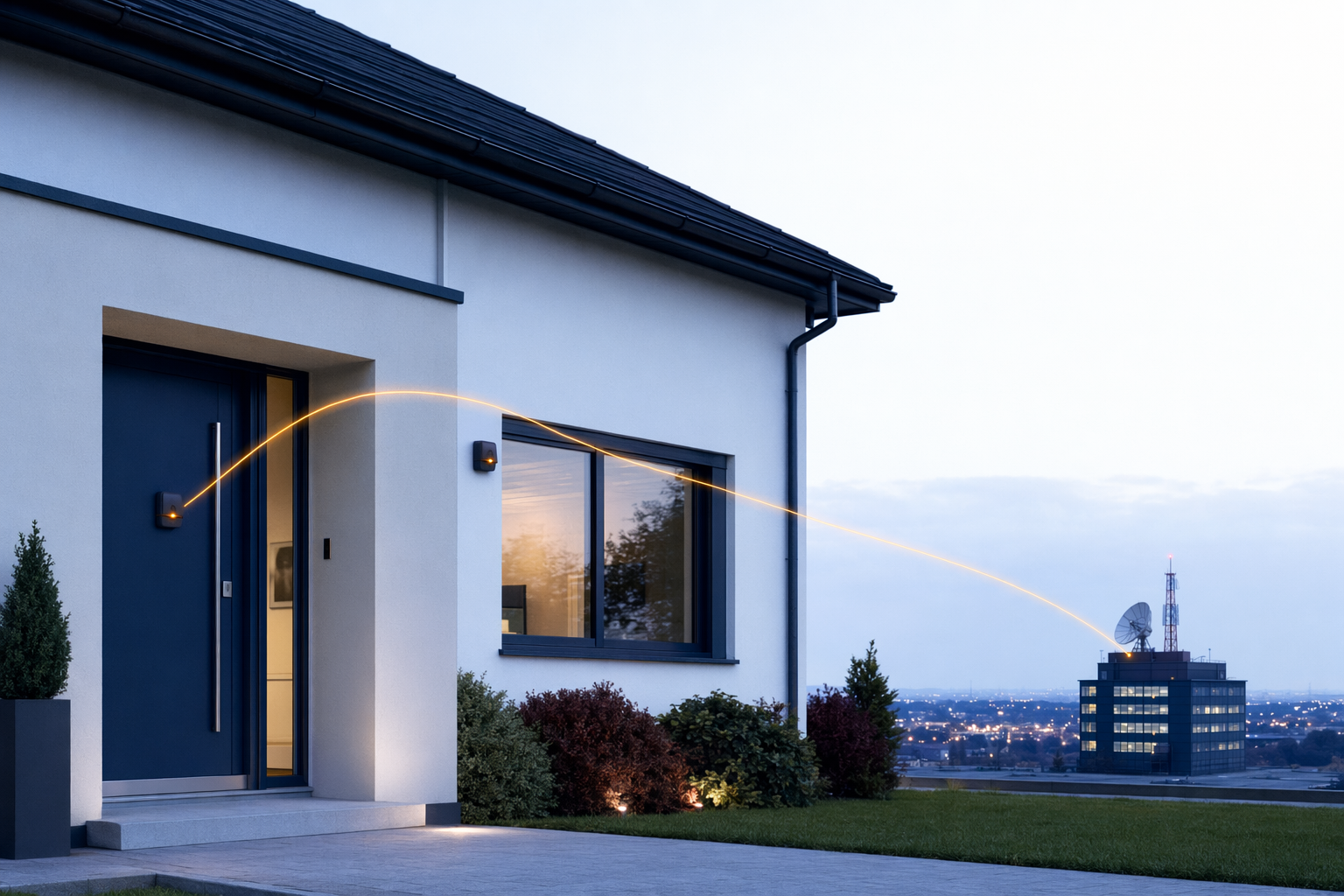
Alarm monitoring means a central station watches for signals from your system 24/7. A sensor trips, the control panel sends a signal to the central station, a trained operator tries to verify with a phone call, and then the operator contacts police, fire, EMS, or your listed contacts based on the signal and local rules.
We can help with 24/7 burglar alarm monitoring, fire alarm monitoring, central station monitoring, medical-alert monitoring, and environmental monitoring.
Some people need basic burglar monitoring for doors, windows, motion sensors, and panic buttons. Others need smoke, heat, and sprinkler supervisory signals sent to a central station. A family caring for an older adult may need a medical-alert button with two-way voice. A restaurant, server room, or vacant property may need water, temperature, freezer, sump, or power-loss alerts.
The right setup depends on the property, the equipment already installed, and how signals reach the central station. Many systems now use cellular or dual-path communication, such as internet plus cellular backup. Older systems may still use a phone line, but many people want a more reliable path than plain POTS service.
If you already have an alarm panel, a provider may be able to monitor it without replacing everything. If the panel is locked, outdated, or not compatible, they may suggest a communicator swap or a new panel. That is why real pricing usually starts with a few questions about the equipment and address.
We keep the process simple. You tell us what kind of monitoring you need, whether you already have equipment, and where the property is located. Then we help you find a participating monitoring provider that serves your area.
If you want to be contacted, that happens only after your prior express written consent. That consent should be a clear, unchecked box that you choose to tick. It is not a condition of using our free service, and you can opt out at any time.
That consent is also the place where calls, texts, or prerecorded or autodialed contact would be disclosed if offered by a provider. We do not assume consent, and we do not treat silence or a prechecked box as permission.
Alarm sales can get confusing fast. Some offers advertise a free system but make up the cost with a long monitoring lock-in. Some contracts renew automatically unless you cancel in a narrow time window. Door-to-door sales can add pressure, and cancellation language is sometimes vague on purpose.
Ask whether the provider uses a UL-listed central station or contracts with one. Ask how verification calls work, what dispatch procedures apply in your city, whether the system supports crash-and-smash protection, and whether the communicator is cellular, internet, or dual-path. If you rent, ask what stays with the property and what you can take.
Also ask whether state or local licensing applies to sales and installation in your area. Rules vary by state, and some states license alarm-company solicitation. A good provider should be able to explain the local permit and licensing picture in plain language.
We are here to help you understand monitoring and find a provider. We are not a central station, not a UL-listed monitoring center, and not the company that will install, service, or monitor your alarm.
The service is free to readers. Participating providers pay us a flat marketing fee. That does not change the basics you should check for yourself: contract terms, total cost, equipment compatibility, permit requirements, and how the central station handles signals.
If English is not your first language, that is fine. We try to explain the process in plain words so you can compare your options and ask better questions before you agree to anything.
How professional 24/7 burglar alarm monitoring works, what a central station does when a sensor trips, and how to find a provider near you.
Open →How monitored smoke and heat detectors alert a central station and the fire department, and how to find UL-listed fire alarm monitoring.
Open →What a UL-listed central monitoring station is, why the listing matters, and how to find a provider whose monitoring center is certified.
Open →How monitored medical alert and panic buttons reach a 24/7 operator, who they call, and how to find a provider for an older or vulnerable household member.
Open →How monitored sensors for water leaks, freezing pipes, and carbon monoxide alert a central station, and how to add them to a monitored system.
Open →We explain central-station alarm monitoring and help you find a provider, for free, without selling or monitoring alarms ourselves.
No. We do not install or monitor alarms. We provide general education and help connect you with a monitoring provider.
In a typical monitored setup, a sensor trips, the control panel sends a signal to the central station, and an operator tries to verify with a phone call. Based on the signal type and local rules, the operator may then dispatch police, fire, EMS, or notify your contact list.
No. Contact happens only with your prior express written consent through a clear unchecked box that you choose. Consent is not a condition of any service, and you can opt out at any time.
It depends on the equipment, contract, communication path, and your area. Home burglar monitoring is often around $20 to $60 per month, but fire, medical-alert, and environmental monitoring can differ, and equipment or activation costs may be extra.
Sometimes yes. If your panel is compatible and not locked down, a provider may be able to take it over. If not, they may recommend a new communicator or panel.
Maybe. Many cities and counties require alarm permits, and some charge false-alarm fees. The rules depend on where the property is located.
Learn what happens when your alarm trips, then get matched, free, with monitoring providers near you. You compare and choose who to hire — and you confirm the price and contract term before you sign.