Guides
What Alarm Monitoring Really Costs
Alarm monitoring is the monthly service that sends your alarm signals to a central station 24/7. This guide explains what people in the US often pay, what changes the price, and where the real extra costs show up.
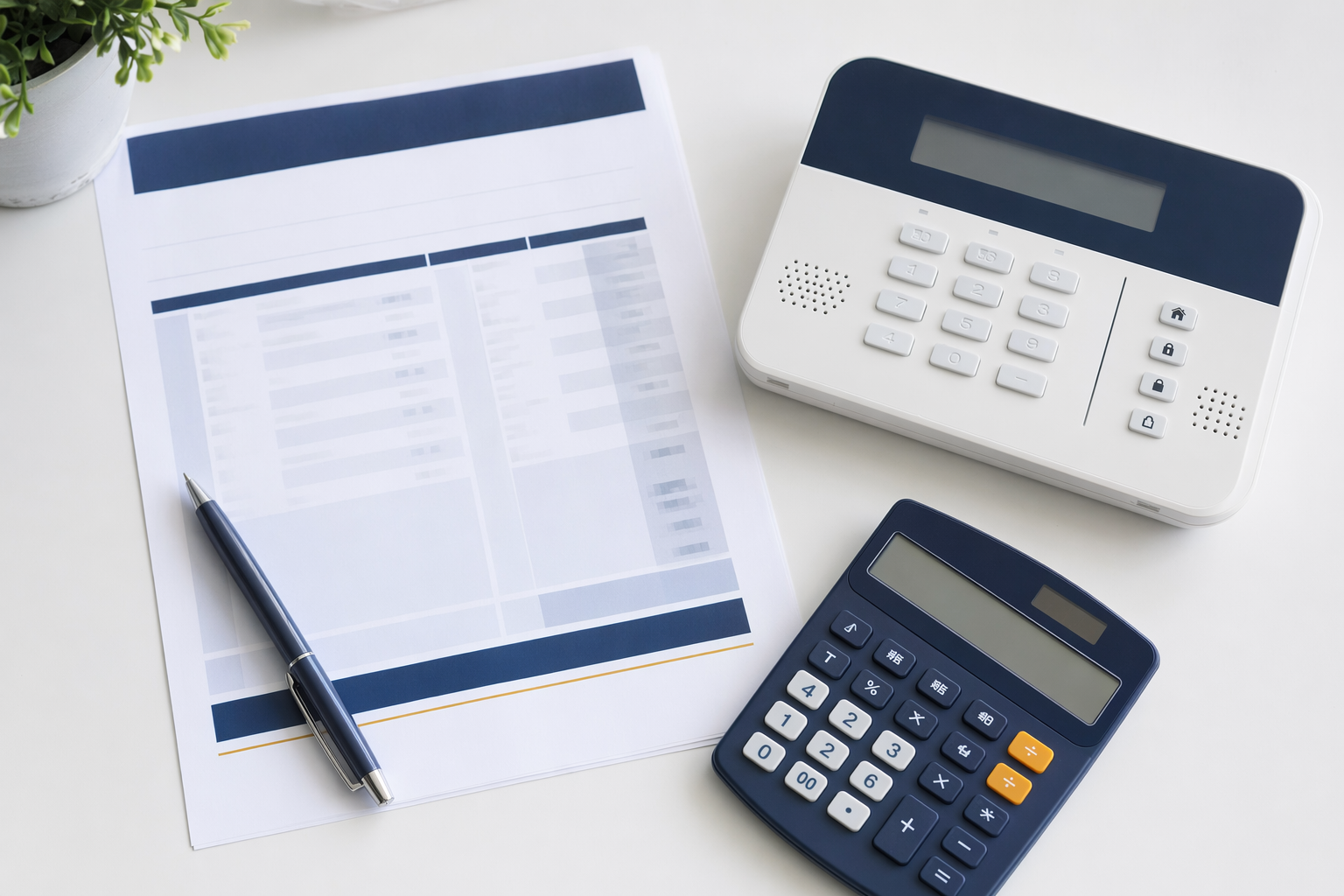
What you are paying for
Alarm monitoring is not the same as buying sensors, cameras, or a control panel. The monitoring fee pays for a central station to receive alarm signals, have a trained operator review them, place a verification call when appropriate, and contact police or fire if the situation meets the provider's procedures.
The basic signal path is simple. A door contact, motion, smoke detector, or other sensor trips. The control panel sends that signal, often by cellular, internet, or both, to the central station. An operator then follows the account instructions, which can include calling the premises or listed contacts before dispatch.
That monthly bill usually covers the monitoring part only. Equipment, installation, service calls, permits, and false-alarm fees are often separate.
Typical monthly price ranges
For a home in the United States, basic burglar alarm monitoring often lands around $20 to $45 per month. If the system uses cellular service, app access, automation features, or dual-path communication such as internet plus cellular backup, many plans move into the $30 to $65 range.
If fire alarm monitoring is included, the monthly price can be higher. A home system with monitored smoke or heat detection may run roughly $35 to $70 per month, depending on the panel, communication path, and local requirements. For small businesses, pricing often starts higher because there may be more zones, opening and closing signals, and different dispatch instructions.
These are ranges, not quotes. The real number depends on the equipment already installed, the monitoring contract, the area, and whether the provider can use your existing panel. If you want help comparing local options, we help you find a monitoring provider at no cost to you.
Upfront costs people miss
The monthly charge is only part of the picture. Many households and small businesses also pay for equipment, activation, installation, panel upgrades, or communicator replacement. If an older panel cannot send signals the way a provider needs, you may need a new cellular communicator or a full panel swap.
Common upfront costs can range from $0 on a promotion to a few hundred dollars for a simple takeover, and more if the system needs new sensors, smoke detectors, or wiring work. A small business with multiple doors, glassbreak sensors, fire devices, or access control can be much higher.
Also ask about permit costs. Some cities and counties require an alarm permit, sometimes with annual renewal fees. If a false alarm leads to police dispatch, the city may charge a separate false-alarm fee. That money usually does not go to the monitoring provider.
Why one provider costs more than another
The communication path matters. A panel that reports by plain internet may cost less than one with cellular backup, and dual-path reporting usually costs more because there is more infrastructure behind it. UL-listed central station arrangements, supervised signals, and commercial fire requirements can also change the price.
Service level matters too. Some accounts include only basic signal handling. Others include app controls, history logs, open-close reports, test signals, after-hours contact lists, and more detailed call procedures. For small businesses, the difference between a simple burglar account and a more customized monitored account can be significant.
Contract terms are another big factor. A lower monthly rate may come with a long agreement, automatic renewal language, early termination charges, or strict cancellation rules. A month-to-month plan may cost more per month but less over time if your needs change.
Sales tactics to watch for before you sign
Read the full agreement, not just the monthly price on the first page. In alarm sales, common problem areas include long auto-renewing contracts, "free" systems that make sense only if you keep an expensive monitoring plan for years, door-to-door pressure, and vague cancellation terms.
Ask direct questions. Is the quoted price for monitoring only, or does it include equipment financing? How long is the contract? Does the rate change after the first year? What happens if you move? Is there a fee to cancel? Is service work included? Will the provider reuse your current panel, or are they replacing everything?
If you are comparing options, learn more about 24/7 burglar alarm monitoring and then get quotes in writing. We are not an alarm company or a monitoring center. Signal Watch Central provides general education and free matching with participating providers, and we are paid a flat marketing fee by those providers.
How to compare prices without getting lost
Start with the total first-year cost, not just the monthly number. Add setup, equipment, installation, permit costs, and any required communicator. Then compare what communication path you are getting, whether the system includes fire signals, and what the cancellation terms say.
It also helps to ask whether the monitoring will be handled by a central station that is UL-listed, and whether your panel will use cellular, internet, or dual-path reporting. If you are in a state with alarm-company licensing rules for sales or solicitation, remember that rules vary by state.
If you want a simpler starting point, browse our alarm monitoring guides or get matched with a provider in your area. If you ask to be contacted, that contact should happen only after your prior express written consent through an unchecked box you choose to tick. Consent is not a condition of any service, and you can opt out at any time.
Alarm monitoring usually means a monthly central-station fee plus possible equipment, installation, permit, and contract costs, so compare the full first-year price, not just the ad.
Common questions
Is alarm monitoring the same thing as owning an alarm system?
No. The alarm system is the equipment on site. Monitoring is the separate service that receives alarm signals at a central station and follows the account instructions.
What is a normal monthly cost for home alarm monitoring?
Many home plans fall around $20 to $45 per month for basic burglar monitoring, with higher prices for cellular, app features, dual-path communication, or monitored fire devices. The actual price depends on the equipment, the contract, and your area.
Why do some companies advertise a free alarm system?
Often the equipment cost is built into a longer monitoring agreement or a higher monthly rate. Always check the full contract term, renewal language, and cancellation fees.
Do I need a permit for a monitored alarm?
Maybe. Many cities and counties require alarm permits, especially for police dispatch, and some charge false-alarm fees. Check your local rules before you sign.
Can I keep my current alarm equipment and just change monitoring?
Sometimes. A provider may be able to take over an existing panel, but compatibility is not guaranteed. Older systems may need a new communicator or panel upgrade.
Will I get calls or texts if I ask to be matched?
Only if you give prior express written consent through an unchecked box that you choose to tick. That consent is not required to use any service, and you can opt out at any time.