Guides
How Alarm Monitoring Works, Step by Step
Alarm monitoring is a 24/7 “watching” service. This guide walks you through the signal path from your sensors to a central station operator, and then to the right local contact if an alarm occurs.
1) The basics: what “alarm monitoring” means (and what it doesn’t)
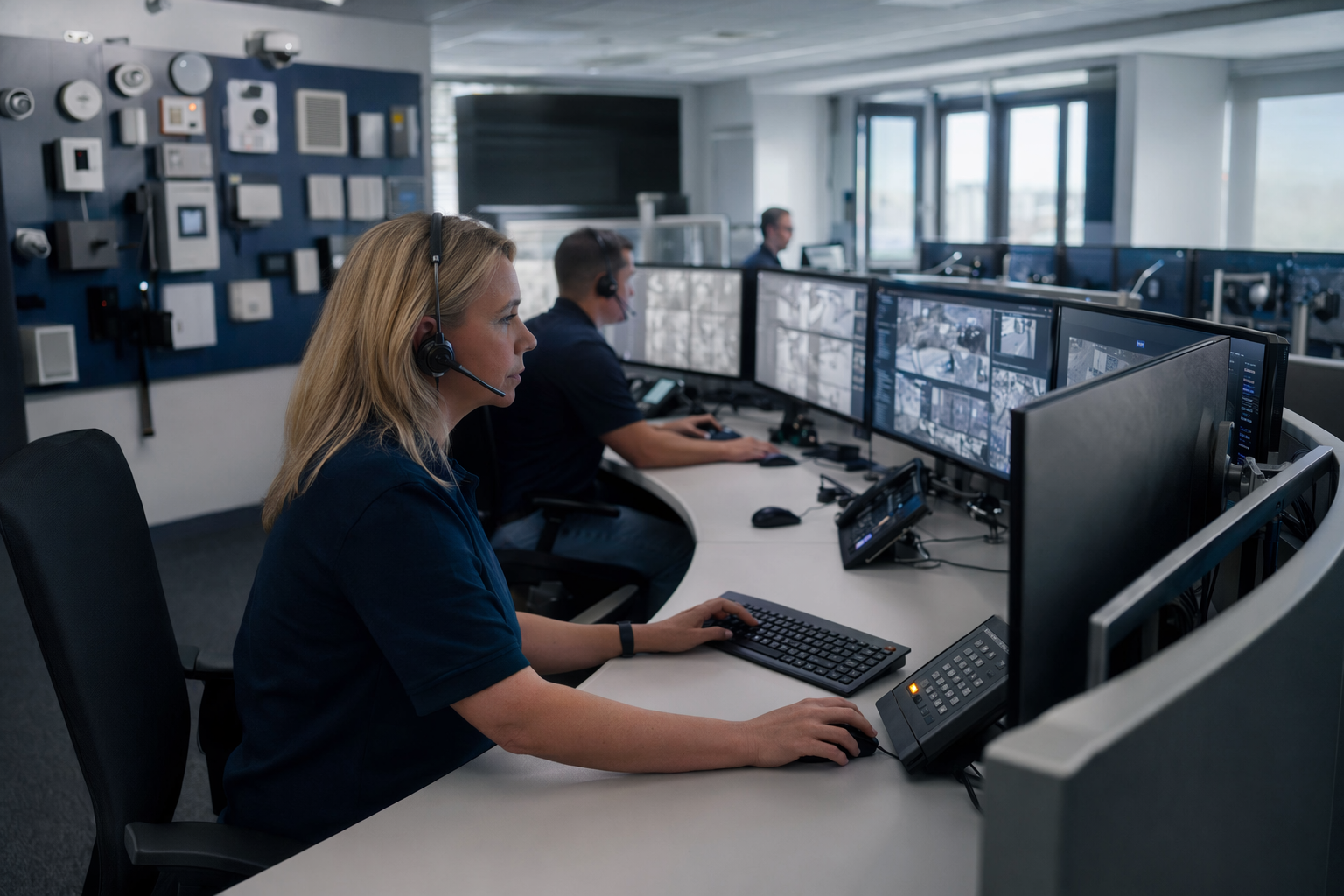
Alarm monitoring usually means a central station watches your alarm system 24/7. If a sensor trips, the system sends a message to the monitoring center, where a trained operator verifies the alarm and follows a set process.
Signal Watch Central is free and helps you find a monitoring provider near you. We are not an alarm company, we do not install or monitor alarms, and we are not a UL-listed central station.
Monitoring is not the same thing as a guard who stands at your door. It is also not a guarantee that someone will arrive in a certain time or that a fire or break-in can always be prevented.
2) Step by step: the signal path from your home to the central station
Here’s a common “how it works” chain, using everyday terms. Your exact equipment and provider setup can vary, but the flow is usually similar.
1) A sensor trips. Examples include a door/window contact, motion detector, glass-break sensor, smoke detector, or other listed device.
2) Your control panel signals the central station. The control panel confirms the event and sends an alert using one or more communications paths (for example, phone line, cellular, or broadband). Some systems use “dual-path” or backup communications.
3) The central station receives the alert. The operator sees the type of alarm (for example, burglary or fire) and the zone or device that triggered it, along with your account details.
4) The operator verifies and calls you if needed. Many providers use a verification step, which often means a phone call to the listed contact(s). If you answer and confirm it’s false, the operator may cancel further action based on your monitoring plan.
5) If it’s confirmed or can’t be verified, the provider notifies local responders. For burglary, this often means contacting police. For fire, it typically means notifying fire services. The operator may also contact additional people you listed, such as a backup contact.
6) Documentation and follow-up. After an event, the monitoring provider records what happened. Some providers also discuss next steps with the customer.
3) Central station verification: why the phone call matters
Verification is the part that helps reduce false alarms. A verification call is common, especially for burglary alarms. If someone recently entered the home, there may be a simple reason for the alarm, like a door opened late or a user exiting the wrong way.
Verification methods can vary. Some accounts use scheduled call windows, some use voice verification, and some rely on system status details from the control panel. Ask the provider you’re considering how their verification works and when they call.
Important: verification does not mean “no mistakes.” Alarms can still be triggered accidentally, equipment can fail, and communications can drop. Your settings, the installation, and the communications path all affect outcomes.
4) Communications paths: landline, cellular, and dual-path backup
An alarm is only as reliable as the message path. Many systems connect to the central station through one or more methods.
Common options include:
- Landline (telephone line): Traditional, but it can be vulnerable to outages.
- Cellular: Uses a cellular connection, often with a dedicated module.
- Broadband/IP: Uses internet connectivity.
- Dual-path (backup): Uses two paths so that if one fails, the system can try the other.
When you compare monitoring providers, ask what communications path(s) they support for your system and whether there is backup. Also ask what happens if the connection is lost. Some providers have procedures for “trouble” signals or repeated attempts.
If you want to understand what you may need for 24/7 burglary alarm monitoring, look for details about the communications method and the monitoring process, not just the price.
5) Types of alarms and how the process can differ
Burglary alarms and fire alarms are not handled exactly the same way in real life.
Burglary monitoring often includes steps like entry/exit delay settings, operator verification, and a call to the customer before dispatch. If the alarm is confirmed, the operator may notify police and notify listed contacts.
Fire and life-safety alarms generally prioritize notification. A smoke or heat alarm can trigger immediately, and the operator may proceed with contacting fire services based on your account terms and the nature of the event.
Because local rules and the provider’s standard procedures can differ, it’s worth asking a monitoring provider for their event flow for both burglary and fire. You can also ask what counts as a “verified” alarm in their process.
6) Cost, contracts, and what to watch for before you sign
Pricing varies a lot. You might pay for the monitoring service only, or you might also pay for equipment, installation, or ongoing fees depending on the system. Real-world monitoring costs depend on things like your equipment, contract terms, communications method, and the area.
As a rough planning guide (not a quote), many households see monthly monitoring charges that can range from about $20 to $60+ per month. Some setups have extra costs, such as setup fees, false-alarm fees in some cities, equipment fees, or optional add-ons.
Be cautious about common alarm-sales tactics:
- Long auto-renewing contracts that are hard to cancel.
- “Free” equipment offers that lock you into higher monitoring costs.
- Vague cancellation terms, long notice periods, or cancellation “penalties.”
- Door-to-door pressure or high-pressure phone calls.
- Monitoring fees that look simple at first, but include extra charges later.
Signal Watch Central can help you compare options and get connected with a monitoring provider that fits your situation. If you want to start, see get matched.
Also note: some states license alarm-company solicitation. Rules vary by state, so check local requirements before anyone promises coverage or signs you up.
Your alarm sensors trigger your control panel, which sends an alert to a central station operator, who may verify by phone and then notifies the right local responder based on the alarm type.
Common questions
Do alarm sensors send the alert directly to the police or fire department?
Usually no. Sensors trip the alarm system, and the system sends a message to the central station. A trained operator then follows the monitoring process, which can include verification, and only then the operator notifies responders.
What does the operator do during an alarm?
The operator reviews the alert details, then may verify by calling the customer or using account information. If it can’t be verified or it’s confirmed, the operator notifies the right local contacts or emergency services based on the type of alarm.
What is dual-path, and why does it matter?
Dual-path means the system can use two communications routes, such as cellular plus broadband, to reach the central station. If one path fails, the system can attempt the backup path.
How much does monitoring cost?
There isn’t one standard price. Monitoring cost depends on your equipment, the monitoring contract, communications method, and your area. Many households pay somewhere around $20 to $60+ per month, with possible additional fees.
Can I avoid annoying calls if there’s a false alarm?
You can often reduce issues by setting correct entry/exit delays, keeping your contact info current, and asking the provider how their verification calls work. Some providers also offer user-related settings, but your account options depend on the monitoring plan.
Is Signal Watch Central a monitoring center?
No. We’re a free matching service that helps you find a monitoring provider. We don’t install equipment and we don’t watch alarms ourselves.