Guides
How does a monitored alarm call for help
A monitored alarm does not call 911 by itself. In most systems, the alarm panel sends a signal to a 24/7 central station, where an operator checks the event, makes a verification call, and then contacts police or fire if needed.
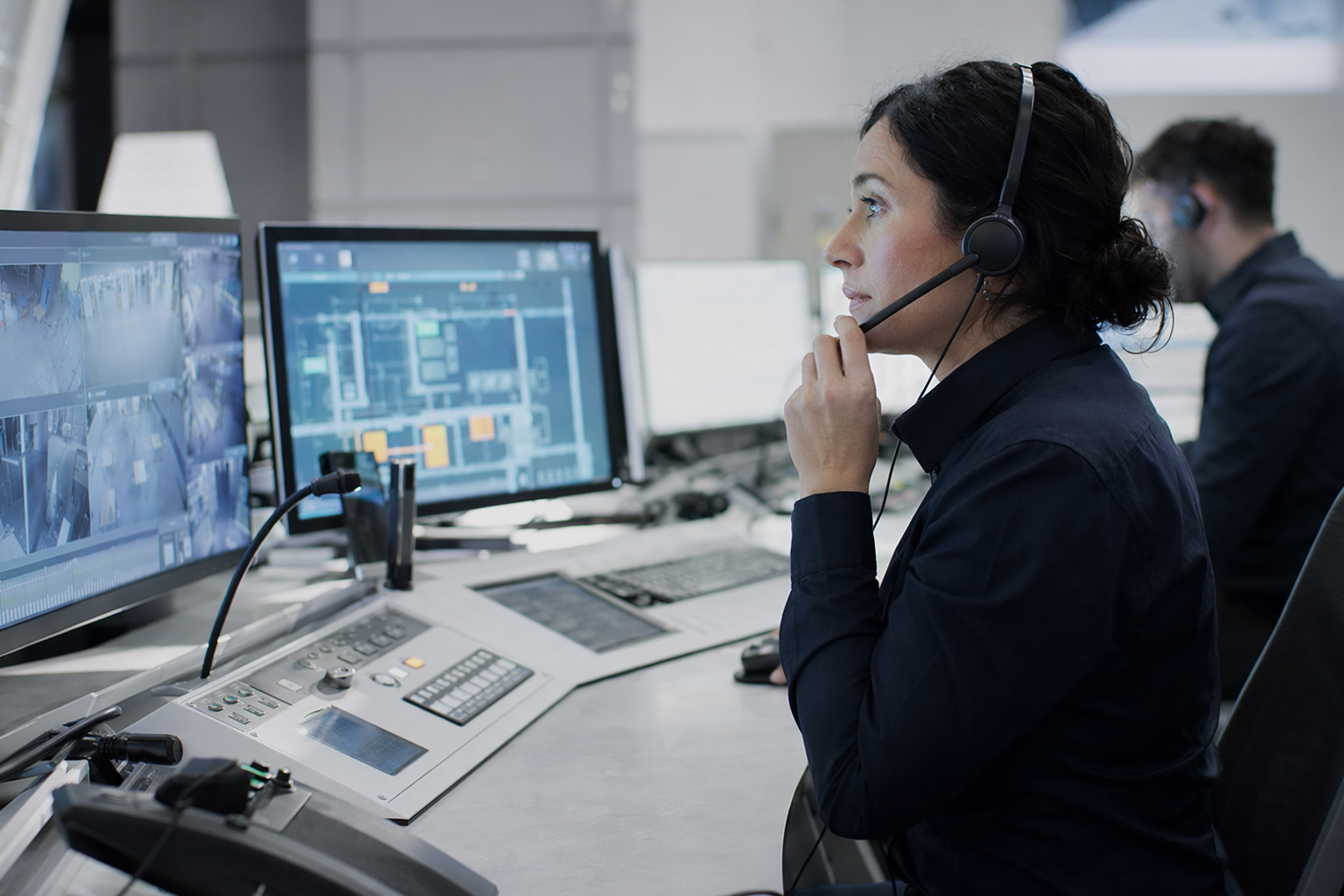
What happens after a sensor trips
A monitored alarm follows a simple path. A door contact, motion sensor, smoke detector, or other device trips. The control panel reads that event and sends a signal to a central monitoring station.
At the central station, software shows the account, the event type, and the contact list. A trained operator reviews the signal and follows the account instructions. For burglary signals, that often means a verification call first. For some fire signals, the operator may call the fire department right away and then notify the customer, depending on local rules and the account setup.
If the event appears real, the operator asks the local dispatcher for police or fire service and then contacts the customer or emergency contacts. That is what people mean by alarm monitoring. It is not a siren alone, and it is not a private security guard driving to your home.
How the signal gets from your home or business to the central station
Older systems often used a landline. Many current systems use cellular service, internet, or both. A common setup is dual-path communication, such as cellular plus broadband, so the panel has a backup route if one path fails.
The panel sends coded event data, not a spoken phone call like a person dialing from a handset. That data can say things like front door burglary zone, smoke detector on the second floor, low battery, AC power loss, or tamper.
The exact path depends on the equipment and the service plan. If you are comparing options, ask whether the monitoring is cellular-only, internet-only, or dual-path. Also ask whether the monitoring center is UL-listed central station monitoring or uses a listed partner, because that affects how some systems are evaluated.
Why operators make a verification call
A verification call helps sort out real alarms from accidental trips. If you open a protected door by mistake, forget the code, or set off a motion sensor while the system is armed, the operator may call the primary number on the account and ask for the verbal password.
If the correct password is given, the operator can usually cancel the dispatch request if one has not already been made. If no one answers, the wrong password is given, or the event looks serious, the operator follows the next step in the instructions. That may include calling the police, the fire department, and then your contact list.
Verification is important because many cities charge false-alarm fees, and some require verified response rules for burglary calls. You may also need a local alarm permit. Those rules vary by city and county.
Burglar alarms and fire alarms are handled a little differently
For a burglary signal, the normal process is signal, verification call, then dispatch if needed. Some systems also support video verification, audio verification, or enhanced call verification to reduce unnecessary dispatches.
For fire signals, operators usually follow stricter procedures. Smoke and heat events are treated differently from a simple door opening because the risk profile is different. The operator may contact the fire department quickly and then call the customer and emergency contacts.
Medical pendants and panic buttons have their own handling rules too. The important point is that the central station is reading event codes from the panel and following the account instructions for that event type.
What monitoring costs, and what to watch for
In the US, home alarm monitoring often runs about $15 to $65 per month. Fire monitoring, business accounts, video features, and dual-path communication can cost more. Equipment, activation, permit fees, and service calls may be separate. These are ranges, not quotes. The real number depends on the equipment, the monitoring contract, and your area.
Read the agreement carefully. Common alarm-sales tactics include long auto-renewing contracts, a "free" system tied to costly monitoring, vague cancellation terms, and door-to-door pressure. Ask for the full monthly price, contract length, renewal terms, cancellation steps, equipment ownership, and whether a permit is required.
If you want help comparing options, Signal Watch Central does not install or monitor alarms. We provide general education and a free way to get matched with a monitoring provider near you. If you ask to be contacted, that contact should happen only with your prior express written consent through an unchecked box you choose to tick. Consent is not a condition of any service, and you can opt out at any time. State licensing rules for alarm solicitation vary.
A monitored alarm sends a signal from your panel to a central station, where an operator checks it, calls to verify, and contacts police or fire if needed.
Common questions
Does my alarm system call 911 directly?
Usually no. In a monitored setup, the panel sends a signal to a central station, and a trained operator contacts police or fire if the event meets the dispatch rules.
Will the monitoring center always call me first?
Not always. Many burglary alarms get a verification call first, but some fire, panic, or duress events may be handled under faster dispatch procedures based on the account instructions and local policy.
What if my internet goes down?
If your system uses cellular backup or dual-path communication, the panel may still be able to send signals. If it is internet-only, an outage can interrupt reporting until service returns.
Do I need a permit for a monitored alarm?
Maybe. Many cities and counties require an alarm permit, especially for burglary systems, and some charge false-alarm fees. Check local rules before activation.
Is a loud siren the same as monitoring?
No. A local siren makes noise on site. Monitoring means a central station receives alarm signals 24/7 and an operator follows the account instructions.
Can Signal Watch Central monitor my alarm?
No. We are not an alarm company or a monitoring center. We offer plain-language information and can help you find a monitoring provider if you want to compare options.