Monitoring
environmental and water-leak monitoring
Environmental and water-leak monitoring adds sensors for water, freezing temperatures, and carbon monoxide to a monitored alarm system. The sensor trips, the panel sends a signal to a central station, and a trained operator follows the system’s rules.
What happens in the seconds after a sensor trips
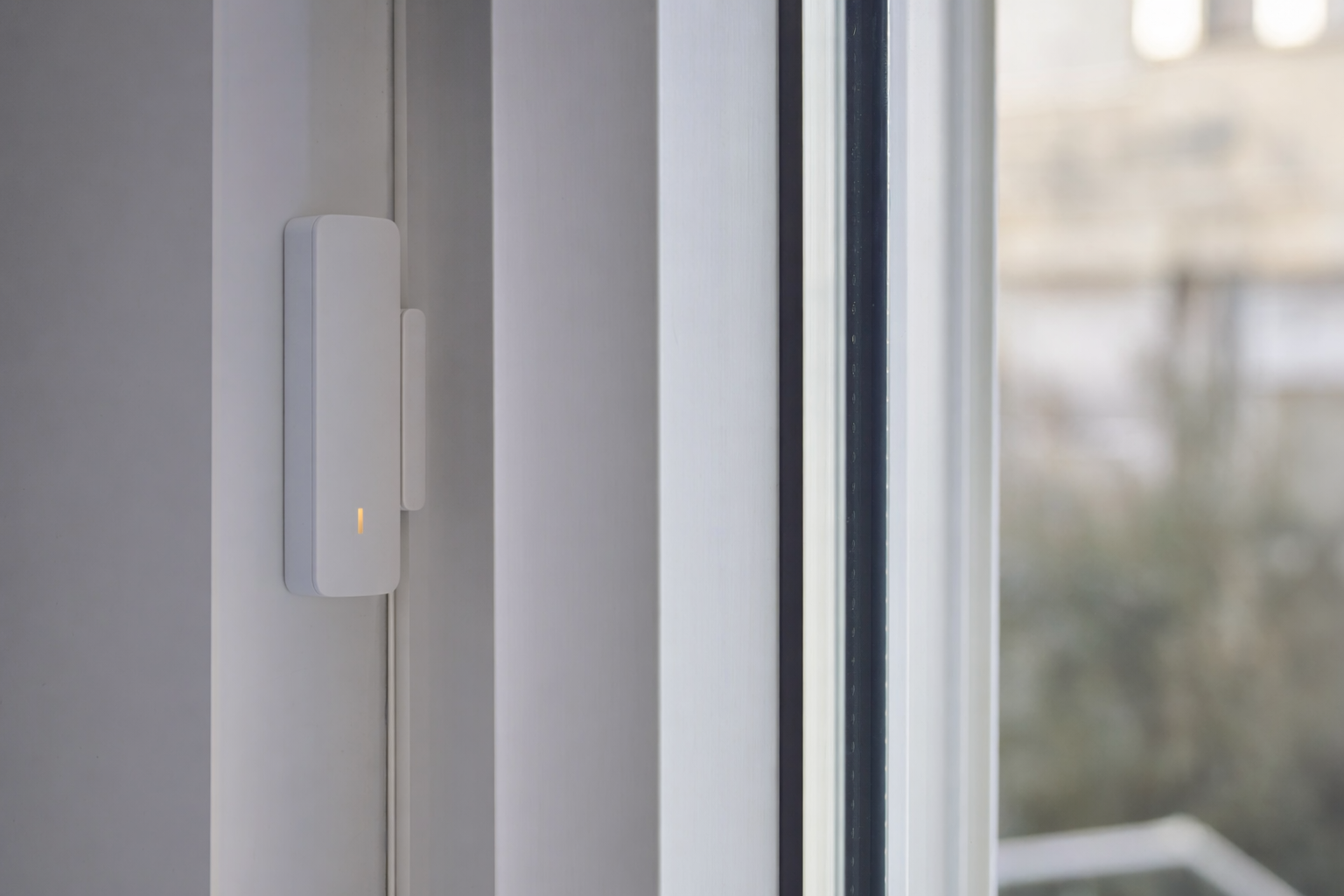
- 1A sensor trips. A door, window, motion, smoke, or heat sensor detects something and tells your control panel.
- 2The panel signals the central station. Within seconds the panel sends the alarm to a 24/7 monitoring center over cellular or internet — not just a siren in your house.
- 3An operator verifies. A trained operator reviews the alarm and makes a verification call to confirm it is real and not an accident.
- 4Help is dispatched. If it is real, the operator dispatches police or the fire department and keeps you informed. This is what 'monitored' means.
What this kind of monitoring does
Environmental monitoring uses sensors that look for trouble inside a building, not security guards. Common devices detect water on the floor, low temperatures that can freeze pipes, and carbon monoxide, which is a dangerous gas you cannot see or smell.
If a sensor trips, the control panel sends a signal to the monitoring provider’s central station. An operator may verify the signal with a phone call or other required step, then dispatch fire or other emergency help if the event calls for it and notify the customer.
This is alarm monitoring, not general safety advice and not a guarantee. It is one more layer in a larger plan for a home, rental, or small business.
Common sensors and where they help
Water-leak sensors are often placed near water heaters, sinks, laundry machines, sump pumps, and basements. They can help identify a leak early, before it spreads across floors or into walls.
Freeze sensors are used in crawl spaces, attics, garages, and other areas that can drop below a chosen temperature. They are often paired with pipe insulation and winterizing steps, because a sensor is not a substitute for maintenance.
Carbon monoxide detectors are usually installed where the code and the monitoring provider’s rules allow. Some systems use dedicated CO sensors that send an alarm signal to the central station. Others use the built-in detector and panel integration. The exact setup depends on the equipment and the monitoring contract.
How the signal path works
The basic path is simple: a sensor trips, the control panel communicates with the central station, and the station follows its verification and dispatch procedures. That can be over cellular, internet, or a dual-path setup that uses both.
Dual-path and cellular monitoring are common because they do not rely only on a landline. The right setup depends on the panel, the property, and what the provider supports.
If you are comparing providers, ask how they handle water, freeze, and carbon monoxide events. Ask whether they use verification calls, what counts as an alarm condition, and whether the system can send both emergency and customer notifications.
Costs, contracts, and what to watch for
Monitoring for environmental sensors is often added to an existing plan. A basic monthly monitoring price may start around $20 to $35, and plans with more zones, cellular service, or commercial features can run roughly $35 to $60 or more per month. Hardware costs vary a lot. A single water sensor may be modest, while a full retrofit can cost more.
Those ranges are not quotes. The real number depends on the equipment, the monitoring contract, the number of sensors, and your area. Some states also license alarm-company solicitation, and the rules vary by state.
Be careful with long auto-renewing contracts, “free” systems that lock you into expensive monitoring, door-to-door pressure, and vague cancellation terms. Ask for the full contract in writing before you sign.
How Signal Watch Central helps
We are not an alarm company, a monitoring center, or a UL-listed central station. We do not install, monitor, or guarantee anything. We provide free education and help you find a monitoring provider near you.
If you want to compare providers, start at Services or read more at How it works. You can also learn about monitoring basics and get matched with a participating provider.
If a provider contacts you, it happens only after your prior express written consent, such as an unchecked box you choose to tick. Consent is not a condition of any service, and you can opt out at any time. We are paid a flat marketing fee by participating providers, and our service is free to you.
These sensors tell a central station about water, freezing, or carbon monoxide problems, and we help you find a monitoring provider that offers them.
Common questions
Can water-leak sensors call the fire department?
Usually no. Water-leak sensors are designed to signal a monitoring provider when water is detected, and the provider follows its own procedures. Fire dispatch is more common for fire or carbon monoxide events, not a simple water alarm.
Do freeze sensors replace winterizing pipes?
No. Freeze sensors can warn you about cold conditions, but they do not stop pipes from freezing. Insulation, heat, and maintenance still matter.
Is carbon monoxide monitoring the same as a smoke alarm?
No. Carbon monoxide and smoke are different hazards, and they use different sensors. Many systems can monitor both, but the panel and central station rules must support each one.
How much does environmental monitoring cost?
It is often added to an existing monitoring plan, so the monthly cost can be relatively small. A common range is about $20 to $60 or more per month, plus equipment and installation, but the final price depends on the provider, the contract, and the number of sensors.