Guides
What is a duress code
A duress code is a secret code you can enter on an alarm keypad if you are being forced to disarm the system. It can signal the central station that you need help, without alerting the person standing next to you.
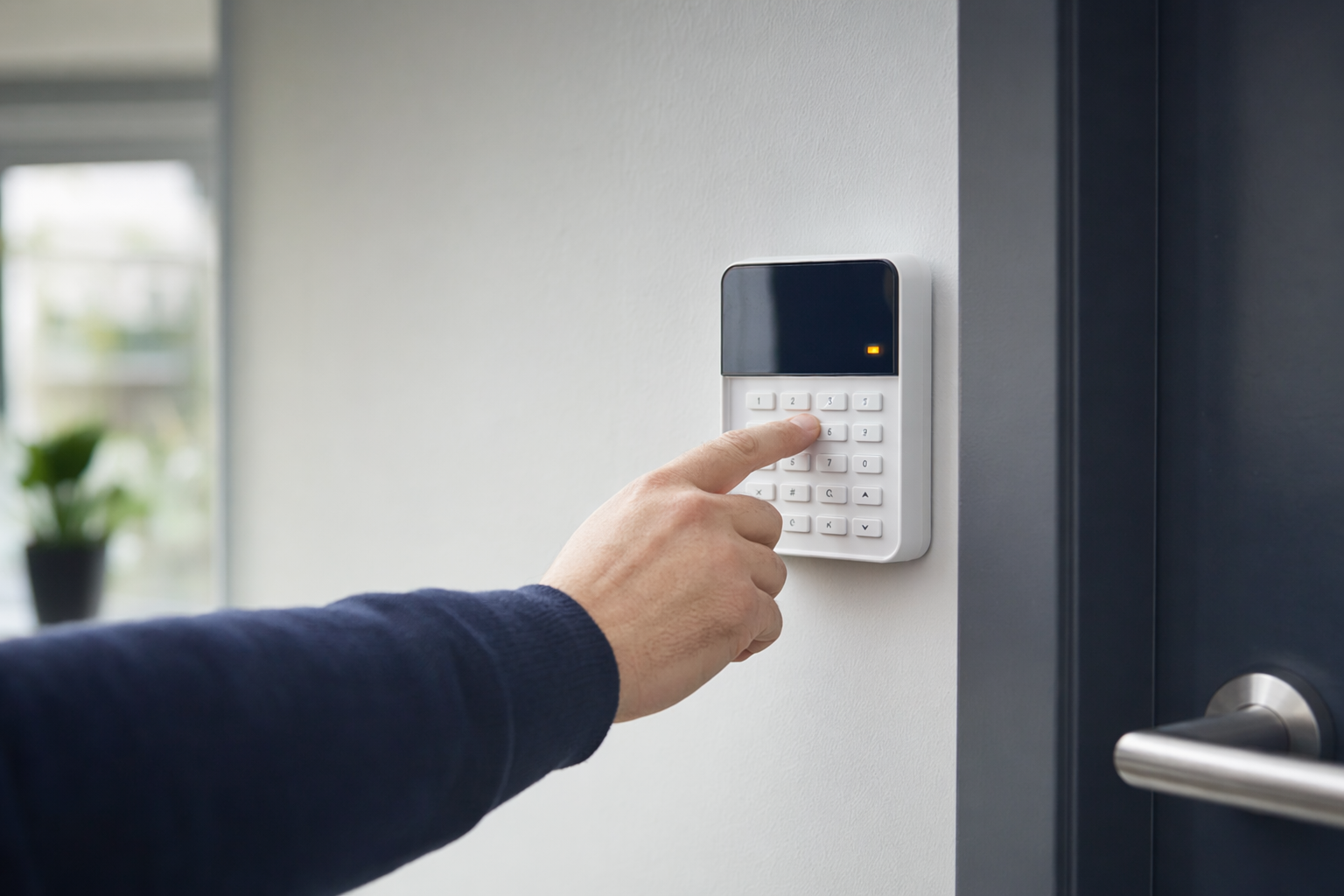
What a duress code does
A duress code is also called a panic code or hold-up code in some systems. It is not the same as your normal disarm code. If someone makes you open the keypad under pressure, you enter the duress code instead of the real code.
On many systems, the panel sends a special signal to the central station. A trained operator sees that signal and follows the company’s verification process. That can include a phone call to the premises or to listed contacts. If the situation appears real, the operator may dispatch police and notify the customer, based on the monitoring company’s procedures and local rules.
It is important to understand the limits. A duress code does not stop an intruder by itself. It is only part of an alarm monitoring setup. For the basic signal path, see central-station monitoring.
How it fits into alarm monitoring
A typical monitored alarm system works like this: a sensor trips, the control panel sends a signal to the central station, an operator checks the signal and may make a verification call, and then the operator contacts police or fire if needed and notifies the customer.
A duress code uses that same monitoring path, but the signal means something different. The person entering the code is telling the monitoring company that they may be under threat. Because of that, many providers treat it as a priority event and follow special instructions on the account.
Not every panel or monitoring plan supports the same features. Some systems use one duress code. Some use multiple user codes with different permissions. Ask the provider to show you exactly how the feature works before you sign anything. If you want help comparing providers, use get matched.
Things to ask before you choose a provider
Ask whether the duress code is enabled by default, whether it sends a silent signal, and what happens after the signal reaches the central station. Also ask how the provider handles verification calls, if they can notify only certain contacts, and whether the system supports cellular or dual-path communication.
Get the contract details in writing. Alarm sales often include long auto-renewing contracts, "free" equipment with expensive monitoring lock-in, door-to-door pressure, and vague cancellation terms. Those terms matter more than the ad copy.
Costs vary. A basic monitored plan may run about $15 to $40 per month, while plans with more features or service options can run higher. Equipment, the monitoring contract, and your area all affect the price, so those ranges are not quotes. Some states also license alarm-company solicitation, and the rules vary by state.
Consent, contact, and state rules
If a provider wants to call, text, or use prerecorded messages, that contact should happen only with the person’s prior express written consent. On a compliant form, that means an unchecked box the person actively ticks. Consent is not a condition of any service, and it should be possible to opt out later.
We are not an alarm company, and we do not install or monitor systems. We help you find a monitoring provider near you, and the service is free to you. Participating providers pay us a flat marketing fee. We do not take a percentage of any provider’s fees.
If you are comparing options, ask about UL-listed central station monitoring, dual-path communication, permit requirements, and local false-alarm fees. Those details are practical, and they can change the real cost of ownership.
Before you set a duress code
Choose a code that is easy enough to remember under stress, but not obvious to someone else. Do not reuse a code that other people already know. Write the real disarm code somewhere secure, not on the keypad or on a note near the door.
Test the feature only with the monitoring provider’s instructions. Some systems require advance notice so they do not dispatch police during a test. If the provider cannot explain the test process clearly, that is a warning sign.
For broader basics on alarm monitoring, start at learn.
A duress code is a secret keypad code that can send a silent alarm signal to the central station if someone forces you to disarm the system.
Common questions
Is a duress code the same as a panic button?
Not always. A panic button is usually a separate button or device, while a duress code is typed into the keypad. Both can send a special signal, but the exact setup depends on the system and monitoring plan.
Will the central station know I am in danger?
The operator will see a special signal, not a full explanation. The monitoring company then follows its procedures, which may include a verification call and dispatch if the situation appears real.
Can every alarm system use a duress code?
No. Support depends on the panel, keypad, and monitoring setup. Ask the provider before you buy or sign a contract.
Does using a duress code guarantee police will come?
No. Dispatch rules depend on the provider, the local jurisdiction, and the signal handling process. A duress code is a request for help, not a guarantee.