Guides
What is a door window sensor
A door/window sensor is a small contact sensor that detects when a protected door or window opens. If you have 24/7 alarm monitoring, that signal goes from the sensor to your alarm control panel, then to a central monitoring station.
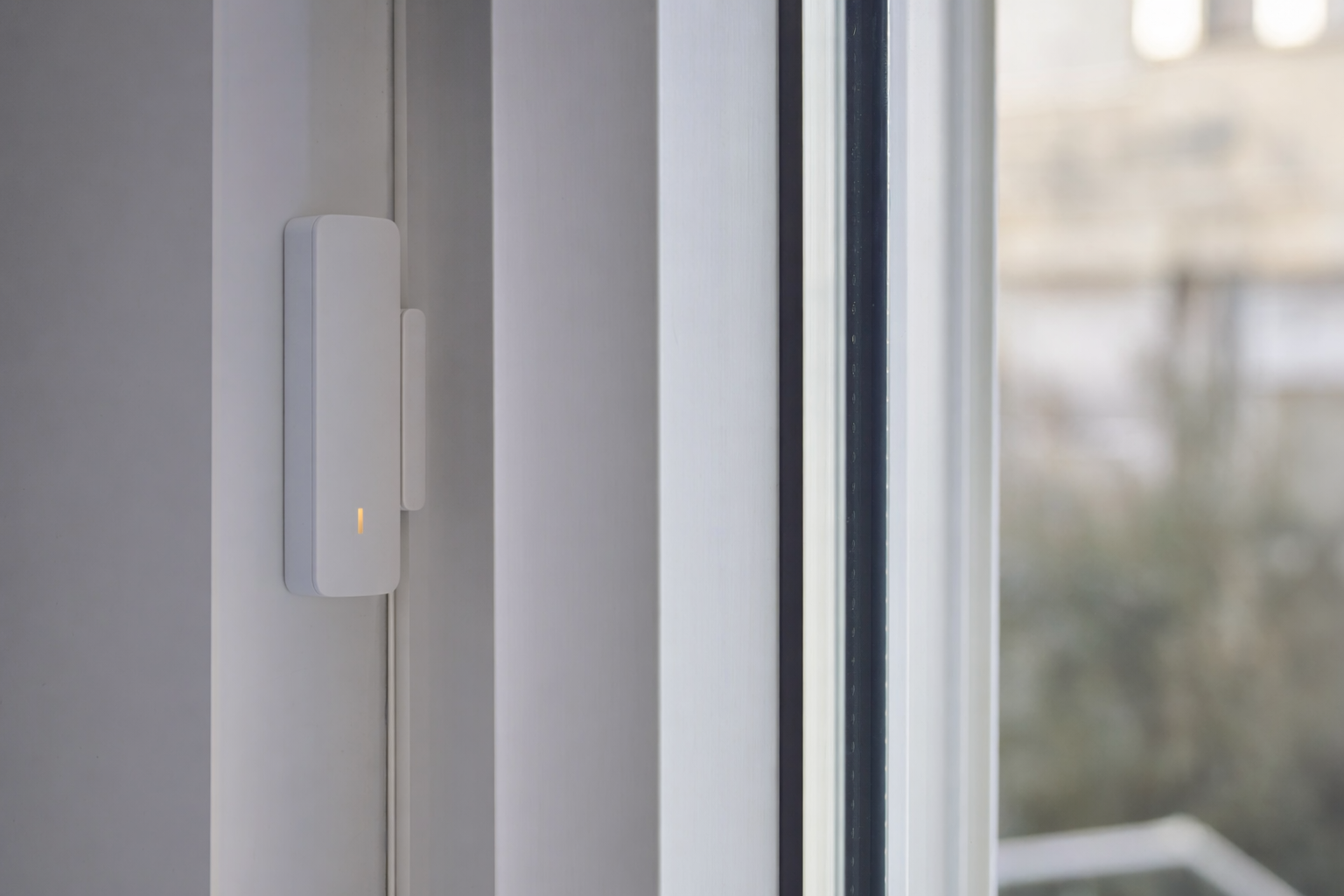
Door/window sensors in plain words
A door/window sensor (often called a “contact sensor”) has two parts: a small magnet and a sensor. When the door or window is closed, the magnet is close to the sensor. When the door or window opens, they separate, and the sensor detects that change.
These sensors are most common on exterior doors, garage doors (if supported by the system), basement windows, and ground-floor windows. They are usually designed for “open/closed” detection, not for movement inside a room.
If you choose 24/7 alarm MONITORING, the sensor is only the first step. The alarm control panel reads the sensor change and sends an alarm signal to the central monitoring station. A trained operator then verifies with a phone call and, if needed, dispatches police or fire. You can read more about the central station monitoring flow here: central station monitoring.
What happens after the sensor trips (the signal path)
Here is the typical chain, from the moment a door opens to a response by emergency services:
1) A sensor trips. A door opens, the magnet separates from the contact sensor, and the alarm system detects an “open” event.
2) Your control panel sends the signal. The alarm control panel converts that event into a message and transmits it to the monitoring station (commonly through an internet path and/or cellular backup, depending on the system).
3) The monitoring station operator verifies. A trained operator checks the situation by calling you and using the information your account provides. This verification step is not guaranteed to prevent dispatch, and it depends on what the system can confirm.
4) Dispatch and notifications, if needed. If the operator determines it is an emergency, they notify the proper services (police or fire, based on the alarm type) and notify you as allowed by your setup.
For a general overview of how monitoring works and how to compare providers, you can start with get matched.
Where door/window sensors are used (and where they are not)
Door/window sensors are helpful for detecting entry points like exterior doors and accessible windows. Many home alarm plans combine them with other detection types, such as motion sensors (movement inside) and glass-break sensors (sound/vibration from breaking glass), depending on your layout.
Door/window sensors do not “see” people or movement. If someone breaks a window and then stays inside without opening a door or window again, a door/window sensor alone may not detect that continued presence. This is one reason people often add motion detection or other sensors for indoor coverage.
If you are setting up a system for 24/7 monitoring, plan for coverage that matches how entry could happen in your home. An installer or monitoring provider can help you map sensors to entry points, but rules and offerings vary by provider and by state.
Common features and terms to watch for
You will see a few repeating terms when comparing systems and monitoring contracts:
- Contact sensor type: Most are “normally closed” contact sensors that detect open/close changes.
- Tamper protection: Many sensors include tamper detection, such as alerting if the sensor casing is removed.
- Exit and entry delay: Some systems allow you to open a door briefly without triggering an immediate alarm if you enter a code within a set time.
- Alarm verification and false-alarm handling: Monitoring providers often define how they handle repeated alarms and what happens for accidental trips. False-alarm fees and thresholds can apply.
- Communication paths: Good systems include more than one path (for example, internet plus cellular backup, sometimes called dual-path). The exact language varies by provider.
Be cautious of marketing that implies monitoring guarantees safety. Monitoring helps with detection and a verification-and-dispatch process, but it does not prevent every break-in or fire, and response actions depend on the operator, the situation, and local procedures.
Cost basics for sensors and 24/7 monitoring
Door/window sensors are usually relatively low cost compared to the monitoring contract and the control equipment. Still, what you pay depends on the system package, how many sensors you need, and whether you are buying or renting equipment.
For 24/7 alarm MONITORING, monthly prices vary widely in the US. A realistic range many people see is roughly $25 to $60 per month, with some plans higher depending on equipment, add-ons, and contract terms. Your exact cost depends on the monitoring contract, the communication method, and any required “service plan.”
Watch for common alarm-sales tactics:
- Long auto-renewing contracts that extend automatically unless you cancel correctly.
- “Free” equipment offers that come with costly monitoring lock-in.
- Door-to-door pressure or hard-to-understand cancellation terms.
- Vague statements about fees for false alarms, equipment returns, or early termination.
Because state rules vary, some states license alarm-company solicitation and the exact process and requirements can differ. If you are comparing options, ask for everything in writing: the monitoring price, contract length, cancellation steps, and the false-alarm policy. Avoid offers that won’t clearly explain these items.
How Signal Watch Central helps you choose a monitoring provider
Signal Watch Central is a FREE service that helps you understand 24/7 alarm MONITORING and connect with a monitoring provider near you. We are not an alarm company, not a central monitoring station, and we do not install or guarantee any system.
If you already have sensors and are trying to confirm monitoring options, or if you are starting from scratch, we can help you compare what monitoring providers typically offer in your area. Use get matched to connect with local providers and ask the right questions about door/window sensors, communication paths, verification calls, and contract terms.
A good next step is to bring a simple checklist to your provider conversations, such as how the sensor signals are verified, how false alarms are handled, whether there is cellular backup, and what it costs to monitor 24/7.
A door/window sensor detects when an exterior door or window opens and sends that alert to your alarm panel, which can then report to a 24/7 central monitoring station for verification and possible dispatch.
Common questions
Do door/window sensors work for 24/7 monitored alarms?
Yes. In a monitored setup, when a door or window opens, the sensor reports to your alarm control panel. The control panel sends the event to the central monitoring station, where an operator verifies with a call and then contacts emergency services if needed.
What is the difference between a monitored system and a self-monitored system?
In monitored alarm monitoring, a central monitoring station receives the signal and an operator verifies and dispatches (when appropriate). In self-monitoring, the system relies on notifications to you or an app, and there is no trained central station operator making verification calls on your behalf.
Will a door/window sensor stop a break-in?
A sensor can detect and alert to an entry-point opening, but it does not guarantee prevention. Whether someone is caught quickly depends on many factors, including how the system is monitored and how the verification and local dispatch process works.
How many door/window sensors do I need?
Most homes benefit from sensors on all exterior doors and accessible ground-floor windows. The best number depends on your layout, how many entry points there are, and what other sensor types you use for indoor detection.
What does it cost to add door/window sensors to monitored alarm service?
Costs vary by equipment and the monitoring contract. As general guidance, 24/7 monitoring in the US is often in the tens of dollars per month, while sensors are typically less than the monitoring plan. Ask providers for the full monthly total and any fees for false alarms, cancellation, or equipment changes.
Do monitoring providers charge fees for false alarms?
Often, yes. Many monitoring setups include false-alarm fees or thresholds in the contract, and local jurisdictions may also have rules. The details vary, so request the specific false-alarm and service terms in writing.