How we've helped
How a Spanish-speaking family found 24/7 monitoring they understood
An anonymized example of how one Spanish-speaking family compared 24/7 alarm monitoring, asked the right questions, and found a provider they could understand. This is a story for education, not a real named customer.
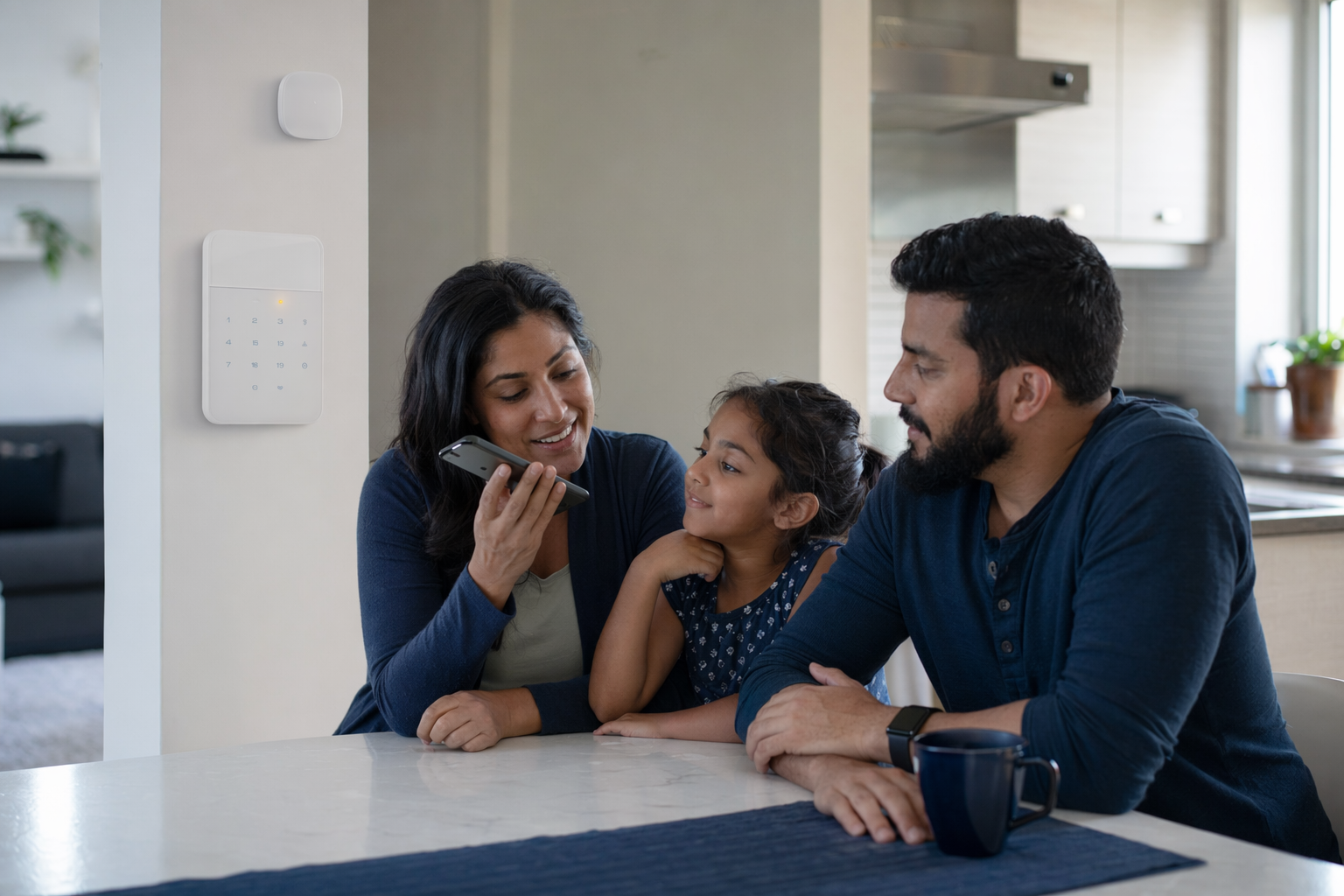
Why this family started looking
A family in Texas had an older alarm system in their home, but they were not sure what it actually did. They knew the keypad made noise when a door opened. They did not know whether anyone outside the house was watching for alarm signals 24/7.
Spanish was the main language at home. Sales calls in fast English were hard to follow. Contract terms were even harder. The family did not want a sales pitch. They wanted a simple answer to a simple question: if a sensor trips at 2 a.m., who gets the signal, who calls, and what happens next?
That is the part many people are really shopping for. Not guards. Not a camera ad. Alarm monitoring means a central station receives signals from the control panel, a trained operator tries to verify the alarm with a phone call, and then the operator contacts police or fire if the situation calls for it.
What they needed explained in plain language
Once the family understood the signal path, the choices started to make more sense. A door or motion sensor trips. The control panel sends that event to a central monitoring station, often over cellular, internet, or both. A trained operator reviews the signal, calls the home or the contact list to verify, and then dispatches police or fire based on the type of alarm and the monitoring company's procedures.
The family also learned that not all setups are the same. Some systems use a single path, such as internet only. Others use dual-path communication, such as internet plus cellular backup. Dual-path can cost more, but some households prefer it because one communication path can back up the other.
They asked for Spanish-language support during signup and during alarm calls. That was a practical question, not a small one. If a verification call comes in after midnight, the person answering needs to understand what the operator is asking.
For a basic overview, families in the same situation often start with 24/7 burglar alarm monitoring.
The questions that helped them avoid a bad fit
The family made a short checklist before talking to any provider. It kept the conversation focused. They asked whether the monitoring center could handle Spanish-language calls, whether the system used cellular or dual-path communication, and whether there were local permit rules or false-alarm fees in their city.
They also asked about contract length, auto-renewal, cancellation terms, and what would happen if they moved. That matters because some alarm offers look cheap at first, then lock the customer into long monitoring terms. A so-called free system can still mean a costly monthly commitment. Door-to-door pressure and vague cancellation language are also common problems.
Cost was another big topic. The family learned that basic residential monitoring often lands somewhere around $20 to $60 per month, while monitored fire or more advanced setups can run higher. New equipment, installation, translator support, smart-home features, and dual-path communication can change the number. Those ranges are not quotes. The real price depends on the equipment, the monitoring contract, and the area.
- Can you explain the contract in Spanish or provide written terms I can review slowly?
- Is the signal sent by cellular, internet, or dual-path?
- If an alarm comes in, does the operator make a verification call first?
- Are there local permit requirements or false-alarm fees where I live?
- Does the contract auto-renew, and how do I cancel?
How they used Signal Watch Central
The family did not want ten surprise calls. They wanted a controlled way to ask for information. Signal Watch Central is not an alarm company, does not install or monitor systems, and does not guarantee equipment or response. We provide general education and help people find a monitoring provider near them.
If someone asks to be connected, contact happens only after that person gives prior express written consent through an unchecked box they choose to tick. Consent is not required to use the free service, and it is not a condition of buying anything. If they do consent, that consent can cover calls, texts, or prerecorded or autodialed contact from participating providers, and the person can opt out at any time.
In this example, the family used that process so they could ask for Spanish-language help and compare options on their own schedule. They were able to review terms, ask follow-up questions, and avoid agreeing to something they did not understand. If you want that kind of side-by-side comparison, you can get matched.
What this story really shows
This family's biggest problem was not technology. It was clarity. Once the monitoring process was explained in plain words, the decision became easier. They were not looking for promises. They were looking for a provider that could explain equipment, monitoring, dispatch steps, and billing in language they understood.
That is why this kind of story matters. Many households, especially new immigrants and non-native English speakers, are asked to sign alarm paperwork before they fully understand the service. Taking a little extra time to ask about the central station, verification calls, permits, false-alarm fees, and contract terms can save a lot of frustration later.
Rules also vary by state. Some states license alarm-company solicitation, and local permit rules can be strict. A good next step is to read more stories like this one, then compare providers carefully.
This page shows how a Spanish-speaking family asked clear questions about central-station monitoring, contracts, and language support before choosing a provider they could understand.
Common questions
Is this a real customer story?
No. It is an anonymized, illustrative case study based on common questions people ask. We do not use fake named testimonials or pretend this is a specific identified family.
What does 24/7 alarm monitoring actually mean?
It means a central monitoring station is set up to receive alarm signals from your control panel at any hour. If a signal comes in, a trained operator follows the company's procedure, usually including a verification call, and may contact police or fire if appropriate.
How much does monitored alarm service usually cost?
Basic residential monitoring often falls around $20 to $60 per month, but the real number depends on equipment, contract terms, features, and your area. Those are general ranges, not quotes.
Do all monitoring providers offer Spanish support?
No. Some do, some do not, and the level of support can vary between sales, setup, and alarm calls. It is smart to ask that question directly before signing anything.
Will using Signal Watch Central mean I get sales calls right away?
Not unless you give prior express written consent through an unchecked box you choose to tick. That consent is not required to use the free service, and you can opt out of future contact at any time.
Are you the company that monitors the alarm?
No. Signal Watch Central is not a monitoring center or a UL-listed central station. We share general information and help connect people with participating monitoring providers.