Guides
What is broadband alarm monitoring
Broadband alarm monitoring means your alarm system sends signals over your internet connection to a central station. It can work well, but it has limits, so it helps to understand how the signal actually gets there.
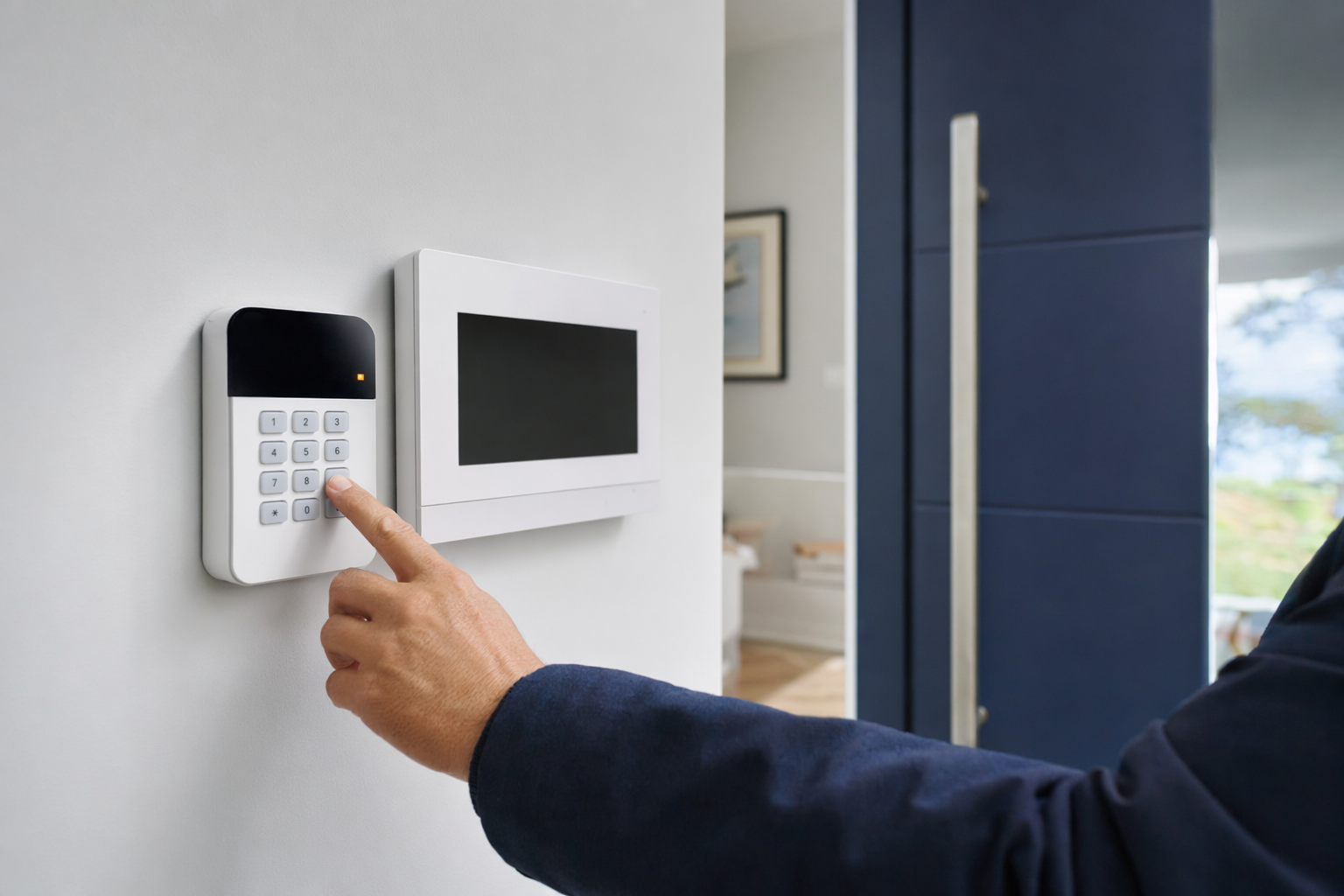
What broadband alarm monitoring means
Broadband alarm monitoring uses your home or business internet service to send alarm signals from the control panel to a central monitoring station. "Broadband" usually means cable internet, fiber, or another always-on internet connection, not a regular old phone line.
The basic path is simple. A sensor trips. The control panel sends a signal over the internet. A central station receives it. A trained operator follows the account instructions, usually starting with a verification call, then notifying the customer and dispatching police or fire if the situation calls for it.
This is alarm monitoring, not on-site guarding. The job of the central station is to receive signals and handle them under the account rules. If you want background on how 24/7 monitoring works overall, see central station monitoring.
How the signal gets from your panel to the central station
With broadband monitoring, the alarm panel or communicator connects to your internet equipment, often your router or modem. When an event happens, such as a burglary alarm, fire alarm, low battery, or supervisory signal, the panel packages that event and sends it to the monitoring center through the internet.
In many systems, the internet path is only one part of the setup. A lot of providers now prefer dual-path communication, usually broadband plus cellular. If the internet goes down, the system may still be able to report over the cellular path. That matters because home internet can fail for ordinary reasons: power loss, a router problem, a service outage, or someone unplugging equipment.
Broadband can also be used for remote features in an app, but app access is not the same thing as professional monitoring. The important question is not just whether you can control the system from your phone. It is whether alarm signals reach a live central station 24/7.
Pros and limits of broadband monitoring
Broadband monitoring can be fast and can support modern system features. It is common with newer alarm panels, interactive apps, and smart-home add-ons. In some setups, it may cost less than maintaining an old landline.
But internet-based signaling depends on local equipment and service. If the modem loses power, the router freezes, the internet provider has an outage, or the network is misconfigured, signals may not go through on that path. That is why many people ask about a backup path, battery backup, and regular supervision signals.
If you are comparing plans, ask plain questions. Is the communicator broadband-only, cellular-only, or dual-path? Does the panel send supervision or heartbeat signals so the provider can tell if communication is lost? Is there backup power for the panel and communication equipment? Those details matter more than marketing words.
How much it usually costs
Broadband alarm monitoring is usually part of a monthly monitoring plan, not a separate one-time product. In many US markets, basic professional monitoring often falls around $20 to $45 per month. Plans with app control, cellular backup, video, or smart-home features can run roughly $35 to $80 or more.
Equipment costs vary a lot. If you already have a compatible panel, you might only need a communicator or a takeover setup. If you need a new panel, sensors, smoke detection, or video devices, the total can be much higher. Some companies advertise a "free" system but make up the difference with a long monitoring contract.
These ranges are not quotes. The real number depends on the equipment, the monitoring contract, and your area. Read the paperwork slowly and watch for long auto-renewing terms, vague cancellation language, early termination fees, and door-to-door pressure.
Questions to ask before you sign up
Ask who is actually doing the monitoring and whether the central station is UL-listed. We are not a monitoring center or alarm company, and we do not install or monitor systems. Signal Watch Central is a free educational service that helps you understand your options and get connected with a monitoring provider near you.
Also ask whether local permits are required for burglary or fire alarm dispatch in your city or county. Some places charge false-alarm fees. Rules can differ a lot by location, and some states also license alarm-company sales or solicitation.
If you want help comparing options, you can get matched with a participating provider. Any contact happens only after your prior express written consent through an unchecked box you choose to tick. That consent is not a condition of using our free service, and you can opt out at any time.
- Is the communication path broadband only, or broadband plus cellular backup?
- Who monitors the signals, and is the central station UL-listed?
- What happens if internet service or power fails?
- How long is the contract, and does it auto-renew?
- What are the cancellation terms and any equipment charges?
- Do I need a local alarm permit, and are there false-alarm fees?
Bottom line
Broadband alarm monitoring means your system uses the internet to send alarm events to a central station for 24/7 handling. It is common and useful, but the internet path has failure points, so many people prefer dual-path service with cellular backup.
The best choice depends on your panel, your building, your local rules, and the contract terms. Start with the basics, compare the communication path carefully, and avoid sales pressure. You can also browse more plain-language guides in our learning center.
Broadband alarm monitoring uses your internet connection to send alarm signals to a central station, and many people pair it with cellular backup because internet service can fail.
Common questions
Is broadband alarm monitoring the same as Wi-Fi monitoring?
Not exactly. People often use the terms loosely, but broadband means the alarm signal goes through your internet service. Wi-Fi may be one way a device connects inside the building, while the bigger issue is how the panel reaches the central station.
Does broadband monitoring still work if my internet goes out?
Not on the broadband path by itself. If your system has cellular backup or another second path, it may still be able to send signals. Ask whether the setup is broadband-only or dual-path.
Is broadband better than a phone line for alarm monitoring?
For many newer systems, broadband is more current than a traditional phone line, but "better" depends on the setup. A single internet path can fail, so many providers now favor cellular or dual-path communication.
Can I use broadband monitoring with an older alarm system?
Sometimes. An older panel may be able to use an added communicator or a takeover module, but compatibility varies by model. A provider would need to check the panel and current wiring.
Do I need professional monitoring if I already get app alerts?
App alerts and professional monitoring are different things. App alerts notify you, while professional monitoring means a central station receives alarm signals and an operator follows the account instructions, usually including verification calls and dispatch steps.
What does Signal Watch Central do?
We provide general education about alarm monitoring and help people find a monitoring provider near them. We are not an alarm company, not a central station, and we do not install, monitor, or guarantee alarm service.