Guides
What happens if the power goes out
If the power goes out, most alarm systems do not go silent right away. The panel usually switches to a backup battery, and if the system is monitored, the central station can still receive signals for a while.
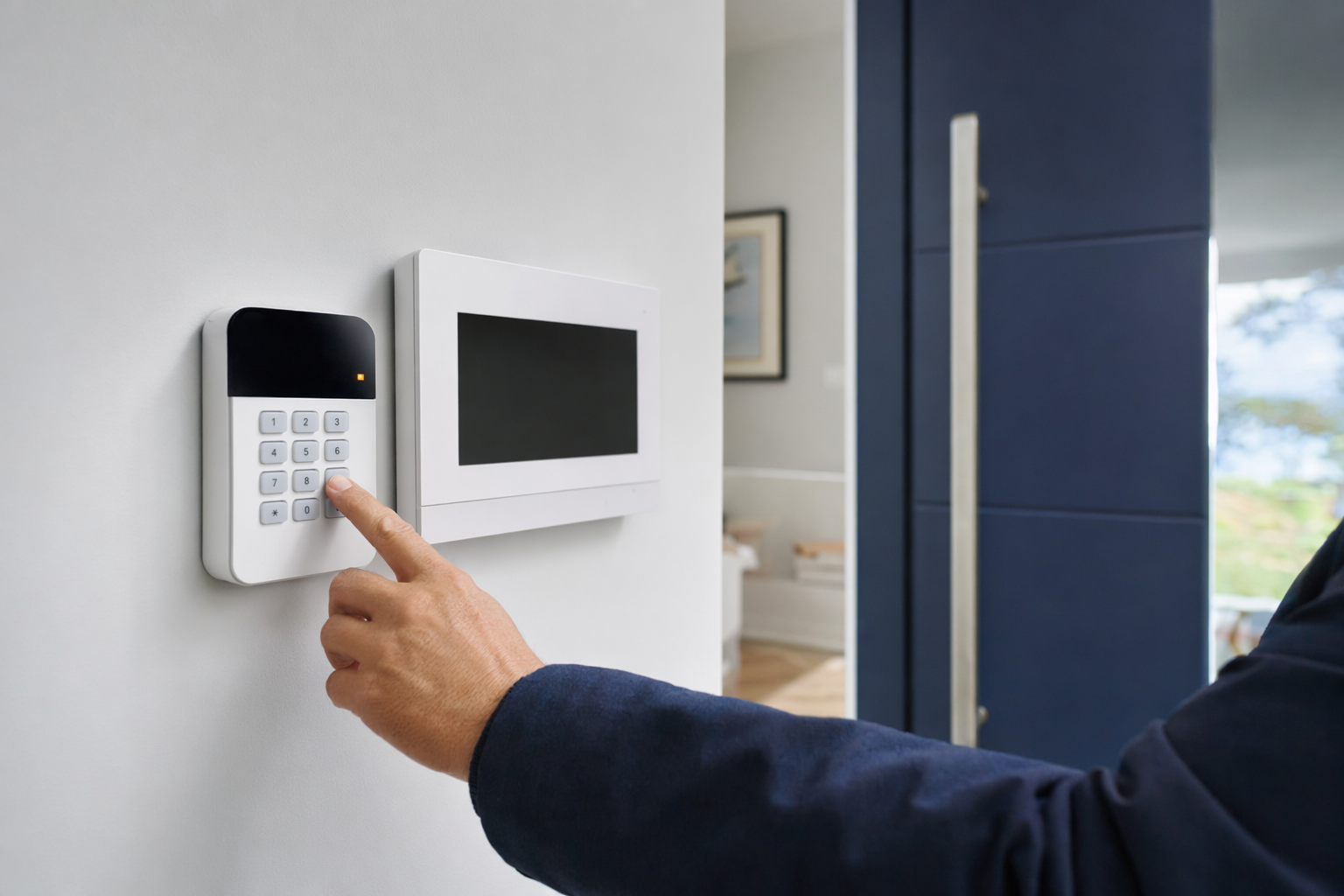
What keeps the alarm working
Most modern alarm panels have a backup battery inside the control box. If your home loses utility power, the panel runs on that battery instead of shutting off immediately.
That matters because the alarm path is usually: a sensor trips, the control panel sends a signal, the central station receives it, and a trained operator checks the event and may place a verification call before dispatching police or fire and notifying you.
If the system has cellular or dual-path communication, it may keep sending signals during a power outage even if your internet equipment or landline also loses power. The exact setup depends on the equipment and the monitoring contract.
What can stop working
A power outage can affect parts of the system that are not battery backed. That may include Wi-Fi equipment, modems, routers, cameras, or any smart home gear tied to the alarm.
If the backup battery is old, small, or already worn down, it may not last long. Some systems also lose keypad lights, screen functions, or certain home automation features before the alarm panel itself stops working.
If the battery dies, the panel can shut down and stop transmitting. That is why battery checks and regular service matter. Ask the provider how long the backup battery is expected to last in your model, and what happens if the outage goes on for hours.
What monitoring providers usually tell customers
A monitoring provider should explain whether your system uses landline, broadband, cellular, or dual-path communication. Cellular and dual-path are often more resilient during a power outage because they do not rely on the home internet line alone.
They should also explain any battery test process, false-alarm handling, and whether your city or county requires an alarm permit. Rules vary by state, and some states license alarm-company solicitation, so local law matters.
If you are comparing options, ask for plain answers about equipment cost, monthly monitoring cost, and contract length. Real prices vary by equipment, the monitoring contract, and your area. Common ranges are often about $20 to $60 a month for basic residential monitoring, and more for video, multi-site, or added services. That is a range, not a quote.
Common sales claims to watch for
A power outage is sometimes used in sales pitches to push long contracts or "free" systems. Be careful with these tactics:
- Long auto-renewing contracts with hard-to-find cancellation terms
- "Free" equipment that ties you to expensive monitoring
- Door-to-door pressure to sign right away
- Vague answers about battery life, cellular backup, or outage behavior
A good monitoring conversation should be clear. You should know what happens if the power goes out, what is backed up, and how to cancel if you need to. You should not be told that consent to contact is required to get service. If you choose to share a phone number or email for follow-up, that contact should happen only if you gave prior express written consent through an unchecked box you actively ticked, and you can opt out at any time.
How Signal Watch Central can help
We do not install, monitor, or guarantee any alarm system. We provide free education and help you find a monitoring provider near you.
If you want to compare central station monitoring options, we can connect you with providers that fit your area and your needs. You can start with central station monitoring or see all learn articles.
If you are ready to compare options, use get matched. The service is free to you. We are paid a flat marketing fee by participating providers, not a percentage of any provider’s fees.
A power outage usually does not kill a monitored alarm right away, because the panel runs on battery and may still send signals, but the exact result depends on the equipment, the battery, and the communication path.
Common questions
Will my alarm still work if the house loses electricity?
Usually yes, for a while. The control panel should switch to a backup battery, and monitored systems with cellular or dual-path communication may still send signals to the central station during the outage.
How long does the backup battery last?
It depends on the panel, battery size, age, and what else is connected. Some batteries last only a few hours, while others can last longer, but there is no single standard for every system.
Does a power outage mean police or fire will not be called?
Not necessarily. If the panel can still send a signal and the central station can verify the event, the operator may dispatch as usual. If the battery dies or communication fails, the monitoring path can be interrupted.
Should I ask about cellular backup?
Yes. Cellular or dual-path monitoring is often worth asking about because it can keep the communication path working even if the home internet or landline is down.