Guides
How to cancel an alarm monitoring contract
Alarm monitoring contracts can lock you into long terms, auto-renewals, or “early termination” fees. This guide explains what to check, what to ask, and how to cancel 24/7 central-station monitoring in the US.
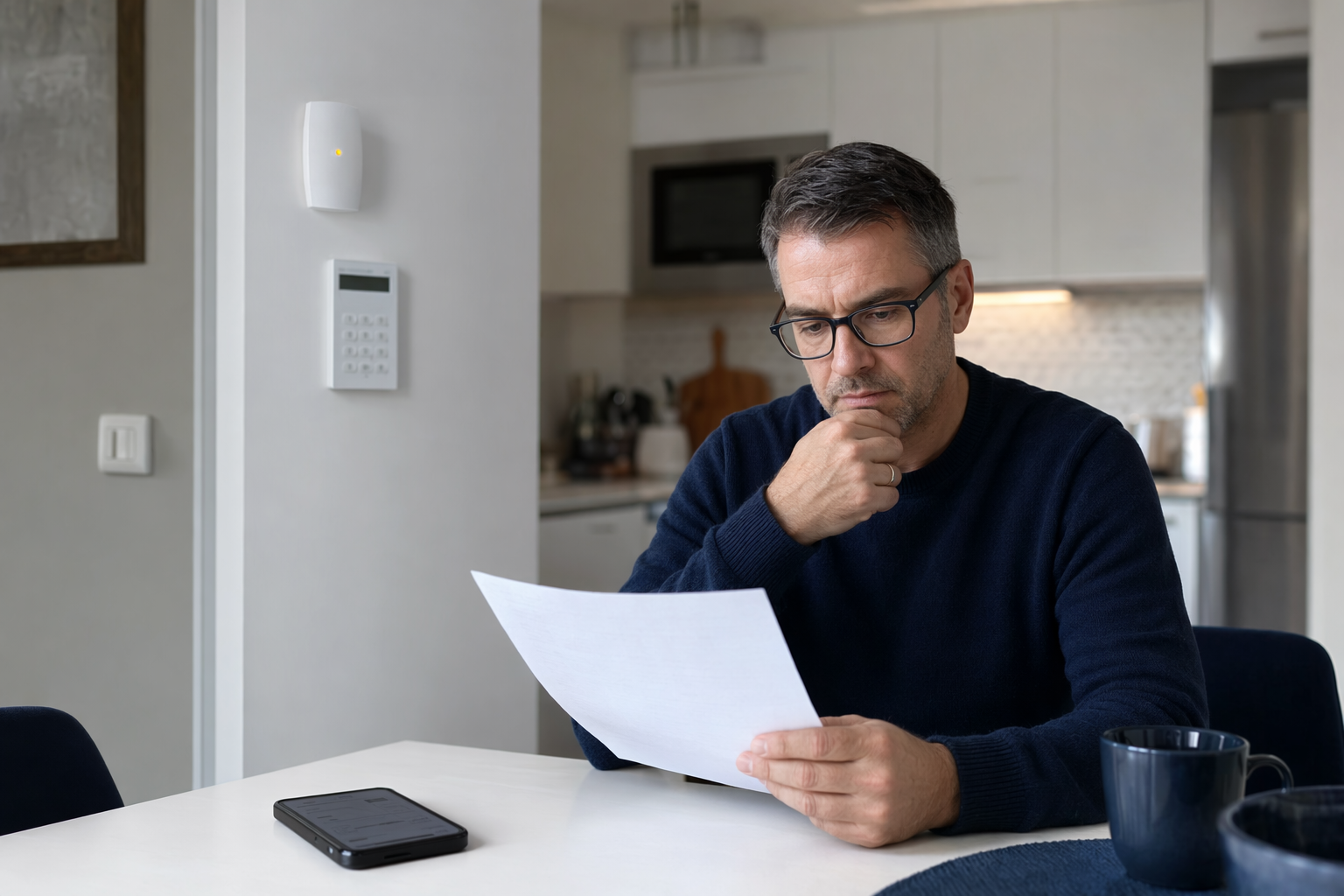
Start with the right contract: monitoring vs. installation vs. equipment
Before you cancel, find the exact agreement that controls your “24/7 central-station monitoring.” Many households have more than one contract.
Monitoring contract: This is the service where your alarm system sends signals to a central station 24/7, and a trained operator verifies and contacts police or fire.
Installation or equipment agreements: These may cover hardware, monitoring setup, permits, warranties, or service calls.
Why it matters: You can sometimes cancel monitoring while keeping ownership of your equipment. Other times, you may need to return equipment or pay an early termination cost.
Understand the signal path (so you know what you are canceling)
Central-station monitoring is a signal chain, not a guard. Typically, a sensor trips in your home.
Then your control panel sends an alert to the monitoring company’s central station. A trained operator attempts verification with a phone call and checks what they can from the alarm data.
After that, they contact emergency services and notify the customer. Some systems also use dual-path communications, like cellular plus internet, to improve signal delivery.
When you cancel monitoring, that chain stops at the point where the central station is no longer watching your signals 24/7. Your internal alarm and local alerts may still work, but the 24/7 monitoring part ends.
What to check in your monitoring contract before you cancel
Look for these items. They are the most common reasons cancellations take longer or cost more.
Auto-renewal and billing cycle: Many contracts automatically renew, often monthly or annually. If you cancel after a renewal date, you may be billed for the next period.
Early termination terms: Some contracts charge a flat fee or require payment through the end of the initial term. Avoid vague “termination” promises and ask for the exact dollar amount.
Notice requirements: Some agreements require written notice by email or a specific address, and they may require a lead time (like 30 days).
Equipment ownership: If you leased equipment or received it “free,” check whether cancellation triggers return requirements, charges for unreturned devices, or additional fees.
False-alarm policy: Some contracts include a “false alarm fee” framework. If you had frequent false alarms, ask how they are handled at cancellation.
Service area and state rules: Alarm-company solicitation and licensing rules vary by state. Your contract must follow the rules that apply where you live.
Steps to cancel (a practical checklist)
1) Find your contract and the cancellation section. If you do not have the documents, ask the provider for the exact agreement terms.
2) Confirm the account details. Collect your account number, monitoring address, and the billing contact. Keep dates.
3) Send written cancellation notice. Use the method required in the contract (often email plus a confirmable method, or certified mail). Ask for a written confirmation of cancellation.
4) Ask these questions in your message:
- What is the effective cancellation date?
- Are there any early termination fees? Provide the exact amount.
- Will you require return of any equipment?
- Will you stop central-station monitoring immediately after the effective date?
- Is there any outstanding balance I should pay before the cancellation date?
5) Request a final confirmation. Keep screenshots or receipts. If you can, ask for confirmation that monitoring is disabled at the central station.
6) If the system uses “call verification” or emergency contacts: Check whether emergency calling and any account settings will change when monitoring ends.
Tip: Do not rely on a phone call alone. Phone calls can be hard to prove later. Written notice is usually the safest route.
Be aware of common alarm-sales traps (so you don’t get pressured again)
If you signed in person or over the phone, review how the contract was sold. Common tactics include:
Long auto-renewing contracts: The provider may advertise low cost upfront, then renew automatically.
“Free” equipment with costly lock-in: Some offers look $0 at first, but the monitoring term or termination terms make it expensive to leave.
Door-to-door pressure: These sales happen fast, and contracts can include less friendly cancellation terms.
Vague cancellation language: Some agreements say “cancel anytime” but hide termination charges, notice windows, or equipment return rules.
If you see language you do not understand, ask for a plain-English summary of your cancellation cost and steps. If you feel rushed, ask for time in writing.
Costs to expect (ranges, not quotes)
Cancellation costs vary a lot. The same plan can cost more or less depending on your equipment, your term length, and your area.
Common cost drivers include:
- Remaining time on an initial term (early termination)
- Equipment charges or return requirements
- Any unpaid monthly monitoring fees
- Processing fees, if the contract allows them
If you are trying to switch providers, you may also face a new monitoring contract and any setup fees. For planning purposes only, monitoring can range from roughly $20 to $60 per month, and some setups include extra monthly fees depending on features like cellular backup, self-monitoring add-ons, or verification services.
Do not treat online estimates as your final bill. Always confirm your exact contract terms before you cancel.
If you are switching providers, you can compare monitoring terms
If your goal is to keep 24/7 central-station monitoring but change who you pay, compare the monitoring contract terms before you cancel.
Ask for the full contract summary: term length, auto-renew rules, cancellation notice requirements, any early termination fees, and equipment ownership terms.
If you want help finding a monitoring provider near you, Signal Watch Central is a free matching service. We help you connect with a monitoring provider based on your address and needs.
Start here: Get matched. Learn more about how monitoring works: Central station monitoring. You can also browse general guides at learn.
Check your contract for auto-renewal, notice rules, and early termination fees, then send written cancellation and get confirmation of the effective cancellation date.
Common questions
Do I need to cancel equipment too, or just the monitoring contract?
Usually you cancel the monitoring contract to stop 24/7 central-station watching. But some agreements bundle equipment leases, installations, or required returns into the same contract. Check whether you own the equipment or must return it if you end monitoring.
How much does it cost to cancel an alarm monitoring contract early?
It depends on your contract term, the cancellation notice window, and whether there are early termination fees or equipment charges. Many providers charge a fee or require payment through the remainder of the initial term. Look for “early termination,” “liquidated damages,” or “restocking/return” language.
What is the best way to send cancellation notice?
Follow the cancellation method required in your contract. In many cases, that means written notice by email to a specific address and/or certified mail, then asking for written confirmation. Keep your receipts and screenshots.
If I cancel, will my alarm still sound locally?
Often, your internal alarm and app notifications can still work because those come from your control panel and your home setup. However, the central-station monitoring chain stops, so emergency dispatch based on monitored signals may not happen. Confirm with your provider what changes after cancellation.
Can a provider stop monitoring immediately after my request?
Sometimes, but many contracts set an effective cancellation date based on the notice period and billing cycle. Your contract may require 30 days’ notice or align cancellation with the end of a billing term. Ask for the exact effective date in writing.
Do your matches include a guarantee or protection?
No. We are a free service that helps you find a monitoring provider. We do not install, monitor, or guarantee service outcomes. If you want 24/7 monitoring, always review the monitoring contract terms directly with the provider.