How we've helped
How a renter added monitoring without violating the lease
A renter wanted 24/7 alarm monitoring, but the lease limited drilling, wiring, and outside hardware. This anonymized example shows how they chose a setup that fit the lease and still connected to a monitoring provider.
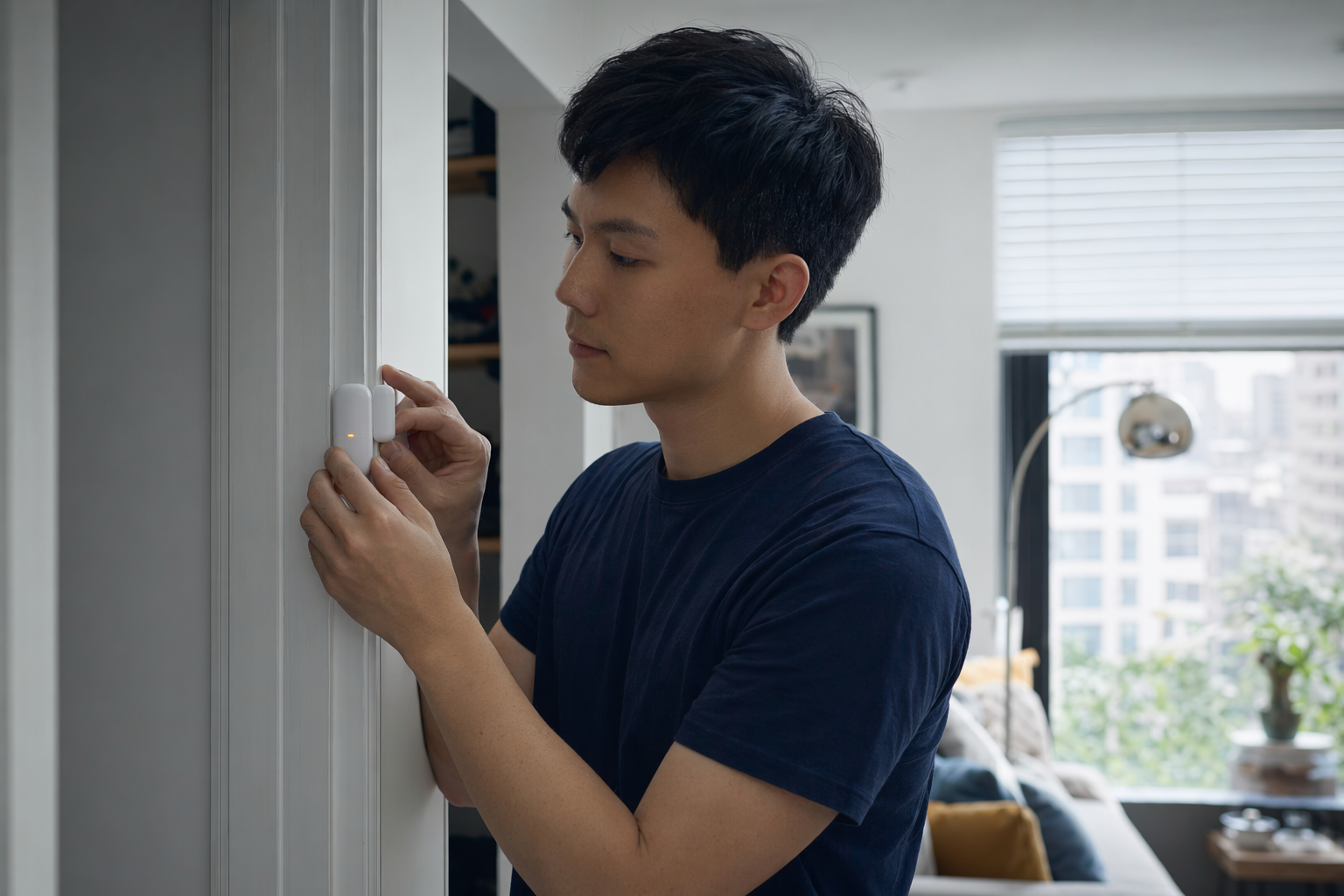
What the renter was trying to do
The apartment already had a basic alarm control panel. The renter was not looking for guards or a live patrol. They wanted central station monitoring: a sensor trips, the panel sends a signal to the monitoring center, an operator places a verification call, and then the operator can dispatch police or fire and notify the customer.
The problem was the lease. It restricted permanent changes, and the building rules were strict about drilling, exterior devices, and anything that could be left behind at move-out. The renter also wanted to avoid signing a long contract before understanding the cancellation terms.
How they kept the lease intact
They started by reading the lease and asking the landlord for permission in writing. That mattered more than any product brochure. In this case, the landlord allowed a no-drill setup that used existing openings and removable mounting where possible.
The renter chose equipment that worked with cellular or dual-path signaling, so the panel could still send alarm signals to the central station without relying only on a phone line. They also asked the provider to confirm what would be installed, whether anything would be screwed into the wall, and what would have to be taken down at move-out.
The renter also checked whether the monitoring contract auto-renewed and how cancellation worked. That helped them avoid common sales tactics like "free" equipment tied to costly monitoring lock-in, vague cancellation terms, or pressure to sign right away.
How Signal Watch Central helped
Signal Watch Central is not an alarm company and does not monitor alarms. The renter used our free matching page to find a monitoring provider that served their area and was willing to discuss lease-friendly options.
We kept the conversation basic. The renter shared the city, the type of property, and whether they already had a control panel. We connected them with providers that could explain their own monitoring plans, equipment compatibility, and contract terms. If a provider wanted to contact the renter directly, that contact happened only after the renter checked an explicit unchecked consent box. Consent was not a condition of using our site.
The renter also asked about cost. The provider said monthly monitoring could range from roughly $20 to $60 or more, depending on equipment, the contract, and the area. Up-front equipment costs could be higher, especially if the system needed a new panel, cellular communicator, or lease-friendly sensors. Those were ranges, not quotes.
What they checked before signing
The renter asked a few plain questions before agreeing to anything:
- Will the system require drilling, new wiring, or exterior hardware?
- Is the monitoring contract monthly, annual, or auto-renewing?
- Is there a cancellation fee?
- Does the system use cellular, dual-path, or another signaling method?
- Who handles permit requirements and false-alarm fees in that city?
They also confirmed that alarm-company solicitation rules can vary by state, and some states license that activity. That meant the renter did not rely on a general promise from a website. They checked local rules and let the provider explain what was allowed in their area.
What this example shows
A renter can often add monitoring without breaking a lease, but the details matter. The safe approach is to get the landlord's approval, avoid permanent changes when possible, and read the monitoring contract line by line.
This story is illustrative only. It is not a guarantee, not a promise of protection, and not a real named customer. The useful part is the process: understand the signal path, compare contract terms, and choose a setup that fits the property instead of forcing the property to fit the system.
A renter can sometimes add central-station monitoring without breaking a lease, but only if the landlord approves, the equipment fits the property, and the contract terms are read carefully.
Common questions
Can a renter usually get 24/7 alarm monitoring without drilling holes?
Sometimes, yes. It depends on the lease, the landlord's approval, and the equipment already in the home. A provider can explain whether a no-drill or low-impact setup is possible.
Did Signal Watch Central install the system or monitor the alarms?
No. We are not an alarm company and do not install, monitor, or guarantee anything. We help people find a monitoring provider near them.
What should a renter look for in the contract?
Check for auto-renewal, cancellation terms, equipment ownership, and any fees for early termination or false alarms. The monthly price is only part of the cost.
Will I be contacted if I use the matching page?
Only if you give prior express written consent by checking an explicit unchecked box. Consent is not required to use the service, and you can opt out later.