Guides
Monitored Alarm vs. DIY Security Camera
A DIY camera can record what happened. A monitored alarm is built to send an alarm signal to a central station so a trained operator can verify and call for help if needed. We explain the difference and help you find a monitoring provider near you.
They do different jobs
A DIY security camera mostly shows video. It may send an app alert to your phone when it sees motion, a person, or sound. Then you decide what to do.
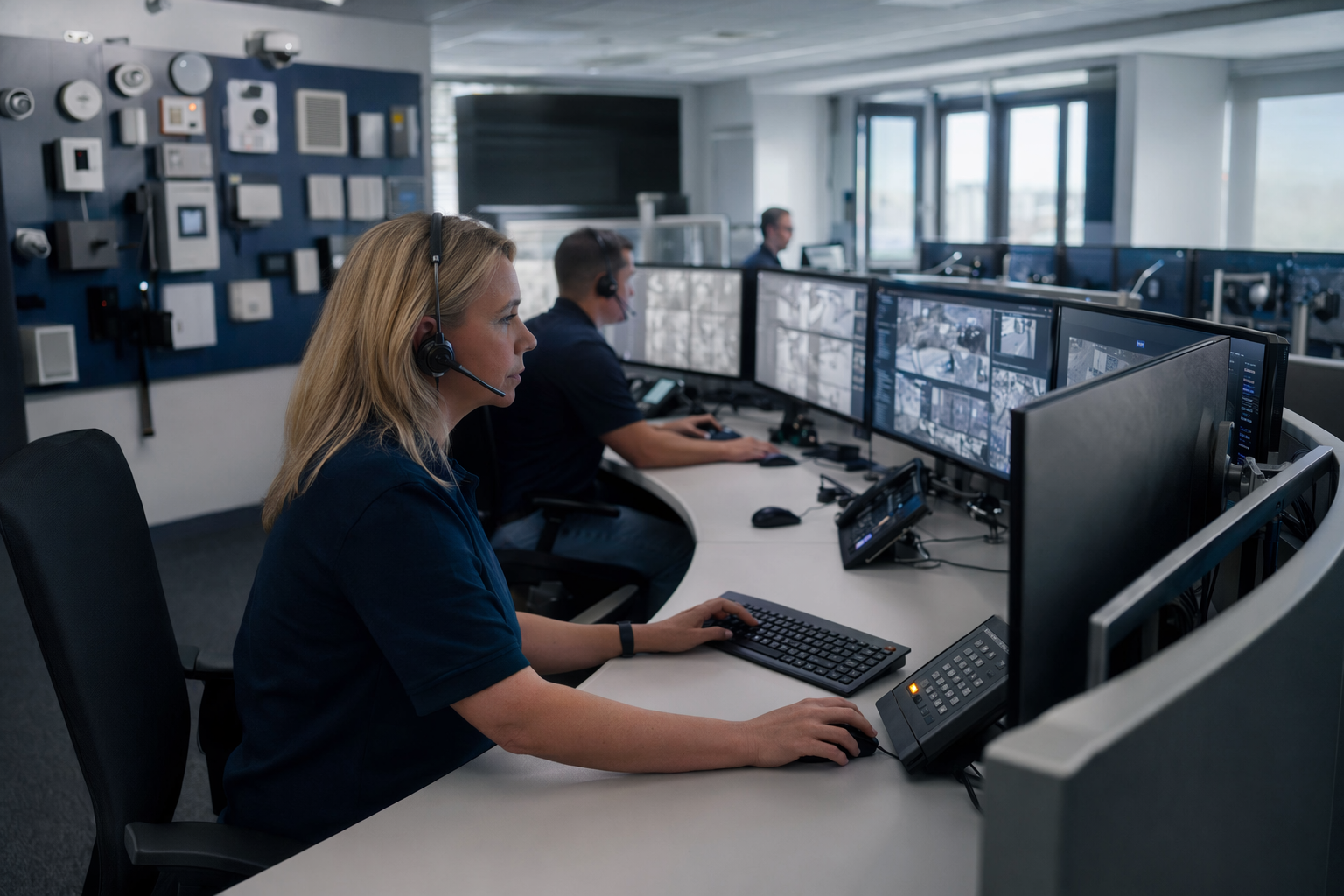
A monitored alarm is a 24/7 service. A door contact, motion detector, smoke detector, or panic button trips. The control panel sends a signal to a central station, often over cellular, broadband, or a dual-path connection. A trained operator follows the account instructions, usually starts with a verification call, and may dispatch police or fire and notify the customer.
That is the main difference. With cameras, you are often the one watching. With monitored alarm service, a central station is watching for alarm signals all day and night.
How the signal path works
In a monitored system, the signal path matters more than the app screen. A sensor trips. The control panel receives that event and sends it to the monitoring center. If the signal is burglary, the operator may call the premises or the customer first to verify. If it is fire, handling may follow local rules and the account setup. Then the operator contacts emergency dispatch if the event meets the response rules.
A camera setup can be useful, but it is not the same path. Many camera alerts depend on your Wi-Fi, the app, your phone settings, and whether you notice the notification in time. If your phone is off, sleeping, out of service, or buried under other alerts, the camera may still record video, but nobody at a central station is reviewing that event for you.
If you want to compare the monitoring side in more detail, see 24/7 burglar alarm monitoring or browse more guides in Learn.
Where DIY cameras fit well
DIY cameras can make sense if you want a simple setup, want to check on a package, pet, or front door, or mainly want recorded video. They can also help after an event by showing a timeline, a vehicle, or a person on the property.
They are often cheaper to start. A single camera may cost about $30 to $200, and cloud storage can add around $3 to $20 per month per camera or per plan. Some people already have enough Wi-Fi coverage and only want a few cameras, so the upfront cost stays low.
But there are tradeoffs. Motion alerts can be noisy. AI labels are not perfect. Power loss, weak Wi-Fi, full batteries, poor placement, glare, and app settings can all affect what you get. A camera can capture useful video and still not create the kind of alarm signal a central station uses for 24/7 response handling.
Where monitored alarms fit better
Monitored alarms are usually the better fit if you want smoke, burglary, glass-break, panic, or door/window protection tied to a central station. They are also useful if you travel, sleep through phone alerts, work long shifts, or do not want to be the only person responsible for reacting to an event.
Costs vary. Basic professional monitoring often runs about $20 to $60 per month. Systems with cellular backup, app control, cameras, home automation, or fire devices can run higher. Equipment can range from a few hundred dollars to more, depending on the sensors, panel, and whether the provider uses leased equipment or a purchase model. These are not quotes. The real number depends on the equipment, the monitoring contract, and your area.
Read the contract carefully. Common alarm-sales tactics include long auto-renewing contracts, a "free" system tied to costly monitoring, door-to-door pressure, and vague cancellation terms. Also ask about permits, false-alarm fees, service calls, and whether the system uses cellular or dual-path communication.
A camera plus monitoring is often the practical answer
For many homes and small businesses, this is not really an either-or choice. Cameras and monitored alarms do different things well. A monitored alarm can handle the alarm signal path and central-station response workflow. Cameras can add video context before or after an event.
A balanced setup might include door contacts, one motion detector, smoke detection if supported, a cellular communicator, and one or two cameras at key entry points. That can be more useful than buying many cameras but having no central-station monitoring for burglary or fire signals.
If you want help comparing local options, get matched. Signal Watch Central is a free educational service. We are not an alarm company, we do not install or monitor systems, and we do not guarantee any equipment or response. We help you find a monitoring provider near you.
Before you sign with any provider
Ask direct questions in plain words. Is the monitoring done by a central station, and is it UL-listed? What communication path is used: cellular, internet, or dual-path? What happens on a burglary signal, and what happens on a fire signal? Is there a permit requirement in my city? What false-alarm fee rules apply locally?
Also ask about the business side. How long is the contract? Does it auto-renew? Who owns the equipment? What are the cancellation terms? Are there price increases after an introductory period? Some states license alarm-company solicitation, and rules vary by state, so sales practices and paperwork can differ.
If you ask us to connect you with a provider, any marketing call, text, or prerecorded contact should happen only after your prior express written consent through an unchecked box you choose to tick. That consent is not required to use any service, and you can opt out at any time.
- Ask whether the system sends signals by cellular only or dual-path
- Ask if local alarm permits are required before activation
- Get cancellation and auto-renew terms in writing
- Treat price ranges as estimates, not quotes
If you want 24/7 alarm handling by a central station, a monitored alarm does a different job than a DIY camera, and we can help you find a provider to compare.
Common questions
Is a DIY camera enough for break-ins?
It depends on what you want it to do. A camera can alert you and record video, but that is different from a monitored alarm signal going to a central station where an operator can verify and follow dispatch procedures.
Can I have cameras and alarm monitoring together?
Yes. That is often the most practical setup. Cameras can provide video, while the alarm panel and sensors handle monitored burglary or fire signals.
How much does monitored alarm service usually cost?
Basic monitoring often falls around $20 to $60 per month, but the real number depends on the equipment, contract terms, and your area. Equipment and installation can add a few hundred dollars or more. Those are general ranges, not quotes.
Will a monitored alarm always get police or fire there faster?
No one should promise that. Dispatch handling depends on the signal type, verification steps, local policies, and emergency-service conditions.
Do I need a permit for a monitored alarm?
Maybe. Many cities or counties require an alarm permit, especially for burglary systems, and some charge false-alarm fees. The rules are local, so ask before activation.
What does Signal Watch Central actually do?
We provide general education about alarm monitoring and help connect you with a monitoring provider near you. We are not an alarm company, we do not install or monitor systems, and our service is free to readers.