Guides
What questions to ask an alarm company
Choosing 24/7 alarm monitoring is a big decision. This checklist helps you ask the right questions so you can understand the signal path, costs, and contract terms before you sign.
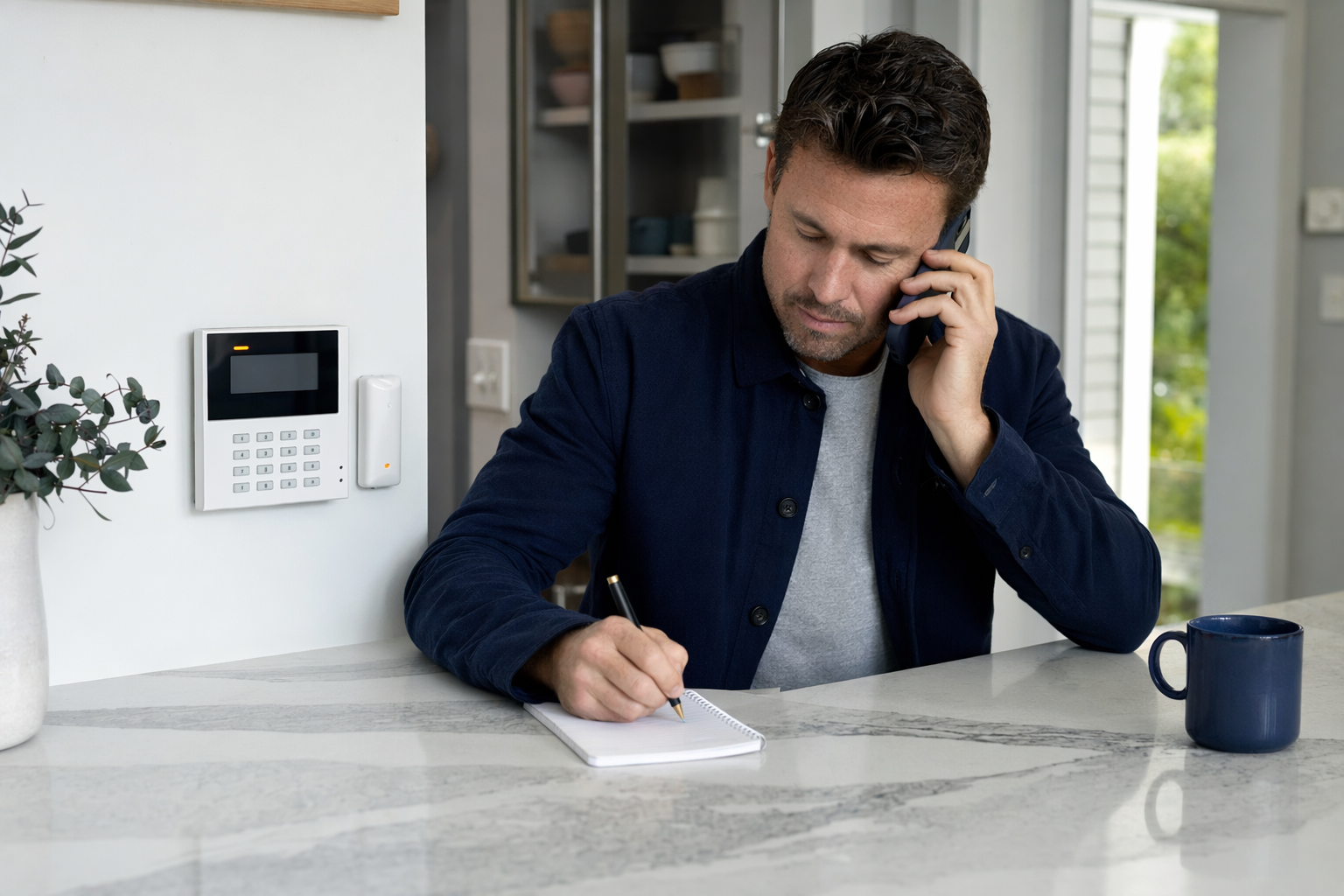
Start with the signal path: how monitoring actually works
Before you talk price, make sure you understand what you are paying for. Alarm monitoring usually means a central station watches your alarm 24/7, not a person sitting at your home.
A typical path looks like this: a sensor trips (door, window, motion, smoke, heat, water). Your control panel sends the event to the central station. A trained operator reviews the incoming signal and then typically calls you (verification). If you cannot confirm, the operator notifies the right responders (police or fire) and alerts the customer.
Ask any provider to explain this in plain terms, including how they verify alarms and what they do for different alarm types like burglary versus fire. If their explanation is vague or they skip verification details, that is a red flag.
Ask about monitoring verification and false alarms
Not every alert is real. Weather, pets, user error, and construction dust can trigger alarms. Good monitoring includes a verification process to reduce unnecessary dispatches.
Ask these questions:
1) What does the central station operator do to verify a signal? (Phone call to you, texting, app notifications, or another method?)
2) Who is contacted first during an alarm event, and in what order? What numbers are allowed to receive the call?
3) Do you charge a “false alarm” fee? If yes, when does it apply and how do you help prevent it?
4) Do you offer procedures for fire alarms, medical alarms, and panic alarms separately? Fire monitoring often has different urgency rules.
Some states and municipalities have rules about permits and false-alarm fees. Your provider should tell you what applies where you live.
Confirm the communication paths (dual-path, cellular, landline)
You want your alarm to still communicate if one connection fails. Many systems use a primary path and a backup path, often described as dual-path.
Ask what communication options are used:
• Cellular (SIM-based) and whether it is included or added later
• Landline or internet path, and what happens if it goes down
• If there is a loss-of-communication alert, who gets it and how fast it is reported
• Battery backup for the control panel and how long it lasts (and what triggers a low-battery signal)
If a company says “it depends” but cannot describe the normal setup, ask for the exact configuration they will install for your home. Avoid deals that only explain pricing and not connectivity.
Understand costs honestly: equipment, monitoring, and contract terms
Alarm costs vary a lot. The real number depends on your equipment, monitoring contract, alarm type mix (burglary only or burglary + fire), and your area. Be careful with marketing language that sounds simple but hides ongoing charges.
Ask for a written estimate that clearly separates:
1) Equipment cost or lease terms (control panel, sensors, smoke/CO detectors if included)
2) Installation cost and whether it is included
3) Monthly monitoring price and any annual increases
4) Fees: activation, equipment upgrades, service calls, account changes
5) Any “free system” terms and the monitoring lock-in length
Also ask about cancellation. Many alarm contracts auto-renew for long periods. Ask:
• When does the contract renew?
• What notice period is required to cancel?
• Is there an early termination fee?
• What is the cancellation process in writing?
Be wary of tactics like vague cancellation terms, long auto-renewing contracts, door-to-door pressure, or claims that “monitoring is the only cost” while other fees quietly apply.
Licensing, central station standards, and what “UL-listed” really means
In the US, terminology can be confusing. “UL-listed” often refers to the safety testing of equipment, not the monitoring company’s promise to protect you. Also, central stations and alarm companies may be regulated differently depending on the state.
Ask:
• Does your state require alarm-company licensing for sales or installation?
• Are you licensed where you work?
• What central station will receive your signals (and what verification process do they use)?
If a provider says they are “a central station” or guarantees response times, ask them to clarify exactly what they do versus what responders do. Monitoring is not the same as a guaranteed outcome.
Signal Watch Central can help you understand what to ask and connect you with a monitoring provider near you, but we are not an alarm company, we do not install or monitor alarms, and we do not guarantee results.
How to compare offers: read the fine print before you sign
When you compare providers, focus on specifics. Two quotes that both say “24/7 monitoring” can differ in verification, communication paths, contract length, and fees.
Make a side-by-side list for every offer:
• Monitoring method and verification steps
• Communication paths (dual-path details)
• Fire and police response handling
• False alarm fees and local permit requirements
• Total monthly cost and any scheduled increases
• Contract term, auto-renew, cancellation notice, and early termination charges
If you want a starting point for matching options, you can begin with our free matching service here: Get matched.
For a deeper explanation of how central station monitoring works, see Central station monitoring 101.
Ask providers to explain how your alarm signal is verified at a central station, what communication backup they use, the full contract and cancellation terms, and all fees so you can compare offers without hidden lock-in.
Common questions
Do I need UL-listed equipment to get good monitoring?
UL-listed equipment usually means the product was tested to certain safety and performance standards. It does not guarantee how quickly someone will respond or how your central station will handle verification. Ask the provider to explain the signal path, communication paths, and verification steps for your specific setup.
What is a verification call during an alarm?
Verification is the process an operator uses to confirm whether an alarm is real. It often includes calling you using your listed phone numbers. If you do not answer or cannot confirm, the operator may notify the appropriate responders and contact the customer.
How much does 24/7 alarm monitoring cost in the US?
Monthly monitoring costs vary widely. The real number depends on your equipment, monitoring contract, alarm types, communication method (for example, cellular), and where you live. Ask for a written breakdown of monthly price, setup or activation fees, annual increases, and any cancellation charges.
Can I cancel an alarm monitoring contract?
Often, yes, but the contract may require notice and may include early termination fees or long auto-renew terms. Ask for the exact cancellation steps in writing, the renewal date, and the time window to cancel without penalty.
Are monitoring providers regulated in my state?
Rules vary by state. Some states require alarm-company licensing for solicitation or installation, and many have local requirements tied to permits or false-alarm fees. Ask the provider what applies in your area and request their license details if required.
Will I be contacted with texts or calls automatically?
Contact and consent rules matter. If you choose to provide contact information, opt-in should happen only with your explicit prior express written consent, using an unchecked box you actively tick. Consent should not be a condition of getting any service, and you should be able to opt out at any time.