Guides
What is dual path alarm monitoring
Dual path alarm monitoring is a setup where your alarm system sends emergency signals to the monitoring center using two communication paths (like cellular plus internet). This page explains how it works in the US and what to ask before you choose a provider.
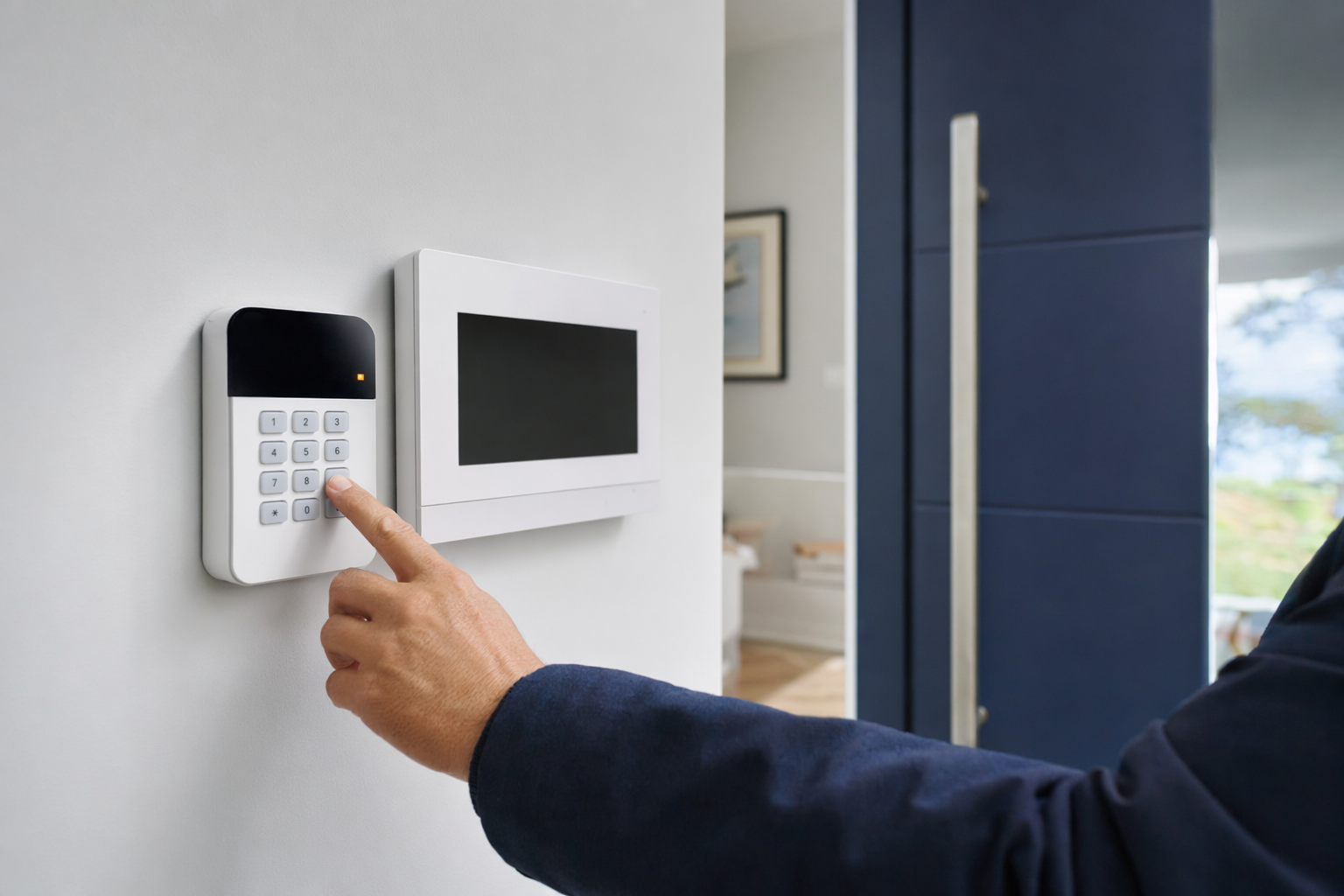
Dual path, in plain language
Dual path alarm monitoring means your alarm is set up to report an event to the central monitoring station using two different routes.
Common examples include cellular plus internet (IP), or cellular plus a backup path. The exact paths depend on your equipment and the monitoring provider.
This is different from just “having an alarm.” An alarm is the sensor and control panel. Monitoring is the 24/7 central station process that watches for signals and responds when something triggers.
The signal path: sensor → panel → central station → verification → dispatch
Here is the usual communication chain when your alarm monitoring is set up.
First, a sensor trips. Examples are a door/window contact or a motion detector.
Next, your alarm control panel sends the alert to the monitoring provider’s central station. With dual path, the panel can use two routes so the message has a second way to get through.
At the central station, a trained operator checks the alarm signal and tries to verify with a phone call or other agreed method. If verification indicates it may be real, the operator contacts the appropriate responders (police and/or fire) and notifies the customer using the information on the account.
Important: this is a human process plus communications. It is not a guarantee that help will arrive instantly or that an incident will not happen.
How dual path helps during common problems
Two communication paths are meant to reduce the risk that a single outage stops your alert from reaching the central station.
For example, if one path is down (internet outage, a router issue, or a service interruption), the other path may still send the signal. That way, your system has a backup route.
Dual path is not the same as “always working.” Signals can still fail due to power issues, improper installation, incompatible equipment, or other technical issues. The key is to ask what specific paths you will use and how the system behaves if one path fails.
What to ask before you choose dual path monitoring
When you’re comparing providers, ask the provider to explain your exact setup and test process in plain words.
Key questions to ask:
- What are the two paths for my system (for example, cellular + internet)?
- What equipment does the system use for each path (cellular communicator, internet/IP connection, or both)?
- What happens if one path is unavailable? Does it automatically switch?
- Are there limits based on your location or building type (apartments, basements, rural areas)?
- Does the provider use a trained operator verification call, and when is it used?
- How are false alarms handled, including any “false-alarm fees” that some cities require?
If you want to understand the overall monitoring process first, see our overview of central station monitoring.
Cost: what dual path usually changes (and what it doesn’t)
Dual path can affect cost because it may require extra equipment and specific communications services. The exact price depends on the monitoring contract, installation plan, and your area.
Typical ranges (not quotes) are often along these lines:
- Monthly monitoring fees can vary widely. Many households end up somewhere from about $20 to $60+ per month for 24/7 monitoring, depending on the provider and features.
- Setup or installation may be free in some offers, but “free” packages can come with longer contracts or monitoring commitments.
- Cellular services may be included or may be priced separately depending on the system design.
Some alarm sales offers include long auto-renewing contracts or vague cancellation terms. Be cautious with “free system” deals that make the monitoring the expensive, lock-in part of the agreement.
Also note: some states license alarm-company solicitation, and rules vary by state. If you’re being approached by door-to-door sales, ask for everything in writing and review the contract before signing.
How Signal Watch Central helps you compare monitoring options
Signal Watch Central is a free US service that helps people understand how 24/7 alarm monitoring works and get connected with a monitoring provider near them.
We are not an alarm company, not a central monitoring station, and we do not install, monitor, or guarantee alarms.
If you’re trying to find a provider that offers dual path options, you can use our matching process at get-matched. You can also browse our learning hub at /learn/ to compare monitoring basics before you talk to anyone.
Dual path monitoring sends your alarm signal to the central station using two communication routes so it has a backup path if one route fails, but you should verify the exact setup, costs, and contract terms with your monitoring provider.
Common questions
Is dual path the same as having a battery backup?
No. Battery backup is usually about power for the alarm panel during an outage. Dual path is about how alerts reach the central monitoring station using two communication routes (like cellular plus internet).
Will dual path stop false alarms?
Dual path is for communication reliability, not for preventing every false alarm. False alarms can come from user error, pets, sensor placement, or weather. Ask your provider how verification works and what the false-alarm policies are in your area.
Does dual path always “automatically switch” to the backup route?
Many dual path systems are designed to use the alternate route if one path is unavailable, but the exact behavior depends on the equipment and the provider’s configuration. Ask what happens during an outage and whether switching is automatic.
How much does dual path monitoring cost?
Costs vary by equipment and by the monitoring contract and local market. As general guidance, monthly monitoring is often somewhere in the $20 to $60+ range, but your real price depends on your specific setup. Setup fees and contract length can also change the total.
What should I check in the contract?
Look for contract length, auto-renew terms, cancellation rules, and any fees. Watch for long auto-renewing agreements and offers that seem “free” but require costly monitoring commitments. If your city charges false-alarm fees, ask whether the provider’s plan affects how those are handled.
Are there state rules for alarm monitoring sales?
Yes. Some states license alarm-company solicitation and require specific disclosures. Rules vary by state, so it’s smart to ask what licensing or consumer protections apply where you live.