Guides
What is a motion sensor
A motion sensor is a device that notices movement in a protected area and sends a signal to an alarm control panel. In a monitored system, that panel can then send an alert to a central station for verification and dispatch.
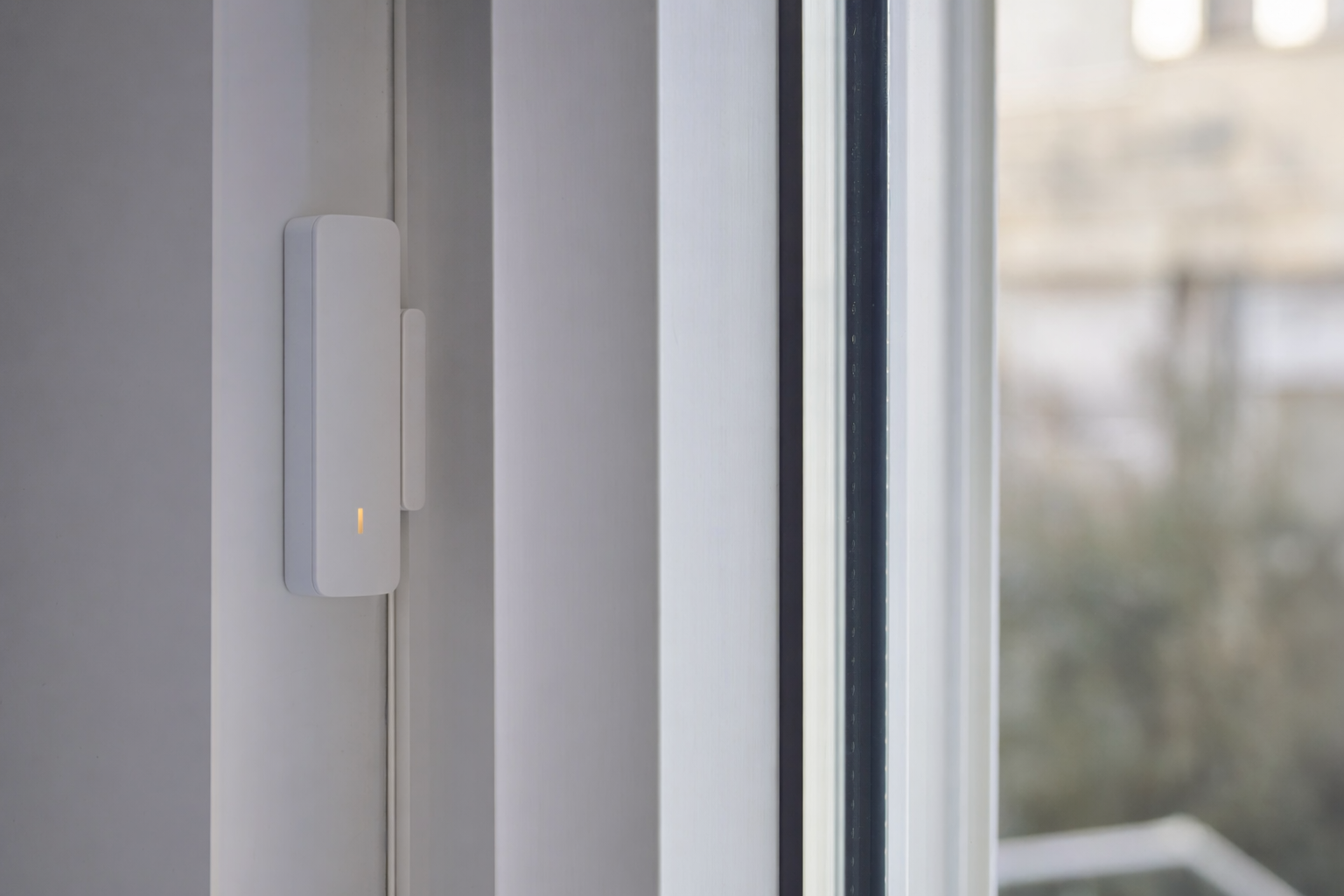
What a motion sensor does
A motion sensor looks for movement, usually inside a room or hallway. Most home alarm systems use a passive infrared sensor, often called a PIR sensor. It watches for changes in heat patterns from a person moving across its field of view.
When the sensor trips, it does not call police or fire by itself. It sends a signal to the alarm control panel. If the system is set up for 24/7 monitoring, the panel sends that signal to the central station, where a trained operator follows the monitoring plan.
That plan often includes a verification call to the customer first. If the alarm is confirmed or the call goes unanswered, the operator may dispatch police or fire based on the type of alarm and local rules.
Where motion sensors are used
Motion sensors are common in hallways, living rooms, offices, garages, and other interior spaces. They are often used as a second layer after door and window contacts. That helps cover areas someone may reach after getting inside.
They can also be used in commercial spaces after hours. In some systems, they work with glass-break sensors, door contacts, smoke alarms, or temperature sensors. The goal is simple: create a signal path that tells the control panel something changed.
A motion sensor is not the same as a camera. It does not record video unless it is part of a separate camera system. It usually just detects movement and sends a message to the panel.
Common limits and false alarms
Motion sensors can be triggered by pets, moving air, heat sources, sunlight, or a bad placement. That is why installers try to place them carefully and choose the right type for the space. Some sensors are pet-immune, but no device is perfect.
If a monitored alarm creates too many false alarms, the customer may face nuisance issues or false-alarm fees from the local city or county. Permit rules also vary by location. Some places require an alarm permit before monitoring is active, and some require the user to renew it.
This is one reason alarm sales can get messy. Watch for long auto-renewing contracts, vague cancellation terms, and “free” systems that come with costly monitoring lock-in.
What motion sensors mean for monitoring
For alarm monitoring, the important part is not just the sensor. It is the full chain: sensor trips, control panel sends the signal, central station receives it, operator verifies, then police or fire is dispatched if needed.
Monitoring prices vary. A basic residential plan might start around $15 to $30 per month, while plans with more features, dual-path communication, or commercial coverage can run higher. Equipment costs also vary a lot depending on how many sensors you need and whether the system is wired or wireless. Those ranges are not quotes.
If you are comparing providers, ask what type of sensors they use, whether the system uses cellular or dual-path communication, and what the cancellation terms are before you sign.
How Signal Watch Central can help
Signal Watch Central is a free information and matching service. We do not install, monitor, or guarantee alarm systems. We help you understand monitoring basics and connect you with a monitoring provider near you.
If you want to compare providers, start with our central station monitoring overview or use get matched to see options. We only contact people after they check an explicit unchecked consent box, and consent is never required to use our educational content or matching tools. Some states license alarm-company solicitation, and rules vary by state.
A motion sensor notices movement, sends a signal to the alarm panel, and can be part of a 24/7 monitored system that a central station verifies before dispatch.
Common questions
Is a motion sensor enough by itself for an alarm system?
Usually no. A motion sensor is one part of a larger alarm setup, often paired with door and window contacts, a control panel, and monitoring if you want central station response.
Do motion sensors call the police?
Not directly. The sensor sends a signal to the control panel, the panel alerts the central station, and a trained operator follows the verification and dispatch steps in the monitoring plan.
Are motion sensors good for pets?
Some are pet-immune, but placement and the type of sensor matter a lot. A provider should explain how the sensor is set up and what can still trigger it.
How much does monitoring with motion sensors cost?
The motion sensors themselves and the monitoring plan can both add to the total. Real monthly prices depend on the equipment, the monitoring contract, and your area, so any range should be treated as general information, not a quote.