Guides
What is a landline alarm monitoring
Landline alarm monitoring uses a phone line to send alarm signals from your control panel to a central station. A trained operator can verify the signal, then contact police or fire and notify you.
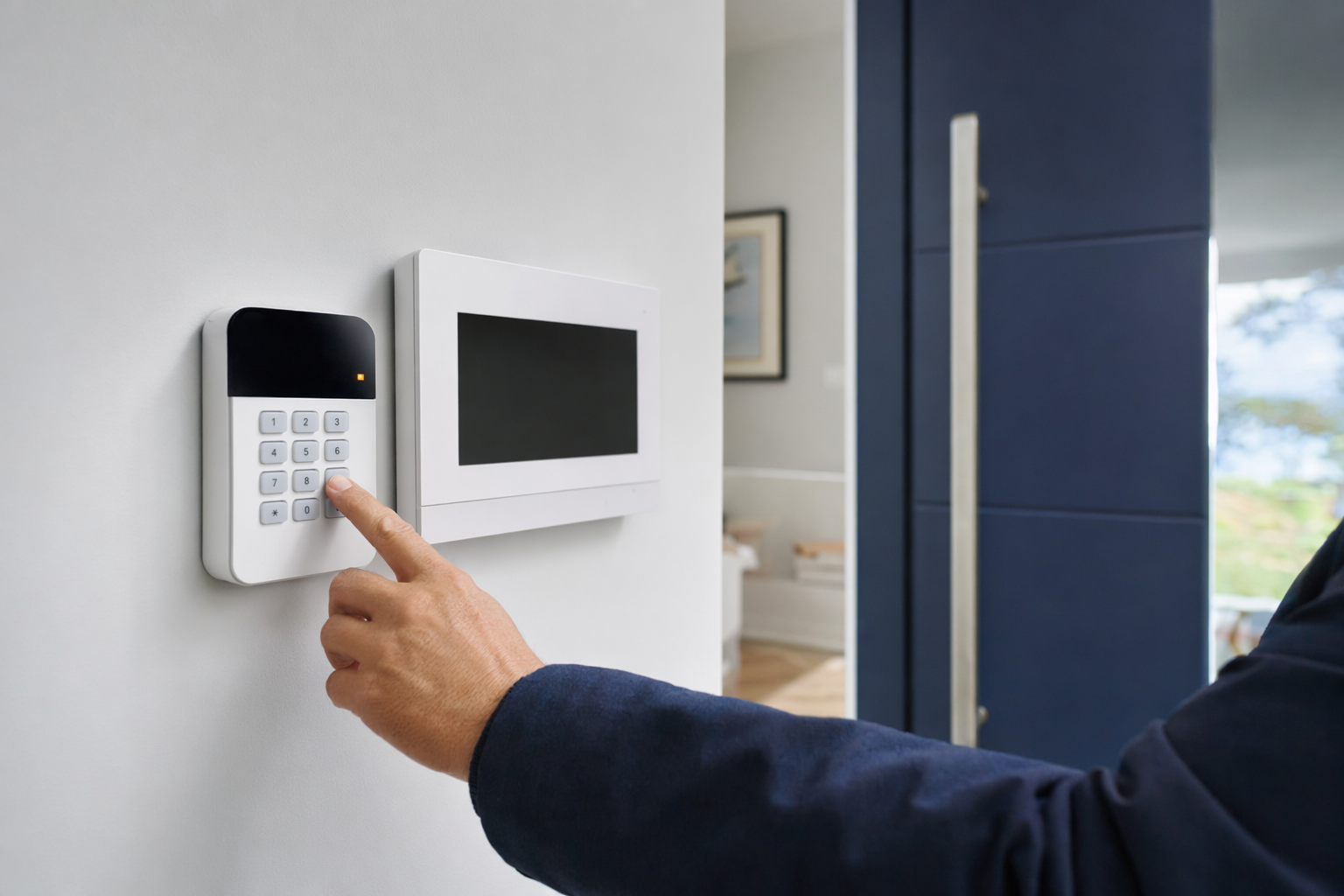
What “landline alarm monitoring” means
A landline alarm system uses a wired telephone line to send a signal when a sensor trips. That sensor might be a door contact, motion detector, smoke alarm, or glass-break sensor. The control panel sends the signal to the central station over the phone line.
This is monitoring, not a guard service. A central station watches the system 24/7. If an alarm comes in, the operator follows the account instructions and may make a verification call before dispatching police or fire, depending on the setup and local rules.
If you want a broader overview of how monitored alarms work, see central station monitoring.
How the signal path works
The basic path is simple: a sensor trips, the panel sends a signal over the landline, the central station receives it, and a trained operator checks the account. In many cases the operator calls the site or the listed contacts to verify the alarm before dispatch.
That verification step matters because false alarms cost money and time. Some cities and counties charge false-alarm fees. Permit rules also vary by city, county, and state.
Landline monitoring can be part of a larger setup that also uses cellular or internet backup. That backup is often called dual-path monitoring. It is not the same thing as landline-only service, and it can change the monthly price.
Cost, contracts, and common sales tactics
Prices vary a lot. For basic residential monitoring, monthly service may start around $15 to $30 and can run higher if the plan includes cellular backup, multi-path signaling, video, or more complex equipment. The real number depends on the equipment, the monitoring contract, and your area. These ranges are not quotes.
Watch for common alarm-sales tactics: long auto-renewing contracts, “free” systems tied to expensive monitoring, door-to-door pressure, and vague cancellation terms. Ask for the full contract length, renewal terms, early termination fee, and whether the system still works if you cancel monitoring.
Some states license alarm-company solicitation, and the rules are not the same everywhere. If someone is selling or enrolling you by phone, contact should happen only with your prior express written consent, such as an unchecked box you choose to tick. Consent is not a condition of any service, and you can opt out later.
Landline monitoring vs. other connection types
Landline was the standard for years because it is simple and widely available. But many newer systems use cellular communication, internet, or both. Providers may recommend cellular or dual-path because a phone line can be cut, unplugged, or disrupted more easily than a backup path.
The right choice depends on the equipment you already have, the building, and the contract you are considering. If you are comparing options, ask how the alarm signal gets out, what happens if the phone line fails, and whether the panel can still communicate during an outage.
If you want help comparing providers near you, use get matched. We help you find a monitoring provider. We are not a monitoring center, and we do not install or guarantee anything.
Questions to ask before you sign
Ask for the monthly price, any activation fee, any equipment fee, and the length of the agreement. Also ask whether the price changes after an introductory period, whether the contract auto-renews, and how to cancel in writing.
For a landline system, ask whether the provider supports your current panel, whether phone-line monitoring is still offered in your area, and whether the station uses verification calls before dispatch. Ask about false-alarm fees and any local permit requirements too.
If the answer is vague, slow down. A clear contract is better than a cheap headline price with hard-to-find terms.
Landline alarm monitoring sends alarm signals over a phone line to a central station, where an operator checks the signal and follows the account instructions.
Common questions
Is landline alarm monitoring the same as security guard service?
No. Landline alarm monitoring is a central station service. A sensor triggers a signal, the panel sends it by phone line, and a trained operator handles the alarm according to the account instructions.
Does landline monitoring still work in the US?
Yes, but availability depends on the provider and the equipment. Many households now use cellular or dual-path monitoring instead because it can be less dependent on a single phone line.
Can I get called if I ask for more information?
Only if you give prior express written consent, such as ticking an unchecked box, and consent cannot be required to use the free matching service. You can opt out at any time.
How much does landline alarm monitoring cost?
Basic plans often start around $15 to $30 per month, but the real cost depends on the equipment, the contract, and your area. That range is only a general guide, not a quote.