Guides
What is a glass break sensor
A glass break sensor listens for the sound pattern of breaking glass and can send an alarm signal to a central station. It is one part of a home or business alarm system, not a complete security system by itself.
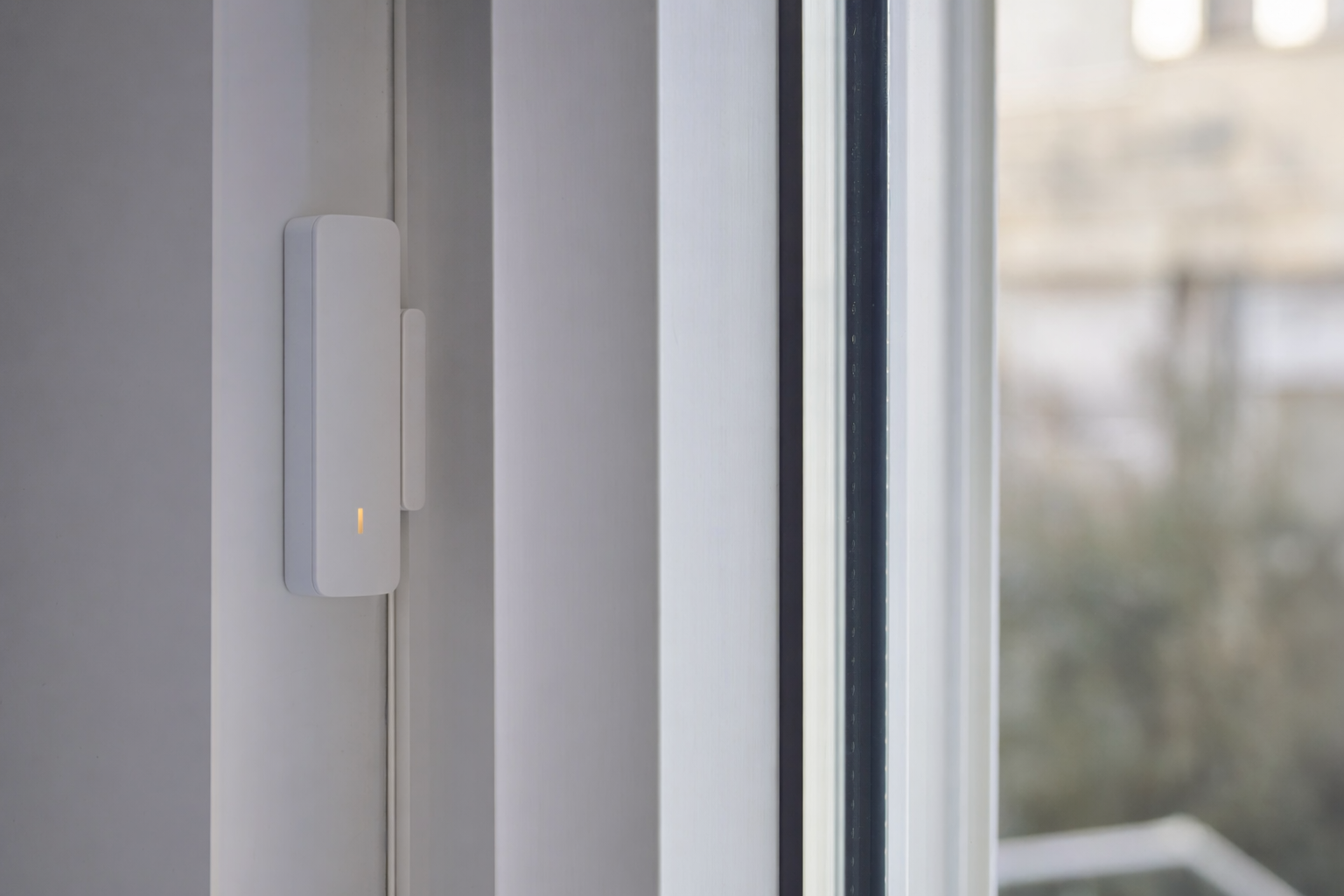
What a glass break sensor does
A glass break sensor is a device used with an alarm system. Its job is to detect the sound or vibration pattern made when a window or glass door breaks. If it detects that pattern, it sends a signal to the alarm control panel.
From there, the normal monitoring path starts. The control panel sends the alarm signal to a central monitoring station, often by cellular, internet, or dual-path communication. A trained operator may place a verification call and then notify the customer and dispatch police or fire based on the type of signal and the instructions on the account.
This is different from a basic local alarm that only makes noise on-site. If you want 24/7 monitored response handling, read more about central station monitoring.
How it works
Most modern glass break sensors are acoustic. That means they listen for a specific sound sequence, not just any loud noise. Many are designed to hear a low-frequency thud first, then the higher-frequency shatter sound that follows when glass breaks.
Some systems also use shock or vibration sensors mounted closer to the glass itself. Those detect the physical impact or vibration on a window or door. The right choice depends on the room, the kind of windows, and how the rest of the alarm system is set up.
A glass break sensor usually covers a room or zone, not every window in the building. Coverage can vary by sensor model, ceiling height, furnishings, curtains, and the type of glass. The equipment manual and installer guidance matter here.
Where glass break sensors make sense
These sensors are often used in rooms with large windows, sliding glass doors, front display glass, or areas where someone might break glass instead of opening a door. They can be useful when a contact sensor on the window frame might not catch the first point of entry.
They are commonly paired with door and window contacts, motion sensors, smoke detection, and a monitored control panel. In plain terms, they are one layer. They do not replace the rest of the system.
For example, a contact sensor usually detects a window opening. A glass break sensor may detect the glass shattering before the window is opened. Using both can give the control panel more than one way to detect a problem.
Limits, false alarms, and setup issues
A glass break sensor is not perfect. It may not respond the same way to every type of glass. Laminated glass, heavy drapes, thick blinds, high ceilings, unusual room acoustics, or a sensor placed too far away can affect performance.
False alarms can happen too. Dropped dishes, loud tools, slamming objects, or certain TV and speaker sounds can sometimes cause trouble if the sensor is poorly placed or poorly adjusted. That is one reason proper testing matters after installation and when furniture or room layout changes.
If your system is professionally monitored, repeated false alarms can create problems with local permits or false-alarm fees in some cities. Rules vary by area. A provider can explain local permit requirements, signal verification practices, and whether enhanced call verification is used.
Cost and what to ask before you buy
A glass break sensor often costs about $35 to $120 for the device itself, but the real number depends on the brand, whether it is wired or wireless, and whether installation is included. Installed pricing may be higher. If it is part of a larger alarm package, the sensor cost may be bundled into equipment and monitoring charges. These ranges are not quotes.
Monthly monitoring for a full alarm system often falls somewhere around $20 to $60 or more, depending on the equipment, the monitoring contract, smart-app features, cellular or dual-path communication, and your area. Some companies advertise a "free" system but make up the difference with a long contract, high monthly fees, auto-renewal terms, or vague cancellation rules.
Ask direct questions. Is the monitoring month-to-month or a long contract? Does it renew automatically? Is there a permit requirement? Is cellular backup included? Who handles service calls? State rules for alarm-company sales and solicitation can vary, so the details matter.
If you are comparing options, we help you find a monitoring provider near you. Signal Watch Central is a free education and matching service. We do not install systems, monitor alarms, or guarantee any equipment or response.
How to choose a monitored setup
Start with the building layout. Count the first-floor doors, accessible windows, and rooms with large panes of glass. Then think about communication path. Many people prefer cellular or dual-path so the control panel can still send signals if one path fails.
Next, ask how alarm signals are handled. A typical path is simple: a sensor trips, the control panel sends the signal to the central station, a trained operator makes a verification call when appropriate, and then the operator notifies the customer and dispatches police or fire according to the account instructions.
If you want help sorting through providers, start at Learn or get matched. If you ask to be contacted, it should be only after your prior express written consent through an unchecked box you choose to tick. That consent is not required to use any service, and you can opt out at any time.
A glass break sensor is an alarm device that detects breaking glass and can send that alarm through your control panel to a central monitoring station.
Common questions
Is a glass break sensor the same as a window sensor?
No. A window contact sensor usually detects when the window opens. A glass break sensor listens for the sound pattern of breaking glass.
Will a glass break sensor hear every window in my house?
Usually not. These sensors cover a limited area, often one room or zone, and coverage depends on placement, room shape, furnishings, and the type of glass.
Can a glass break sensor cause false alarms?
Yes, it can if it is badly placed or set too sensitively. Loud noises, tools, dishes, or media sounds may sometimes trigger a false alarm, which is why testing matters.
Do I need a glass break sensor if I already have door and window contacts?
Maybe. Contacts and glass break sensors detect different things. Some people use both, especially near large windows or sliding glass doors.
How much does a glass break sensor cost?
The device itself is often around $35 to $120, with installed cost higher in many cases. If it is part of a package, equipment and monthly monitoring may be bundled together.
What happens after the sensor goes off in a monitored system?
The sensor reports to the control panel, then the panel sends the signal to the central station. A trained operator may call to verify and then notify the customer and dispatch police or fire based on the signal and the account instructions.