Guides
What is a free alarm system catch
A "free alarm system" usually is not really free. The equipment cost is often moved into a long monitoring contract, activation fee, cancellation charge, or higher monthly price.
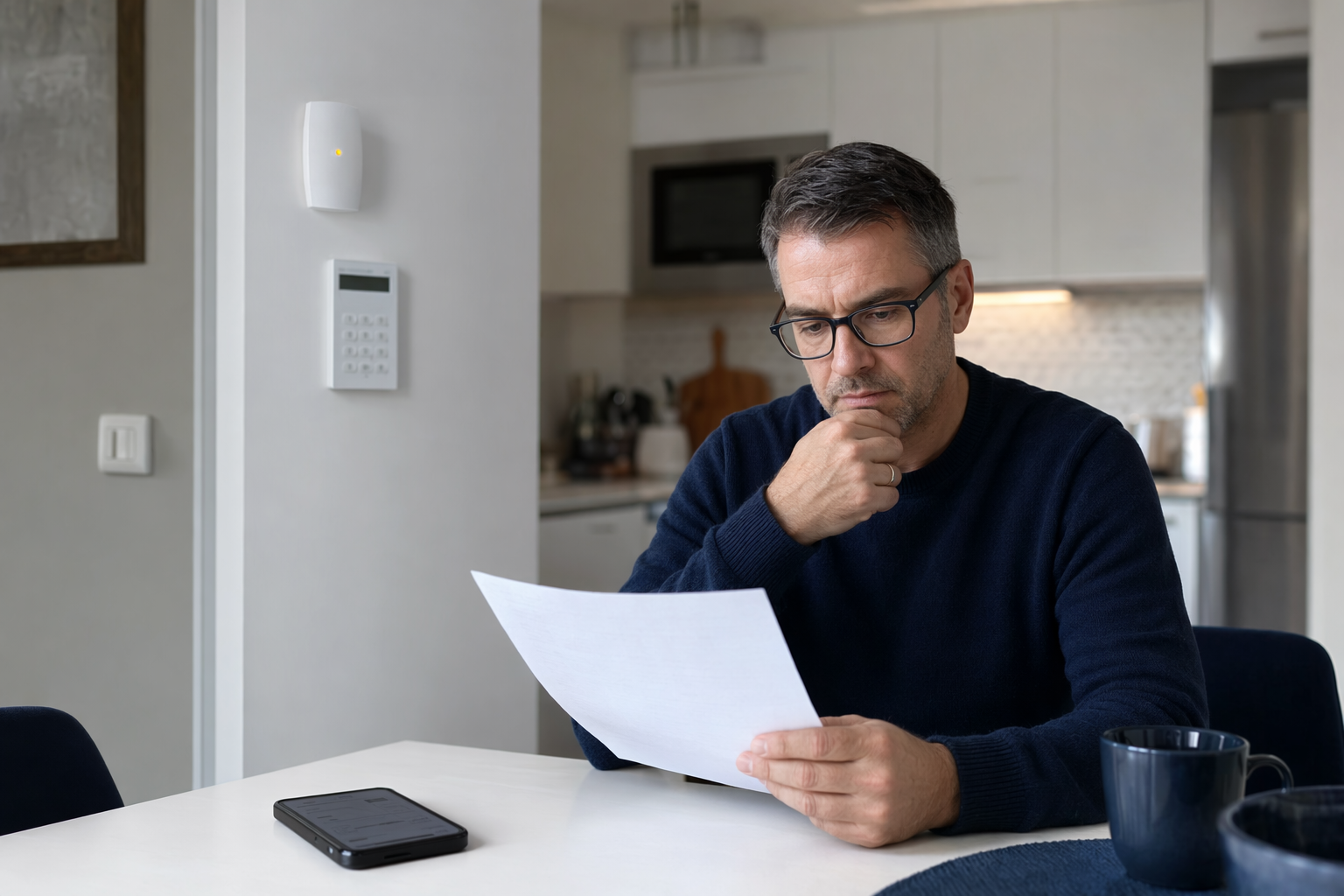
What people mean by the catch
In alarm sales, "free system" often means the keypad, a few door sensors, and maybe one motion detector are provided at little or no upfront cost. The company then makes its money through ongoing 24/7 monitoring fees and contract terms.
That matters because alarm monitoring is the real service. A sensor trips, the control panel sends a signal to a central station, a trained operator tries a verification call, and then the operator contacts police or fire if the situation calls for dispatch. The monthly monitoring agreement is usually where the larger cost sits.
So the catch is usually simple: lower cost today in exchange for more commitment later. Sometimes that trade-off is fair. Sometimes it is not. The key is reading the full offer, not just the word "free."
Common ways the real cost shows up
The first place to look is the contract length. A "free" system may require 36 to 60 months of monitoring. Monthly rates often land around $20 to $60 for basic service, and can be higher if you add app control, cameras, home automation, or extra signals. These ranges are not quotes. The real number depends on equipment, the monitoring contract, and your area.
The second place is fees outside the monthly bill. Some offers add activation, installation, permit help, service-call charges, restocking fees, moving fees, or early termination charges. Some contracts auto-renew unless you cancel during a narrow window.
The third place is equipment limits. The "free" package may cover only a very small setup. If your home needs more door contacts, smoke detectors, glass-break sensors, cellular communication, or dual-path communication, the price can rise quickly.
What to ask before you sign
Ask for the full monthly price, the contract term, and the total cost over the whole agreement. If the system is truly free, the seller should be able to explain what you owe on day one, what you owe each month, and what happens if you cancel early.
Ask how the system communicates with the central station. Cellular is common. Dual-path systems use two communication paths, such as internet plus cellular, which can be more robust than one path alone. Also ask whether the monitoring center is a central station and whether it is UL-listed if that matters to you.
Ask how alarms are handled. A useful plain-language answer should describe the signal path clearly: sensor trips, panel sends a signal, operator makes a verification call, then dispatch and customer notification follow based on the event and local rules. If the answer stays vague, keep asking.
Sales tactics to watch for
Some alarm offers are sold fairly. Others lean on pressure. Be careful with door-to-door sales, time-limited discounts that vanish if you do not sign immediately, and claims that equipment is free only "today." In some states, alarm-company solicitation is licensed, and the rules vary by state.
Also watch for long auto-renewing contracts, vague cancellation terms, and "free" systems tied to costly monitoring lock-in. If a salesperson will not leave a copy of the agreement, or will not point to the cancellation section, that is a warning sign.
Permits matter too. Many cities require an alarm permit, and false-alarm fees can apply if dispatches happen without a real emergency. Ask who is responsible for the permit and whether the company helps with the paperwork.
How to compare a free system with a paid system
The right comparison is total cost, not just upfront cost. A paid system with a shorter term and lower monthly monitoring may cost less overall than a "free" system with a long contract. Write down the one-time charges, the monthly rate, the contract length, and any cancellation terms.
Also compare what is included. A low advertised price may leave out smoke monitoring, cellular backup, battery replacement, service calls, or app access. For many households, the monitoring details matter more than the starter equipment.
If you want a plain-language overview of the service itself, see central station monitoring or browse other guides in Learn. If you want help finding a monitoring provider near you, we can help you get matched. We are not an alarm company or a monitoring center. We provide general education and free matching.
A free alarm system usually means you pay later through monitoring fees, contract terms, and add-on charges, so compare the full cost before you sign.
Common questions
Is a free alarm system ever actually free?
Sometimes the upfront equipment cost is very low, but there is usually an ongoing monitoring contract or other fees. Read the total agreement cost, not just the ad headline.
What is included in a typical free alarm offer?
Often it is a basic starter package such as a control panel, keypad, a few door or window sensors, and one motion detector. Extras like smoke detectors, glass-break sensors, cameras, cellular backup, and dual-path communication may cost more.
How much does alarm monitoring usually cost?
Basic residential monitoring often falls around $20 to $60 per month, with higher prices for cameras, app features, or home automation. Those are general ranges, not quotes, and the actual price depends on equipment, contract terms, and area.
Why do alarm companies push long contracts?
Long terms help them recover equipment, installation, and sales costs over time. That is one reason a system can be advertised as free upfront while costing more over the full contract.
What should I ask about cancellation?
Ask whether there is an early termination fee, whether the contract auto-renews, how much notice is required, and whether you must cancel in writing. Get those answers in the actual agreement, not just verbally.
Will someone contact me if I ask to be matched with a provider?
Only if you give prior express written consent through an unchecked box that you choose to tick. That consent is not a condition of any service, and you can opt out at any time.