Guides
What is a central monitoring station
A central monitoring station is a 24/7 facility that watches signals from your alarm system, verifies the event by phone, and contacts the right responders. This page explains the signal path in plain English.
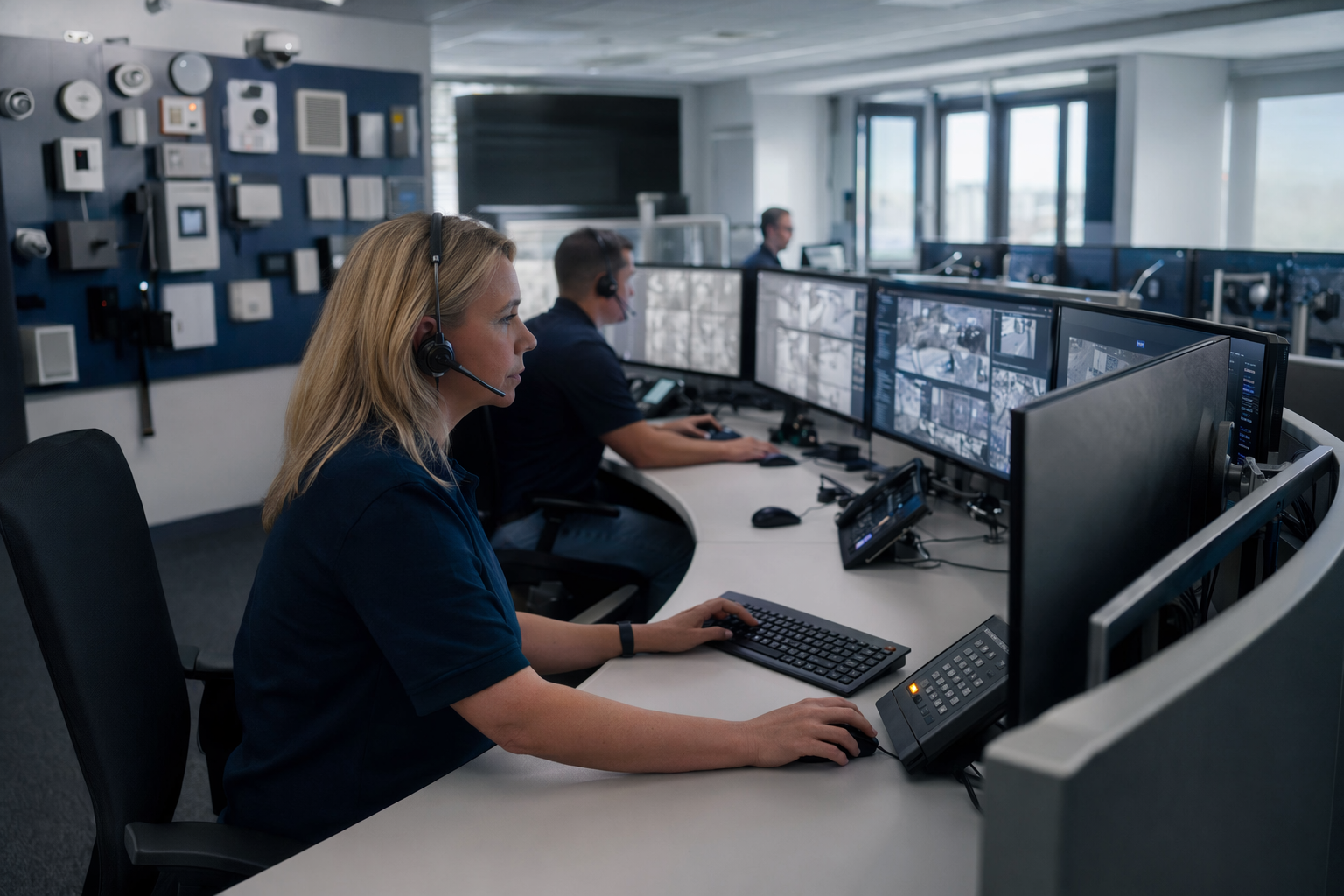
Central monitoring station, in plain words
A central monitoring station is a service that receives signals from your home or business alarm system and monitors them around the clock.
When you choose “24/7 alarm monitoring,” you are usually choosing two things: (1) a control panel that can send signals and (2) a monitoring provider that operates the central station and handles the call-outs. The station is where events are logged and where trained staff start the verification steps.
Signal Watch Central is a free service that helps you understand how monitoring works and connect you with a monitoring provider near you. We are not an alarm company, not a central station, and we do not install or guarantee monitoring.
If you want a direct walkthrough of what the matching process looks like, see get matched. For background, you can also read about central station monitoring.
The signal path: sensor to central station to responders
Here is the typical “signal path” for monitored alarms in the US.
1) A sensor trips: A door/window contact, motion detector, glass-break sensor, smoke detector, or a panic button sends an alert to your alarm control panel.
2) The control panel sends the signal: The control panel forwards that alert to the monitoring provider’s central station using a communication method such as phone line, cellular, or sometimes IP/internet.
3) The central station receives it and starts a verification: A trained operator reviews the event and then typically tries to contact you using the contact information you provided.
4) Verification and action: If the operator can verify it is real, they notify the appropriate responders. For burglary, that is commonly police. For fire, it is commonly fire services. They may also notify other contacts (for example, a listed emergency contact), depending on your plan and local policies.
Important: monitoring involves people, processes, and communications. It does not guarantee safety or a specific response time. False alarms can happen, and different plans handle them differently.
This exact path can vary by equipment, contract terms, and the monitoring provider. If you’re comparing options, ask how they verify signals, what contact numbers they use, and what happens after a missed call.
Common technologies: how the central station receives alerts
Monitoring has a “last mile” problem: how the alert reaches the central station. Monitoring providers may use different communication paths, and many systems use more than one.
Common options include:
- Landline (phone line): A traditional option. If the phone line is cut or fails, alerts may not get through.
- Cellular: Uses a mobile network. It can still fail in rare circumstances, but it is often chosen to reduce reliance on a single wired connection.
- Internet/IP: Sends alerts through the internet connection. This depends on your network and power backup.
- Dual-path / backup communications: Some systems send alerts using two paths (for example, cellular plus internet, or cellular plus phone line) so the central station can still get the signal if one method fails.
Ask your provider what communication methods are included and whether backup paths are truly included. Also ask about power: most alarm setups need power backup for the control panel so it keeps running when electricity goes out.
If you’re shopping and want a checklist, you can also use our learning hub at learn.
What the operator does during a real event
At the central station, trained operators follow a workflow. Exact steps vary, but you can usually expect some version of verification.
Typical operator steps include:
- Confirming the type of event: For example, intrusion, panic, smoke, or a trouble signal.
- Checking the device and zone details: Which sensor triggered and whether there are supporting signals.
- Calling the listed contacts: Often first the primary account holder, then backup contacts if needed.
- Documenting outcomes: Whether the event is confirmed or canceled.
- Notifying authorities when warranted: The central station contacts police or fire based on the event type and the verification result.
If you have unique needs, mention them before you sign. For example, language needs, your preferred call times, and what numbers are reachable during emergencies.
It also helps to understand that “verification” does not always mean a person physically checks your home before responders are dispatched. Some plans focus on phone verification and event review. Other plans may use additional steps. The only way to know is to ask the monitoring provider how they handle verification for your exact event types.
Costs and contracts: what to expect (and what to watch for)
Costs for 24/7 monitored alarms vary a lot in the US. The real price depends on the equipment, the monitoring contract, the communication setup (for example, cellular or dual-path), and local factors.
A common way people pay includes a mix of:
- Equipment cost: Either you buy the hardware, finance it, or lease it through an agreement.
- Installation cost (sometimes): Some companies charge for setup, placement, and configuration.
- Monthly monitoring fees: Many providers charge a monthly amount for 24/7 monitoring. There may also be charges for add-ons such as professional installation, specific sensor packages, or additional services.
Cost ranges can be broad. In practice, you may see monitoring plans from “about $20 to $40 per month” up to higher amounts depending on features and contract terms. Some deals quote an initial “free” system, but later costs can shift into long monitoring commitments, equipment ownership structures, or cancellation terms.
Be alert to common alarm-sales tactics:
- Long auto-renewing contracts: The agreement renews automatically unless you cancel within a deadline.
- “Free” system deals with monitoring lock-in: The system may be low-cost upfront but comes with strict ongoing monitoring requirements.
- Door-to-door pressure: Limited time to decide, unclear cancellation terms, or pushy sales language.
- Vague cancellation language: Charges may apply if you cancel early, even if you dislike the service.
Also note: some states license alarm-company solicitation and the rules vary by state. If you are in doubt, ask whether the seller is licensed where required and get the full contract terms in writing.
For matching help with provider options in your area, start with get matched. You can then compare how each provider handles monitoring verification, communication paths, and contract terms.
How a central station fits into an overall alarm system
Your alarm system is more than the central station. Think of it as a connected set of parts.
- Sensors: Detect the event (entry, motion, smoke, glass break, panic).
- Control panel: Receives sensor signals and decides what to do. It also sends alerts to the monitoring provider.
- Communication path: Carries alerts to the central station.
- Central station staff: Receive events and handle verification steps.
- Dispatch and notifications: Contact police or fire and follow the plan’s procedures.
Because each part matters, you should not judge monitoring by the name of the company alone. The questions that matter include:
- How does your control panel send alerts?
- Are there backup paths like cellular or dual-path?
- What does “verification” mean in the provider’s workflow?
- What contact numbers are required and how do missed calls get handled?
- What fees apply for false alarms, trouble alerts, or missed verification?
Signal Watch Central helps you learn these terms and compare options. We do not install or guarantee any monitoring. That means your next step is to confirm details with the monitoring provider you choose.
A central monitoring station is the 24/7 place that receives your alarm signals, calls you to verify, and then contacts police or fire based on the event and your monitoring plan.
Common questions
Is a central monitoring station the same thing as an alarm company?
Not exactly. An alarm company might sell equipment and service. The central monitoring station is a 24/7 operation that receives signals and runs the monitoring workflow. Signal Watch Central helps you understand monitoring and connect with a monitoring provider, but we are not a monitoring center and we do not install alarms.
How does the central station verify a burglary or fire alarm?
Most providers use a verification process that can include reviewing event details and placing phone calls to the listed contacts. If the event can be verified or is clearly warranted, the operator then notifies the appropriate responders. The exact steps vary by provider and plan.
What communication method is best: landline, cellular, or internet?
There is no single “best” for every home. Cellular or dual-path setups are often chosen to reduce reliance on one connection method. What matters is what your system supports, whether backup is included, and how the plan handles failures or trouble signals.
Does 24/7 monitoring guarantee a faster police or fire response?
No. Monitoring can help ensure that an alert reaches the right people, but it does not guarantee safety or a specific response time. Dispatch depends on local procedures, the nature of the event, and communications outcomes.
What should I ask before signing a monitoring contract?
Ask for the monitoring verification steps, the communication paths included (and any backup/dual-path), contact and language options, false-alarm/trouble handling, and the cancellation and renewal terms. Be careful with long auto-renew contracts and “free system” offers that lock you into costly monitoring.