Guides
UL-Listed Central Stations, Explained
UL-listed central stations are certified monitoring facilities that follow specific safety and performance standards. This guide explains what “UL-listed” means, how alarm monitoring is supposed to work, and how to compare providers.
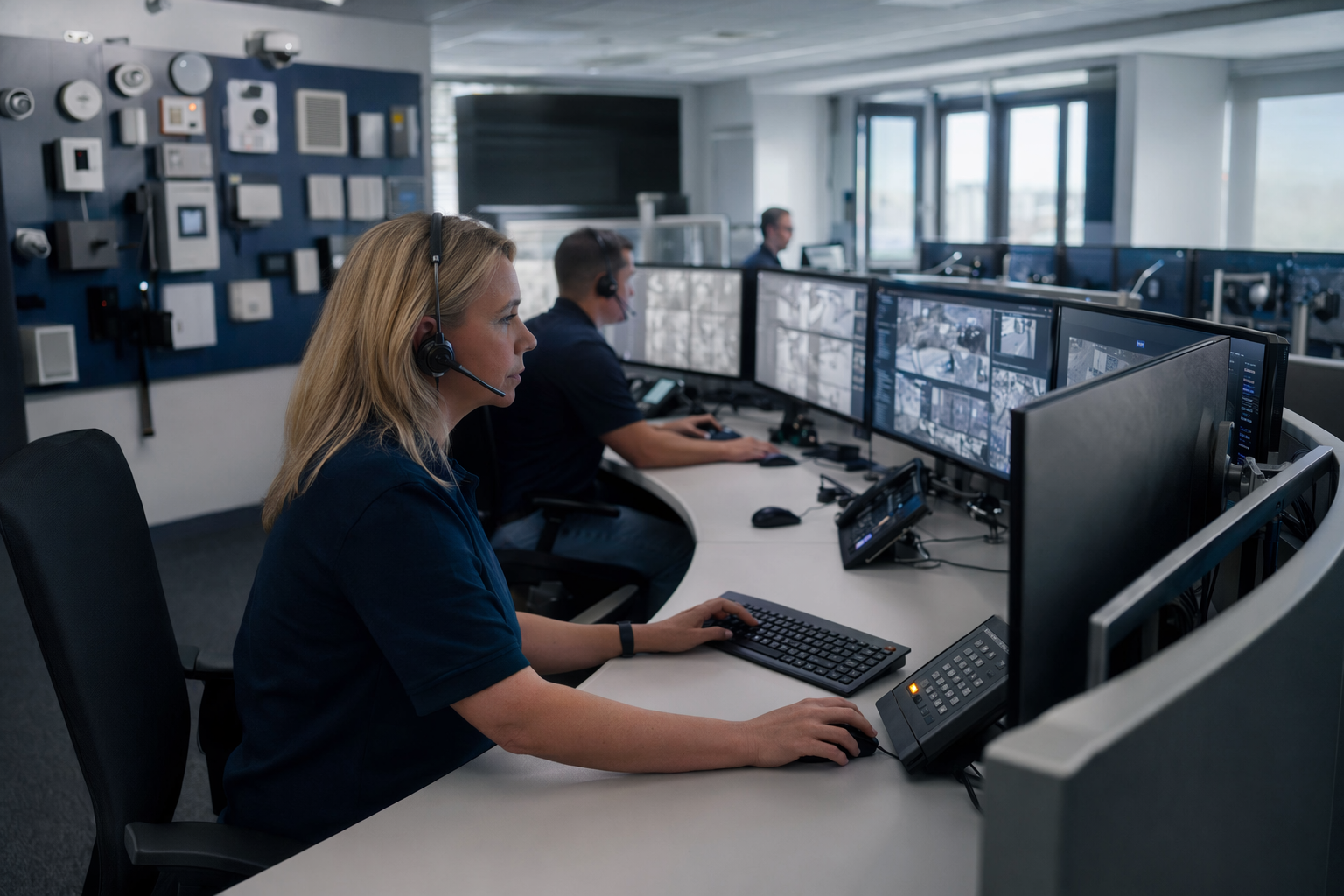
What a “UL-listed central station” is
A central station is the monitoring control center that watches alarm signals 24/7. If a sensor trips, the alarm control panel sends an alert to the central station, where a trained operator responds.
“UL-listed” means the central station has been evaluated by UL (Underwriters Laboratories) against certain testing and certification requirements. UL does not make the central station “guaranteed perfect,” and UL listing does not automatically mean your specific alarm setup will always work the same way.
In plain terms: UL listing is a quality and safety certification signal for the facility and related equipment or processes, not a promise about your personal outcome.
The typical alarm monitoring signal path (sensor → call center → dispatch)
Here is the common path for alarm monitoring in the US:
1) A sensor trips (for example, a door contact, motion detector, smoke/heat detector).
2) Your alarm system’s control panel sends the event to a central station using one or more communication paths (often landline, cellular, and sometimes internet, depending on the system). This is often called a “dual-path” or “backup path” setup.
3) A trained operator checks the incoming signal and may try to verify it using information on your account.
4) The operator typically makes a verification call to you or contacts on your account.
5) If the event is confirmed as urgent, the operator dispatches the right service (police for burglary-type alarms, fire/EMS for fire-type alarms) and records the event.
Exact steps can vary by provider, local rules, and how your account is set up. Different providers may also use different verification methods, schedules, and escalation rules.
What UL listing does (and doesn’t) tell you
UL listing can help you compare how a central station facility and certain alarm-related components were tested. It may cover things like equipment performance and safety requirements.
But UL listing is not the same thing as:
• a guarantee that every alarm will be verified successfully
• a promise of response times
• a guarantee that false alarms will not happen
• proof that your specific setup (sensors, panel, wiring, placement, power backup, communication paths) is installed and maintained correctly
For households and small businesses, the most important practical question is usually: “If an alarm triggers, how will signals reach the central station, how will verification work, and what contacts and escalation steps will be used for my account?”
How to compare monitoring providers (and avoid common traps)
A monitoring provider can be different from the UL-listed central station facility. Many providers route signals to partner central stations, or they may offer their own operations.
When you compare, look for clear answers to these questions:
• Communication paths: Do they use cellular and a backup path? Is the plan designed for outages?
• Verification: What happens before dispatch? Who is called first, and what if you do not answer?
• False-alarm handling: Are there fees for false alarms? Do they explain how to reduce them?
• Contract terms: Watch for long auto-renewing agreements. Some companies advertise “free” equipment but then lock in ongoing monitoring charges.
• Cancellation terms: Are there vague or hard-to-meet conditions to cancel? Ask how to cancel in writing and what penalties apply.
• State rules: Some states license alarm-company solicitation, and rules vary. If you are unsure, check your state’s requirements or ask the provider directly.
Alarm sales can use pressure tactics like door-to-door sales, short “today-only” pricing, or unclear cancellation terms. If anything is unclear, ask for it in writing before you sign.
What monitoring usually costs in the US (honest ranges)
Costs vary a lot by equipment, monitoring contract length, the area, and whether you buy new hardware or use existing equipment. Some providers bundle equipment with monitoring; others offer monitoring-only.
In general, you might see monthly monitoring charges that range from under $20/month to $60+/month. One-time equipment costs can also apply, especially if you need new sensors, a new panel, installation, or permits.
Because prices are not uniform, the most reliable approach is to compare plans side by side with the same assumptions: the same number of doors/windows, similar sensor types, and similar communication paths. If you already have an alarm system, ask whether your existing equipment is compatible with the provider’s central station monitoring.
Free matching: how Signal Watch Central helps you find a local fit
Signal Watch Central is a free service that helps you understand 24/7 alarm MONITORING and connect with a monitoring provider near you. We are not an alarm company, not a central station, and we do not install or monitor your alarm.
If you want, you can start by learning about how monitoring works and then use get matched with a monitoring provider so you can compare options and ask the right questions for your home or business.
For a closer look at the full monitoring setup, including what “24/7 burglar alarm monitoring” typically means, see 24/7 burglar alarm monitoring.
UL-listed central stations are certified monitoring centers, and real value comes from how your alarm sends signals, how verification works, and what the contract says, not from UL alone.
Common questions
Does UL-listed mean my alarm will be monitored correctly every time?
UL listing relates to the certification and testing of the central station facility and certain alarm-related processes. It does not guarantee your specific system signals will always be received or verified, since performance also depends on your sensors, panel, wiring, power backup, and communication path.
Is the provider the same as the UL-listed central station?
Not always. A monitoring provider may route signals to a UL-listed central station or partner with one. Ask the provider who operates the central station and how events are handled before dispatch.
How does verification usually work after an alarm triggers?
Often an operator checks the signal and attempts a phone call to you or another listed contact. If the event is confirmed as urgent, the operator dispatches the appropriate service. Exact steps vary by provider and your account settings.
What should I ask about “communication paths” like cellular and backups?
Ask whether the system uses a cellular path, a backup path, or dual-path communication. Also ask what happens during power or internet outages, and whether the plan accounts for network loss.
How much does monitoring cost?
Monitoring costs depend on equipment, contract terms, and the local area. Many plans fall roughly in the $20 to $60+/month range, but there is no single national price. Equipment and installation may cost extra if you need new hardware.
Are there different rules in different states for alarm companies?
Yes. Some states license alarm-company solicitation and impose specific consumer protection rules. Requirements vary, so it can help to ask the provider what applies in your state and how they handle permits, false-alarm fees, and contract cancellation.