Guides
How to spot an alarm sales scam
Alarm monitoring sales can be messy, and some offers hide the real terms. This guide explains the common warning signs so you can compare central-station monitoring offers with a clear head.
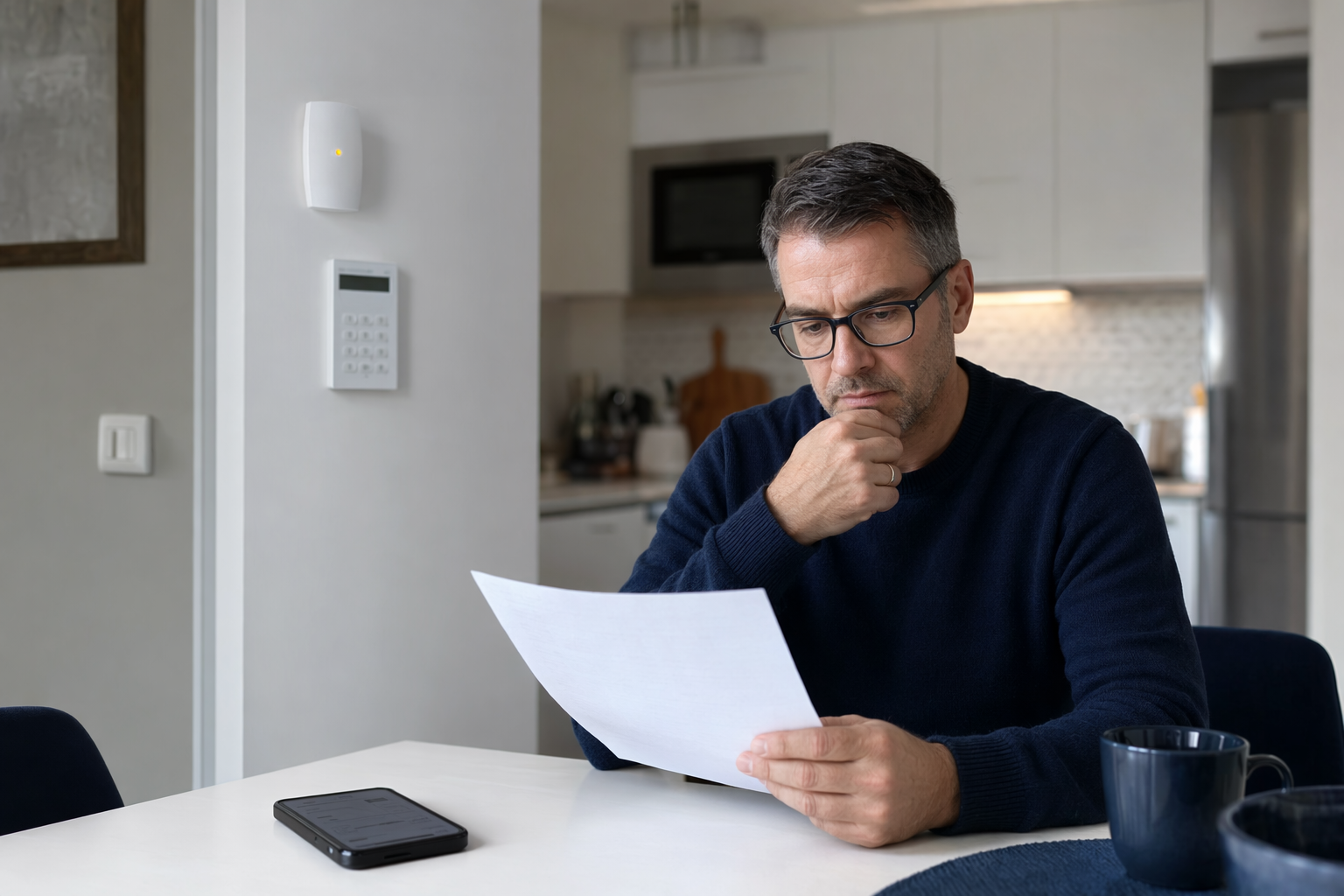
What a real monitoring setup should look like
Alarm monitoring is a signal path, not a guard service. A sensor trips, the control panel sends a signal to a central monitoring station, a trained operator may verify with a phone call, then the operator dispatches police or fire and notifies the customer.
That is the basic setup you should hear explained in plain words. If a salesperson cannot explain the panel, the monitoring station, verification call, and dispatch process without dodging, that is a warning sign.
If you want the basics first, start with central-station monitoring and then compare the actual contract terms, not the pitch.
Common scam patterns to watch for
One common tactic is the long auto-renewing contract. Another is the “free” equipment offer that ties you to expensive monitoring for years. Some sellers use door-to-door pressure, rush you to sign, or gloss over cancellation terms until after the paperwork is done.
Watch for vague words like “standard plan” or “included protection” with no clear list of monthly monitoring cost, activation fees, cellular backup, or permit fees. Real pricing depends on the equipment, the monitoring contract, and your area. For many homes, monitoring can run about $15 to $60 per month, but that is only a range, not a quote.
If the seller will not put the full terms in writing, slow down. Ask for the contract length, renewal terms, cancellation policy, and whether the system uses cellular or dual-path communication.
Consent, calls, and texts
If someone wants to contact you by phone, text, or prerecorded message, that should happen only with your prior express written consent, using an unchecked box that you choose to tick. Consent is not a condition of any service.
That matters because alarm sales and telemarketing are heavily litigated. You should be able to ask for details first, review the offer, and opt out at any time.
We help you find a monitoring provider, but we are not the monitoring company and we do not make promises about how a provider will contact you. Some states also license alarm-company solicitation, and the rules vary by state.
Questions that expose a bad offer
A careful seller should answer direct questions without pressure. Ask who actually monitors the alarm, whether the station is UL-listed, what happens after a signal reaches the station, and whether the operator calls before dispatch when the account uses verification.
Also ask about false-alarm fees, permit requirements, and what happens if you move. If the answer is vague, the company may be hiding the real cost or the real process.
Useful questions:
- What is the monthly monitoring price, and what fees are extra?
- How long is the contract, and does it auto-renew?
- How do I cancel, and is there a written cancellation address?
- Is the system cellular or dual-path?
- Who owns the equipment if I stop service?
How to compare offers without getting pushed
Do not compare only the headline monthly price. A low teaser rate can become expensive once you add installation, activation, cell backup, video add-ons, permit fees, and early termination charges.
Read the agreement slowly. Look for cancellation deadlines, renewal notices, and any clause that says you owe the rest of the term after canceling. Those terms are where many problems start.
If you want a simpler way to compare options, use get matched to connect with a monitoring provider near you. The service is free to the reader, and participating providers pay a flat marketing fee. We do not install, monitor, or guarantee anything.
A real monitoring offer should clearly explain the central station, costs, contract, and cancellation terms. If the seller rushes you, hides fees, or uses vague promises, walk away.
Common questions
What is the biggest red flag in an alarm monitoring sale?
A contract that is hard to cancel is one of the biggest red flags. If the salesperson will not clearly explain the term length, auto-renewal, and cancellation rules, treat that as a warning.
Is a cheap monitoring offer always a scam?
No. Low prices can be real, but the full cost may be higher once you add equipment, installation, activation, or permit fees. Always ask for the complete written price.
Should a company be able to call or text me right away?
Only if you gave prior express written consent by checking an unchecked box. Consent is not required to use the service, and you can opt out later.
Does alarm monitoring guarantee police or fire response?
No. Monitoring means a central station receives the alarm signal and follows its process, which may include verification and dispatch. Actual response depends on the circumstances and local authorities.