Guides
Alarm Monitoring for Renters and Apartments
Renters can often add alarm monitoring without owning the building, but the setup is different from a house. This guide explains how central station monitoring works in apartments, what landlords may allow, and what costs and contracts to watch closely.
What alarm monitoring means in a rental
Alarm monitoring is a 24/7 central station service. A door, window, motion, smoke, or panic sensor trips, the control panel sends a signal to the central station, a trained operator tries to verify with a phone call, and then the operator notifies you and may dispatch police or fire based on the signal type, your instructions, and local rules.
That is different from a local alarm that only makes noise inside your apartment. A siren may alert neighbors, but monitored service is about getting signals off-site to a monitoring center.
Signal Watch Central is not an alarm company, not a monitoring center, and not a UL-listed central station. We provide plain-language information and can help you find a monitoring provider near you for free.
What renters can usually install
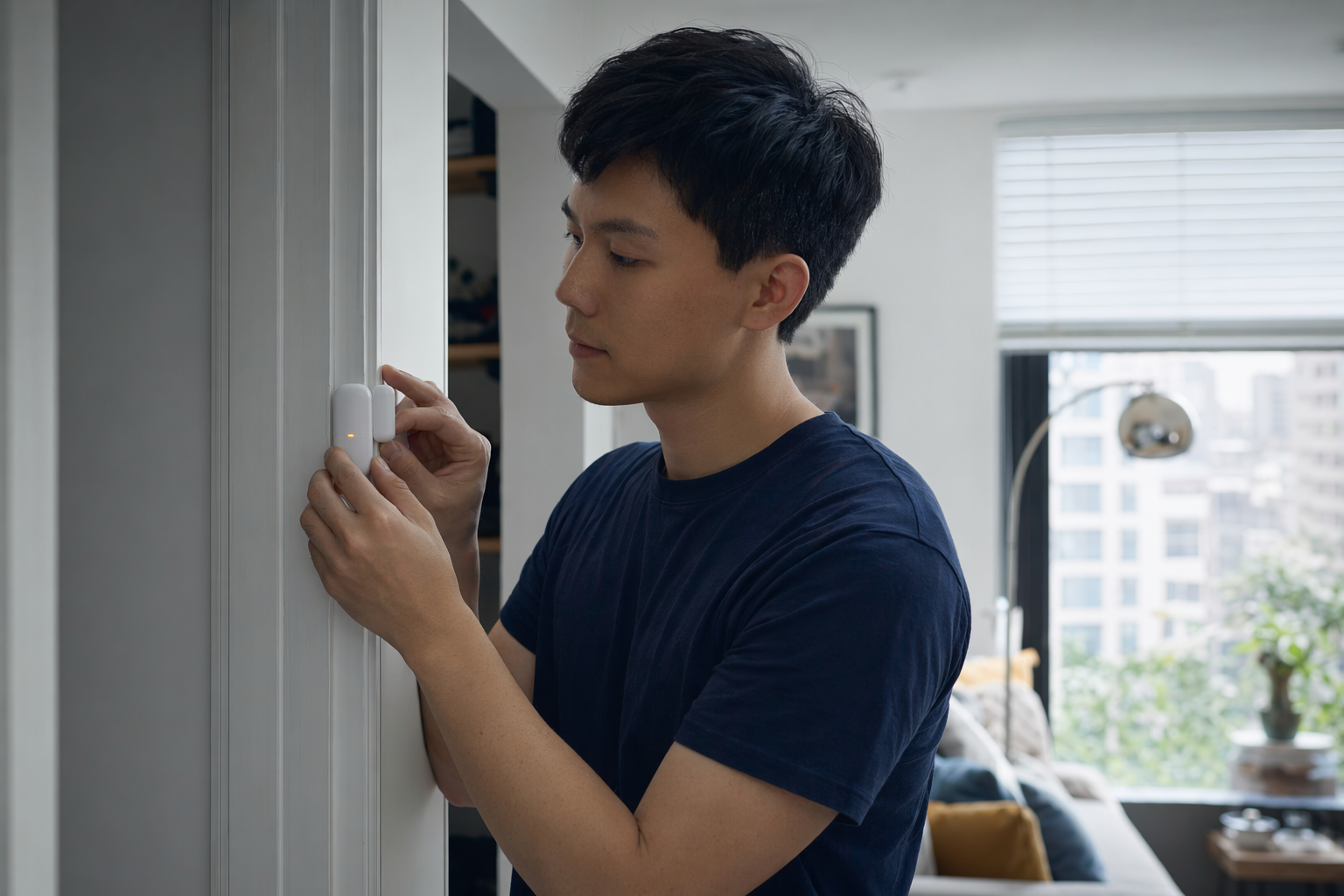
Most renters do best with equipment that does not require major drilling or wiring. Common options are peel-and-stick door and window contacts, battery-powered motion sensors, glass-break sensors, indoor cameras if allowed, and a keypad or app-based control panel that uses cellular or Wi-Fi.
For many apartments, a cellular or dual-path system makes sense. Dual-path usually means the panel can send signals over more than one route, such as Wi-Fi plus cellular backup. If the internet goes down, the panel may still be able to reach the central station through the cellular path.
If you rent a condo unit or a small commercial suite, the same basic idea applies, but building rules may be stricter. Smoke detectors, sprinkler monitoring, and fire alarm systems in shared buildings are often controlled by the property owner or HOA, not by the tenant.
Ask the landlord before you sign anything
Your lease matters. Some landlords allow wireless apartment alarms as long as there is no permanent damage. Others ban extra locks, doorbell cameras facing common areas, holes in frames, or any device attached to a fire system.
Ask simple questions in writing. Can you mount sensors with adhesive strips? Can you replace the lock or add a smart lock? Are cameras allowed in hall-facing windows or at the front door? If the building already has a shared fire alarm or entry system, can your equipment connect to it? In many rentals, the answer to that last question is no.
Also ask who handles permits. Some cities require an alarm permit for police dispatch, and false-alarm fees can be charged if the permit is missing or the system causes repeated dispatches. Rules vary by city and state, and some states also license alarm-company solicitation.
How much renter alarm monitoring costs
For renters, equipment often falls somewhere around $100 to $600 for a simple wireless setup. Monthly monitoring is commonly about $15 to $50 for burglar signals, depending on whether the system uses cellular, app control, video features, or smart-home extras. Those ranges are not quotes. The real number depends on the equipment, the monitoring contract, and your area.
If fire or environmental devices are included, cost can rise. The same goes for indoor cameras, video verification features, and dual-path communication. Some providers roll equipment into a long monthly contract instead of charging much up front.
Read the offer slowly. A "free" system may really mean low upfront cost tied to costly monitoring for 3 to 5 years. Ask about activation fees, shipping, permit help, moving fees, early termination charges, auto-renewal, and what happens if you move before the contract ends.
Common sales tactics renters should watch for
Renters are often targeted with fast sales because they may want a simple setup right away. Be careful with door-to-door pressure, limited-time claims, and vague answers about cancellation. If someone cannot explain the monthly price, contract length, and equipment ownership in plain words, slow down.
Watch for long auto-renewing contracts. Watch for "free installation" that only makes sense if you keep expensive monitoring for years. Watch for unclear promises about landlord approval. A provider should tell you what is portable, what leaves holes, and what may not be allowed in a rental.
Ask direct questions before you agree to anything:
- Is this month-to-month or a fixed-term contract?
- If I move in 12 months, what fees apply?
- Do I own the equipment, lease it, or finance it?
- Does the panel use cellular, Wi-Fi, or dual-path communication?
- Is the monitoring center UL-listed?
- Will I need an alarm permit in my city?
- How are false alarms handled, and can there be local fees?
Getting matched without the hard sell
If you want help comparing monitored options, you can use Signal Watch Central to find alarm monitoring providers or start at our learning center. Our service is free to readers. Participating providers pay us a flat marketing fee.
If you ask to be contacted, that should happen only with your prior express written consent through an unchecked box you choose to tick. Consent is not a condition of any service, and you can opt out at any time. That consent language is where calls, texts, and, if disclosed there, autodialed or prerecorded contact belong.
We do not install systems, monitor alarms, or guarantee any provider's work. We help you understand the basics and connect you with a monitoring provider so you can compare equipment, contract terms, and monthly cost for your rental.
If you rent, you can often add central station alarm monitoring with wireless equipment, but you should check your lease, compare contract terms carefully, and confirm how the system sends signals to the monitoring center.
Common questions
Can I get alarm monitoring if I rent an apartment?
Often yes. Many renters use wireless equipment that does not require major drilling or changes to the unit, but you should check your lease and get landlord approval when needed.
Will alarm monitoring work if I only have Wi-Fi?
It can, but many renters prefer cellular or dual-path systems because they do not rely on one connection only. Ask how the control panel sends signals to the central station if your internet fails.
Can a renter connect to the building's fire alarm system?
Usually not on your own. In many apartment and mixed-use buildings, shared fire systems are controlled by the owner or building management and must follow code and local rules.
Do renters need an alarm permit?
Sometimes. Permit rules are local, not national, so check with your city or county. Missing a required permit can create problems if police dispatch is requested, and false-alarm fees may apply in some places.
Is month-to-month monitoring available for renters?
Sometimes, yes. It depends on the provider and the equipment plan. Month-to-month can be useful if you may move soon, but the upfront equipment cost may be higher.
What is the cheapest setup for a renter?
A basic wireless package with a few entry sensors and central station monitoring is usually the lowest-cost starting point. Exact pricing varies by equipment, contract length, communication path, and area.